
Translated material
The head of the Accounts Chamber Stepashin: Britain quarreled with Russia because of the Sakhalin-2 project
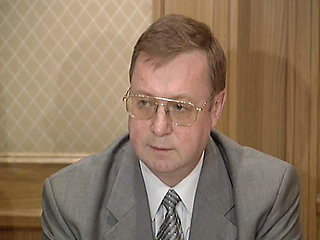
The deterioration of relations between Britain and Russia may be associated with the entry of Gazprom into the Sakhalin-2 project. This opinion, as ITAR-TASS reports, was expressed by the head of the Accounts Chamber of the Russian Federation Sergey Stepashin.
Gazprom entered the project, perhaps not everyone liked it, ”he said. - Apparently, the sharp reaction of the British partners is caused by this. "We will remind, in the Sakhalin-2 project, Britain in the person of the royal company Shell was defeated and was forced to share its share.
Stepashin noted that the Accounts Chamber reported four times to the government about violations identified in the development of projects on Sakhalin. "Ecology issues were visible there with the naked eye," he said. At the same time, according to the head of the Accounts Chamber, it cannot be said that "we have foreign investors." He recalled that the commission for the implementation of projects for the development of Sakhalin-1 and Sakhalin-2 projects and the Kharyaginsky deposit was headed by the Russians.
The Sakhalin-2 project provides for the development of two large hydrocarbon deposits on the terms of the SCP. Within its framework, two sea drilling platforms, liquefied natural gas production plants and gas condensate processing, 800 km of the pipeline and an oil shipment terminal are built.
Recall that one of the versions of the diplomatic conflict between Moscow and London in the "Litvinenko case" is the assumption of British's need to expand access to sources of hydrocarbon raw materials. England allegedly seeks to achieve more favorable conditions for access to mineral deposits.
The day before, the British conservative party, which is now in the opposition, opposed the supply of Russian gas to the country's hospitals. The Russian monopolist of Gazprom is trying to receive a contract for supplying fuel of one of the largest customers - the National Health Service, which acquires fuel for $ 200 million a year.
Thus, conservatives indirectly joined the requirements of the Labor Government, headed by the new Prime Minister Gordon Brown, to block transactions with Russia in the conditions of a diplomatic crisis. The shadow Minister of Health Michael Penning called on Prime Minister Gordon Brown to refuse the transaction.