
Translated material
The remains of the children of Emperor Nicholas II were found, the Ural archaeologists say
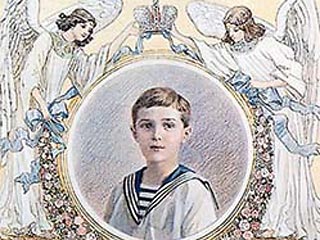
Scientific and public organizations of Yekaterinburg stated that they found the remains, presumably belonging to Tsarevich Alexy and Grand Duchess Maria - the children of the last Russian Emperor Nicholas II, shot together with the whole royal family in 1918.
"During the search work carried out in July-August in 2007, the remains of two people with traces of numerous injuries were acquired. Ural archaeologists suggest that these are the remains of Tsarevich Alexy and Grand Duchess Mary," said the deputy head of the department of archaeological research of the scientific and production center and the use of monuments of history and culture of the Sverdlovsk region, Sergei Pogolov, Serge Passes "Interfax".
According to him, excavations were conducted in the area of the old Coptyakovsky road by the forces of the Military Shield of the Military Shield, the Scientific and Production Center for the Protection of History Monuments, the Institute of History and Archeology, the Institute of Ecology of Plants and Animals, as well as the Public Fund "Foundation".
The place of searches by archaeologists was laid out on the basis of a document, which until recently was under the heading "secret". It contains a detailed presentation of the story of Yakov Yurovsky, who led the execution of the royal family.
As follows from the document, several unsuccessful attempts were made to conceal the remains of the executed. In the end, out of 11 killed, nine were doused with sulfuric acid for disfigurement and buried by the road under the bridge of sleepers in the piglet logs, and the remains of two - Tsarevich Alexy and one of the princesses - were burned at some distance from the main burial, dropped into the pit and buried. This was done so that the number of corpses did not coincide with the number of those killed in the house of Ipatiev. For additional masking at the place of concealment of the remains of two people, a fire was again divorced.
The trace of this fire helped archaeologists find a burial. During further excavations, large bone remains were found, many small fragments, teeth, fragments of a ceramic vessel for storage of sulfuric acid, nails, parts of a metal braid of a wooden box, as well as bullets of different calibers.
Scientists believe that further studies of the found remains must be openly, with the access of specialists to all parts of the found skeletons and under the supervision of the public. They also emphasize the need for representatives of the Russian Orthodox Church in conducting research.