
Translated material
Until the end of 2007, in Russia they may be allowed to take donor authorities from children
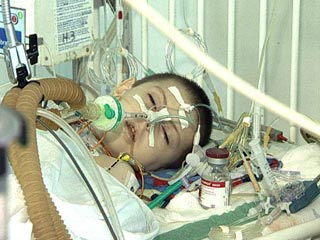
By the end of this year, an official document may appear in Russia, allowing the transplantation of children's donor bodies. The corresponding order should be prepared by the Ministry of Health, the director of the Bakulev Academician Leo Bokeria told ITAR-TASS to the ITAR-TASS agency.
Currently, in Russia, only related kidney transplants and liver segments from the parent to the child are held. And although formally the transplantation of donor organs for children is not prohibited, the fence of organs in dead children is not allowed. Due to this situation, they need to be sent abroad for treatment, which is not always possible and very expensive. The liver transplant operation, for example, costs about 100 thousand dollars.
“If the document is approved before the end of the year, our little patient Linar, who is on the artificial heart, will have a chance to wait for the donor body,” the academician said. The heart of a six -year -old boy from Ufa does not work independently, and its function is performed by a special apparatus. Like hundreds of other children in Russia, Linar needs transplantation of the donor body, and experts are looking forward to the obstacles to the operation disappear.
The Ministry of Health and Social Development plans to prepare the appropriate draft order before the end of October. Then the Ministry of Justice will have to be approved. It will also be necessary to prepare specialists in those medical centers where they will conduct such operations. Now only a few medical institutions in Russia are equipped with appropriate equipment: including the Research Institute of Transplantology, the Republican Children's Clinical Hospital and the Scientific Center for Surgery.
According to the Moscow Coordinating Center of Organic donation, 5 thousand Russians need transplanting operations annually in transplanting operations. Of these, 30% are children. According to the Research Institute of Health of Children of the RAMS, on average annually in Russia, about 200 children need a donor kidney, 100 in the liver, 150 - in heart transplant operations.