
Translated material
Foreigner: "Putin's plan" is "totalitarian democracy", which grew out of the political ideas of Russo
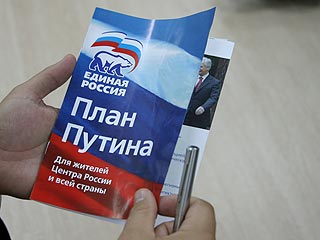
To explain what is happening in modern Russia, it is not necessary to rewrite its history - sometimes it is enough to study someone else's experience. Based on this idea, The New York Sun newspaper draws analogies between the French revolution and the collapse of the USSR. The first ended with terror, Putin's Russia is located on the same path, the newspaper believes.
The publication is based on the famous book of the Israeli scientist Jacob Talmon about how Jean-Jacques Rousseau led to the political ideas of Jacques. He called the book "The Origin of Totalitarian Democracy" (The Origins of Totalitarian Democracy). Although the name was created more likely to citizen Robespierre than to a citizen of Putin, it is perfect for describing the political system in today's Russia.
In theory, this regime allows the existence of opposition parties. In practice, they were denied access to the press, the ability to conduct a campaign, the right to protest and the right to receive satispulation in court. The suppression of peaceful demonstrations on the streets of Moscow and St. Petersburg led to the detention of two famous opposition figures, Harry Kasparov and Boris Nemtsov, the leader of the Union of Right Forces. On Monday, the Moscow court sentenced Kasparov to five days of arrest, the purpose of which is to undermine his chances to influence the elections to the Duma.
The totalitarian democracy of Russia has much in common with the Republic of Robespierrov, in which the law on suspects put the entire French people under suspicion, writes The New York Sun. In the state of Putin, the active opposition to the rule of the party "United Russia" is interpreted as a sabotage against the state. Before Kasparov was able to turn to his supporters publicly, he was arrested. This is his second stay in prison. The third time may no longer be so short.
Putin's apologists are in a hurry to indicate the difference between today's Russia and the Soviet Union. It is true that the Soviet state owned everything except a small part of the means of production, while today's Russian economy is largely privatized. The truth is that the Soviet courts were discovered by political, without even creating the appearance of the independence of the judiciary, while today Russia claims that it complies with the rule of law.
However, economic freedom, both personal and corporate, in today's Russia is strictly limited by the state. Entrepreneurs, no matter how large they are investing without a previously obtained official patronage, usually with the help of a bribe, do this at their own peril and risk. In the same way, the legal system is subordinated to state considerations. “The world helplessly looked at how the attempts authorized by the state are defended by the court, while the opponents of the regime are falsely accused and pursued - and all in the name of the people,” the American newspaper continues.
In such a totalitarian democracy, Andrei Lugovoi - a person who is wanted on suspicion of the murder of Alexander Litvinenko, poisoned in London a year ago Polonia -210 - will probably be elected to the Duma, thereby receiving parliamentary immunity. The Russian courts refused the extraction of the meadow to Britain, and he became a leading figure in the "Neophastic Liberal Democratic Party of Vladimir Zhirinovsky," writes The New York Sun. However, Kasparov, the most charismatic opponent of Putin, is now languishing in a Moscow prison.
The grotesque symbolism of this opposition may not notice the Russian electorate, "hypnotized by state propaganda", but it should not pass by governments in America and Europe, the newspaper notes. The Duma elections on Sunday will be followed by presidential elections in March. Not being "neither free nor fair", these manifestations of "Russian totalitarianism" do not deserve any recognition from the liberal democracies of the West, except for recognizing them by Russo ideas, brought to their inevitable completion, concludes The New York Sun.