
Translated material
The elections are finished - everyone is happy
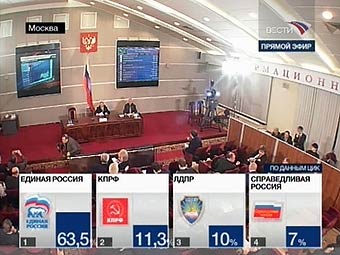
The Duma elections are completed. Their results were quite predictable. The winner was known not only at the beginning of the election campaign, but also long before it. The struggle for the second place between the Communist Party and the Socialist Revolutionaries became meaningless after Vladimir Putin headed the United Russia, and the party Sergei Mironov could not count on “silver”, but perhaps on passing into parliament. She, and even the LDPR was one of the “semi -passage” parties, which, with a successful result of the election for them, fell into the parliament, and otherwise found themselves beyond. But this intrigue, important for the party members, was clearly a smaller part of the voters.

As a result, “United Russia” are satisfied, which, without the president, at the head of their electoral list, could count on receiving an absolute (and even not for sure), but not a constitutional (or very close to it) majority in the fifth Duma. Now they can maintain control over all parliamentary committees, and their candidates who did not particularly expect to go to the Duma will receive deputy mandates. “Socialist-Revolutionaries” are no longer competitors-even in the Stavropol Territory, where they won in March, today there is a “United Russia” triumph (coupled with a criminal investigation, the defendant of which became the mayor of the Socialist-Revolutionary). It is clear that the "United Russia" dreams of a significant expansion of their capabilities-up to some version of the Presidential-Parliamentary Republic, but they are unlikely to seriously count on such an idyllic version. The role of the "Putin instrument" for the implementation of political projects, the majority of party members, in principle, are quite satisfied.
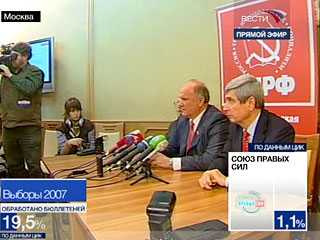
The Communists are satisfied. Of course, they counted on more, dreaming of getting 16-18 percent, but the current result for them is far from worst. The main danger - the second place of the "Social Revolutionaries" - has not become relevant. It is clear that now representatives of the Communist Party are indignant and accuse the authorities of falsifications, but according to their wording it is clear that they will not go to the system conflict with the Kremlin - it will not be risky and will not lead to anything. Yes, now they say that they can even abandon the mandates, but only if it leads to re -election, perfectly understanding that there is simply no such situation in Russian legislation in relation to a party, which received a little more than 10% of the vote. Therefore, now they will deal with a more promising business - a section of posts of deputy chairman of parliamentary committees, which they will receive by their quota.
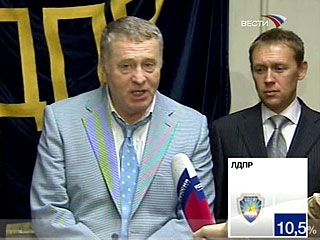
Satisfied with the "Zhirinovites". Once again, many have experienced the inevitable defeat, but Zhirinovsky once again was able to “pull out” the party, relying on his image resource. Thus, numerous businessmen who are included in the LDPR list will receive the desired deputy mandates, and the party will retain decent investment attractiveness.
The Socialist -Revolutionaries are satisfied, at the end of the election campaign dreaming of only one thing - just to go to parliament with any result: otherwise the party lost any possibility of further existence. Now it turns out that Mironov is in demand as a “limiter” for the Communist Party, which does not allow the Zyuganovites to at least partially restore the level of electoral support, which took place until 2003. Dozens of representatives of the peripheral part of the elites, who yesterday did not know how their fate would develop, are being prepared today to take places in the Duma or are glad that they were able to keep them behind them. And all because they left their former parties in time, joining the Mironovsky project, whose success was not guaranteed at all.
Enough almost all the regional authorities, which for the most part achieved the desired results. Yes, most of the heads of regions are far from the Kadyrovsky Grozny from 99% (according to preliminary data) of the “United Russia” electorate or Shaimievsky Tatarstan from “total” 85% (according to the same data). However, they, in general, coped with the tasks and are now hoping that the post -sophisticated “cleaning”, rumors about which have recently circulated more and more actively, will pass them.
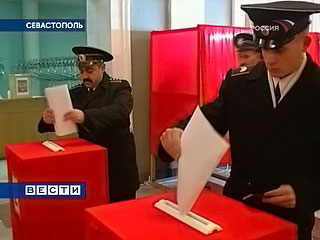
Sisper Russians are satisfied, whose votes are not too active and recklessly (the exception was the ATP of the last weeks of the campaign, pushed by the authorities into a radical opposition), participants in the election campaign fought. During the period of high oil prices, voters are very conformist and live on the principle of "if only there was no war." They are little interested in the answer to the question why in the new Duma there is no Glazy or Ryzhkov, which are personally pretty sympathetic to many of them. And the relationship between prices in stores and election results remains for them unobvious - as, indeed, for many experts.
The leaders of the small parties-spilers are satisfied, who were able to participate in the election campaign, being in demand by stronger players. Maybe they will be needed next time. The political organization, at any moment, ready to stand up for the “party in power”, offended by liberals, may be useful in the future.
The radical non -parliamentary opposition is satisfied, which can now even more actively criticize power and, at the same time, clearly explain to the temperate plans that their plans for moderate partnership with the authorities are doomed to failure. And to receive into their ranks new supporters from among the political and public figures offended by the authorities.
Liberals are unhappy - ATP and "Apple". The former expected to break into the Duma, the latter dreamed of at least 4%, which would allow the electoral deposit. Now they are terribly disappointed: if in 2003 the defeat in the Duma elections gave hope for a possible revenge, now there are practically no such hopes. However, there are so many liberals in modern Russia that their discontent is unlikely to have any serious impact on the political processes taking place in the country.
Author - Deputy General Director of the Center for Political Technology