
Translated material
Iran continues to work on suspicious nuclear projects
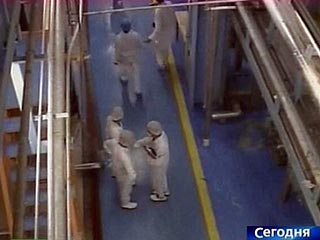
The new projects of the Iranian government in the nuclear sphere are again forced to suspect that the country's leadership is striving to create weapons of mass destruction. After the shipment of Russian fuel for nuclear power plants in the Bushera, Iran was convinced that he could with impunity to prohibited enrichment of uranium, and the probability of international sanctions is extremely low, writes The Economist (full text onthe Inopressa website).
US President George Bush tried to hide his dissatisfaction with fuel supply to Busher. “If the Iranians accept this uranium for a civilian power plant, then they do not need to learn to enrich,” he explained his position. Theoretically, this is true, but the Islamic Republic refuses to follow such a logic.
By sending uranium rods to Busher, Russia breaks down further attempts by the UN Security Council to increase pressure on Iran and contributes to the further spread of dangerous nuclear technologies. And at present, many Middle Eastern governments intend to develop nuclear energy, recalls the publication.
President Mahmoud Ahmadi Nezhad claims that his country will not stop the production of fuel for nuclear power plants on its territory: to 3 thousand centrifugs, which are already working at the enrichment enterprise in Natanze, will add a total of 50 thousand more. This, according to officials, will ensure a new 360-megavatta reactor in the province in the province of low-enriched uranium in the province Khuzistan. At the same time, highly enriched uranium, which can be obtained thanks to centrifuges, is suitable for the production of warheads.
The research center in Arak can develop an atomic bomb
The Economist considers such projects to be extremely suspicious. Iranian engineers are already building a 40 -megavatt “research” reactor in Araka, which is frighteningly great for research, too small for the production of electricity, but is ideal for the production of plutonium - another component of the bomb - from the spent fuel.
At the same time, local experts have no skills to create a reactor, according to Gary Seymour from the New York Council on International Relations. So if Iran does not receive help from abroad, Darkhovin will only be an occasion to continue work to enrich uranium.
It is noteworthy that the attitude to supplies to Busher has changed, although Iran has not moved from its position. In 2005, Russia said that it would not send fuel until questions remain about the peaceful intentions of the Islamic Republic. However, the inspectors still have many questions. Nevertheless, Moscow announced the decision to ship uranium rods even before the assessment of American intelligence, which admitted that Tehran has stopped a military nuclear program since 2003.
Having held fuel for Busher, Russia was able to put pressure on Iran in an atomic confrontation - now this opportunity has disappeared. Bush’s threat to strike at the country's nuclear objects has become much less serious since the national intelligence report stated the peaceful nature of Iranian research.
Perhaps Moscow in its decision was guided by financial motives, according to Mark Fitzpatrick from the London International Institute for Strategic Research. She wants to look like a reliable supplier to sign new contracts for the construction of reactors. America, a number of European countries, Japan and other states consider the possibility of supplying nuclear fuel to Iran and work with waste to prevent the development of Iranian nuclear technologies. However, Russia gives Tehran to understand that you can get foreign help and the right to engage in its own suspicious projects at the same time.