
Translated material
The UN Security Council did not make a decision on Kosovo
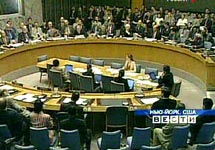
At an emergency meeting of the UN Security Council, held on Monday, no decision was made on the problem of unilateral proclamation of Kosov’s independence. According to the Air Force, Russia, China, South Africa, Vietnam, Libya and Indonesia opposed the recognition of the sovereignty of the region. Other members of the Council of People's Commissars - Belgium, Croatia, France, the USA and the UK - said Kosovo should become an independent state.
The Secretary General of the UN Pan Hi Moon made it clear that it would not initiate the process of recognition by illegal sovereignty of Kosovo, as Serbia and Russia require. “The independence of states is recognized as states, not a secretariat,” he said after a meeting to reporters. “I will not say whether it is legal or illegally.”
In the Council of People's Commissars, the President of Serbia Boris Tadich took part, he once again stated that Serbia was considering the Branch of Kosovo as a violation of international law, and urged participants in the meeting not to create a dangerous precedent. In his speech, he also emphasized that, without doing anything for the suspension of the Kosovo department, the Security Council tells the whole world that state sovereignty and borders are not inviolable.
The Serbian president insists that the region’s separation is illegal, since it did not receive the approval of Belgrade, who considers Kosovo as an integral part of the territory of Serbia. The country's parliament unanimously annulled the Kosovo declaration of independence.
Tadich once again noted that Serbia does not intend to use force to resolve the Kosovo problem, but at the same time stated that Belgrade never recognizes the independence of the region.
The constant representative of Russia at the UN Vitaly Churkin called the Kosovo Declaration on Independence by a gross violation of the norms and principles of international law. The representative of China also expressed concern about the actions of the leadership of Kosovo, and said that they challenge the basic provisions of international law.