
Translated material
In the house on Korolev Street, a homemade bomb with a capacity of 25 kg in TNT equivalent could explode
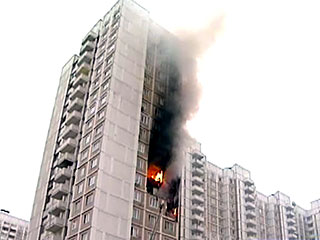
According to the results of the preliminary investigation, the cause of the explosion in a residential building on Korolev Street in Moscow was a bonded explosive device filled with ammonia nitrate, the capacity of which was 25 kg in Trotyl equivalent. This was written by Komsomolskaya Pravda with reference to an unnamed source in law enforcement agencies. According to him, the explosive device that worked in the apartment could not come spontaneously.
Recall, on the eve of Moscow, Yuri Semin, said that explosive equipment did not find traces of explosives at the explosion. The investigation was inclined to the version of the gas explosion, however, as it turned out today, the investigation could exclude it.
- Families of the dead will receive compensation for 150 thousand rubles
- One of the dead studied at the Aerodynamic Faculty, he could prepare rocket fuel
- Luzhkov tightens the requirements for repairs
The explosion, as experts found out, thundered in the apartment of the student Kirill Shiryaev, to whom a friend Nikolai Mironov came to that day. Both guys died.
“In order to study the causes of the explosion, two examinations were scheduled for the investigation in the given case - construction and fire engineering,” the official representative of the Investigative Department of the Investigative Committee at the Moscow Prosecutor's Office (SCP) of the Russian Federation in Moscow told Interfax . He emphasized at the same time that "during the inspection of the scene of the incident, no traces of explosives and their remains were found."
There were several versions of the state of emergency - from the explosion of gas during the restoration of Kolchuga, which Cyril may have been engaged (he was fond of historical reconstructions), until the bomb of the time of the Second World War, which Mironov could bring, a connoisseur of weapons from the time of the Great Patriotic War.
“The epicenter of the explosion was in one of the rooms of the three -room apartment on the 11th floor,” says the interlocutor of the newspaper. “Judging by the nature of the explosion, the work of the explosion, most likely, was on the table. And its impact was local - the wave went up and down, destroying the ceilings. And then - along the path of the least resistance - went to the external walls and carried them out.”
There was also another version: during the repair in one of the apartments, the cylinder with gas rushed, but it was shaved quickly. “Suppose that a 40-liter cylinder with propane exploded. To cause such destruction, the gas had to completely flow out, fill all three rooms, and then rush from, say, a random spark or a lit match. Then a fire ball would burst out of the window and a strong fire would immediately start. And in this case, the walls were collapsed. By the way, external external explosions. The walls and floors would not collapse at all.
“This suggests that at the time of the explosion the dead students, it is likely that they were just made a bomb,” the source of the newspaper said in law enforcement agencies.
On the fact of the explosion, a criminal case has been instituted under part 3 of article 216 (violation of safety rules during construction work, which entailed by negligence the death of two or more persons), which provides for a punishment of imprisonment up to seven years.
Families of the dead will receive compensation for 150 thousand rubles
The families of those who died as a result of the explosion of the house on Academician Korolev Street on April 4 will receive 150 thousand rubles each, and they will be wounded by 50 thousand rubles. The corresponding decision was made on Monday of the Moscow City Hall, the New Region reports.
In addition, the State Unitary Enterprise "Ritual" organizes the funeral of the dead, having paid for the services for each in the amount of 32.7 thousand rubles.
As a result of the explosion, 18-year-old Kirill Shiryaev died, his guest 29-year-old Nikolai Mironov and 35-year-old neighbor Elena Trofimchuk. Several apartments were injured, about a hundred residents of the house are temporarily placed in hotels.
One of the dead studied at the Aerodynamic Faculty, he could prepare rocket fuel
On April 4, Lidia Smirnova came home at about 18:00 Moscow time (the woman worked as a manager at one of the capital's enterprises). Her son Cyril was at home with a friend Nikolai.
According to some reports, with them in the apartment was also a friend of Kirill, 19-year-old Olga Vinogradova. But she refutes it herself. According to Olga, she learned from the television news about the explosion. Olya Vinogradov was kept in the police all night from Sunday to Monday.
The girl’s father told the Moscow Komsomol member that she was treated very rudely, threatened, demanded that Cyril were preparing a terrorist attack.
Olga said that they met Shiryaev six months ago at the concert of the Alice group. Relations began to develop. Cyril introduced her to his friends. Olga also knew about the hobbies of the young man. The fact is that recently Cyril has become very interested in explosives.
Perhaps this interest in the guy somehow awakened his studies. Shiryaev was engaged in MFTi, at the Aerodynamic Faculty. According to Olga, Cyril with pleasure visited those objects where it was said about the topic of interest to him. During the explosion, experts did not find any traces of explosives in a destroyed apartment. There were also no smells there. However, the guardians believe that students could use substances in chemical experiments for the manufacture of rocket fuel.
It should be noted, according to media reports, two of the three who died in an explosion in a residential building were activists of a radical movement against illegal immigration (DPNI).
Experts: Gas was not the cause of the explosion in a residential building
Specialists-explosion equipment of the FSB and the Ministry of Internal Affairs believe that the cause of the explosion in a residential building on Akademika Korolev Street in Moscow was not gas, a source in the capital’s law enforcement agencies said on Tuesday RIA Novosti .
"Investigative actions and examinations conducted at the moment indicate that the cause of the explosion in the house on Korolev Street is not gas," the source said. According to him, the remains of gas cylinders, which, as previously, could cause an explosion, have not yet been found at the scene of the explosion.
In addition, the source continued, as a result of the examination, particles of a substance were found, which "could be an integral part of the explosive device."
At the same time, he did not call the substance that experts discovered, but added that it is well known and is used to make explosives.
“The work in this direction continues, and in the near future it will be established that it exploded in the house on Academician Korolev Street,” the agency’s interlocutor expressed confidence.
On the eve of the first deputy head of the Main Directorate of the Russian Emergencies Ministry for the city, Major General Viktor Klimkin told reporters that experts working at the explosion site did not find the remnants of gas cylinders, who, allegedly exploded in one of the apartments.
“So far, the blockages have not yet been dismantled. There are floats of two floors. It is necessary to raise the slabs to see what is under them,” said Klimkin.
Klimkin found it difficult to say, which served as the immediate cause of the explosion. “There really was a gas -air mixture that exploded. Now experts of the Central Internal Affairs Directorate, the FSB, and the Ministry of Emergencies are working on the reasons (explosion),” he said.