
Translated material
Abbas demanded at a meeting with Olmert to free three prominent figures of Fatha and Hamas from prisons
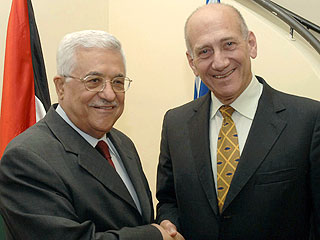
The chairman of the Palestinian National Administration (PNU) Mahmoud Abbas demanded at a meeting with Israel Prime Minister Ehud Olmert to free three senior Palestinian politicians from prison.
According to the adviser to the head of PNN Saib Arikat, we are talking about the leader of the Fath group on the western bank of the Jordan River Marvan Barguti, the speaker of the parliament and a member of the leadership of the Islamic movement Hamas, as well as the head of the People’s Front of the Liberation of Palestine Ahmed Saadat, ITAR-TASS reports.
Information about how the Israeli side reacted to this requirement has not yet been received.
Negotiations of Abbas and Olmert are held in Jerusalem. This first meeting, after the Israeli Prime Minister made last week that he would leave the post of chairman of the Kadim party in September , which leads the ruling coalition in Israel.
Abbas and Olmert are discussing the framework of a possible peace agreement between Israel and Palestinians on the eve of the American Secretary of State Condolizes Rice, outlined on August 20, the visit to the Middle East.
According to Israeli sources, the Americans put pressure on the sides, trying to force them to come at least a partial transaction. Olmert said that he was allowing the possibility of reaching a compromise on the problems of borders and refugees, but he completely eliminated the parties to the parties to the agreements on Jerusalem until the end of 2008. Abbas negatively reacted to this statement by the Israeli prime minister, emphasizing that "he would not sign any agreement without Jerusalem."
Israeli Foreign Minister Cipi Livni, who is considered the successor of Olmert, is in no hurry to conclude a deal with the Palestinians. Livni fears that such a step can negatively affect her efforts to form a future government coalition. The elections of the new leadership of Kadim will be held on September 17.
Recall that at the meeting of the President of Israeli Shimon Peres with the head of the Palestinian National Administration, Mahmoud Abbas on July 22, which some media called the "historical", it was decided to conclude a peace agreement before the end of 2008 , as promised at the Middle Eastern Conference in Annapolis in November 2007.
However, regional observers believe that the inter -party struggle in Israel will make adjustments to the peace process, which will most likely be stalled. In the case of early parliamentary elections, which is insisted by the leader of the Right Opposition Bloc "Likud" Benjamin Netanyahu, negotiations can be postponed for a long time.
This prospect is concerned about Kondoliza Rice and her assistants. They fear that such a development of events can provoke a new wave of violence in the region and the further growth of the popularity of Hamas Islamists.