
Translated material
Transnistria stood in line for recognition: the positions of Chisinau and Tiraspol still do not coincide
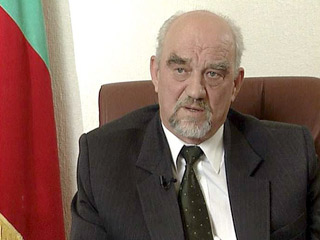
All three three involved parties - Moscow, Chisinau, Tiraspol, but experts say that the settlement of the conflict on the Dniester will stop at Chisinau’s negotiations with Tygrazepol, since the positions of the latter still do not coincide, do not coincide. Moreover, the resolution of the conflict directly concerns the fourth side - Kyiv, since Transnistria, unlike the Caucasian republics, does not have a common border with Russia. And without Ukraine, as an intermediary, the conflict will not be resolved.
On the eve of the Bocharov stream, Dmitry Medvedev accepted the leader of Transnistria Igor Smirnov. After the meeting, Medvedev announced the signing of the decree on the independence of Abkhazia and South Ossetia. The Transnistria, as you know, did not fall into this list, but, according to the leadership of the unrecognized republic, does not intend to abandon the course of independence.
- Lavrov: Not a single question was as close to settlement as a conflict in Transnistria
Transnistria is not against the settlement of the conflict, but on conditions that would satisfy all the parties. This was announced by the "independent newspaper" in the Security Council of the unrecognized republic.
As the President of Transnistria Igor Smirnov said, the position of Tiraspol will continue to rely on the results of the 2006 referendum, which, as you know, confirmed the unanimous desire of the people of the region to live regardless of Moldova with a possible subsequent integration into Russia. Igor Smirnov supported Dmitry Medvedev’s position regarding the world order based on international law.
In Tiraspol, in turn, they share the joy of South Ossetia and Abkhazia about the recognition of their independence by the Russian parliament, on the other hand, they regret that Transnistria was not included in the list of lucky ones. Although they understand there: the reason is the absence of borders common to Russia. And while Transnistria borders on Ukraine, it will depend on this country how and when the Transnistrian issue is resolved.
“Without the consent of Ukraine, finding a settlement formula that would suit the parties to the conflict, as well as intermediaries in the relevant negotiations, is difficult,” said Grigory Marakutsa, representative of Transnistria, general secretary of the Commonwealth “for Independence and Rights of Peoples”, which included South Ossetia with Abkhazia.
Measures such as the economic blockade of the region, organized by the Moldovan leadership, as well as blocking measures in relation to the leadership of the unrecognized republic, according to the Marakutsy, cannot be regarded as steps aimed at increasing the confidence of the parties to each other. On this principle, by the way, the peace plan of Vladimir Voronin is based.
In Chisinau, over the past year, they talk a lot about this plan. About him, as well as the bill on the autonomous status of Transnistria, reminded Medvedev at a meeting in Sochi Voronin. According to the Moldovan leader, said upon returning home, the Russian President agreed to put this bill the basis of the coming negotiations of the leaders of Moldova and Transnistria in September.
The fact that such negotiations are really prepared was confirmed by a source in the Russian Foreign Ministry. He noted that Dmitry Medvedev’s meetings with Vladimir Voronin in Sochi "were consulting in which the parties were reminded of their obligations in relation to each other and Moscow."
But, the source said, "Smirnov’s official meeting with the President of the Russian Federation will take place, as planned, in September." In his opinion, Moscow may offer the parties to return to the famous "Kozak memorandum" , which, as you know, was first approved and then rejected by Voronin in 2003.
The point that played with the document prepared by the Kremlin was an angry joke, was the installation that Russian peacekeepers remain in Transnistria for another 20 years. The authors of the project suggested that during this time it would be possible to really settle the problem that exists on the Dniester. Now, as you know, one of the conditions of Russia, which is adopted by Chisinau, is the neutral status of Moldova, excluding the country's entry into military blocs, including NATO.
A large -scale plan for changing territories has already matured in the minds of experts
The Transnistrian political scientist Alexander Gorozhn considers the fact that Medvedev still persuaded Voronin and Smirnov to resume the dialogue. But, in his opinion, the main intrigue is that it will be put on con. It is clear that the parties will have to do something, but what?
The thoroughbred, who previously headed the Transnistrian delegation in the mixed control commission (SCC), emphasized that Tiraspol would agree to the confederate structure of the general state, provided that guarantees from Russia and other intermediaries - the OSCE, the EU and the United States to withdraw from the State Union if Moldova changes its status.
This refers to the prospect of the unification of Moldova with Romania, which is considered real in Bucharest. Moreover, the leaders of Romania do not exclude the exchange of territories. According to President Romania Trajan Basescu, Transnistria can be exchanged for Northern Bukovina (today as part of Ukraine).
He believes that in Kyiv there are complaints about the return of Transnistria to Ukraine, "but at the same time" forget about the return of Chisinau South Bessarabia and Northern Bukovina - territories that the former Ukrainian SSR received after the Second World War. " This opinion was published in the Romanian newspaper Ziua in April, and the other day the same publication continued the topic.
The former head of the Romanian Security Service Jel Voikan Voikulescu believes that after the summit of the North Atlantic Alliance in December this year, "the western part of Ukraine will still join NATO, for which it will become the" Trojan horse ".
It is after these events that it is possible to change all the borders of Ukraine: Russia will regain Crimea, donated by Khrushchev, and will be vital to annex to himself and Transnistria. In exchange, Moscow will return Moldova Budzhak (southern Bessarabia). "In this context, concludes Voikuleska," Romania will pick up the northern bugovina. "