
Translated material
"Surviving, remembering all this, not so simple"
Member of the uprising in the concentration camp by Sobibor Alexei Vaitsen - The New Times
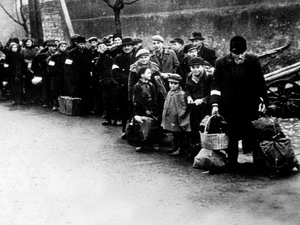
In May 1942, the train brought you and other prisoners to Sobibor. Remember this trip and day of arrival?
We all knew that we were going to the destruction camp. They knew that they were being taken to kill, that when we arrive, our life would end. Four days brought us, then driven to the camp platform, separated the sick and old from the young and took it off ...
Back in the train, I began to wait for death, and then all the time, every minute, for a second I knew that they could kill me. After all, you could have killed simply because you looked up at the guard, did not hear the order or just the boss was in a bad mood ...
Until October 1943, more than a year, all my existence was permeated by the expectation of death. Every moment.
And then we rebelled
How did the day go in the camp?
They killed us. They fed those who could still work. They killed again. At five in the morning you are raised and you work until the evening, expecting someone to kill you for a fault or for the sake of entertainment. Echelons arrived with people, and every day they were destroyed and burned, leaving very few people to work ...
Until May 1943, such echelons came daily. The Germans will take away five to ten people, and the rest in the murderer. All - men, old people, women and children - were driven into gas chambers and after half an hour they carried corpses from there ... And one of the guards looked in a special window how people died ... (Pause.) And then we rebelled against them. I was one of these rebels - people for whom death was better than this existence, complete fear. Everything hung in the balance. It’s like a card game: you go wa-bank, and there is either a pan, or disappeared. Either they will doubt us, or we are them.
Was there a friendly relationship between prisoners in the camp?
All were equal before this world of death. They shot, beat, killed every day. It was impossible to be friends in this world. Friendship, or rather, a partnership, arose only when Alexander Pechersky appeared, who began to prepare an uprising. And we created an underground committee.
What helped you survive on those days when you did not know that there would be an uprising when you could not have hope?
The thought helped: I have to break out of here. I believed.
And those who did not believe in it - what supported them?
Those all died. As soon as Vera disappeared into liberation, a man died.
Do you remember your first meeting with Alexander Pechersky?
He was brought to the camp to destroy, like everyone else. If he had not appeared there, he had not lifted this uprising, did not plan everything correctly, did not calculate to the smallest detail, we would be sent to gas chambers all. And I would not talk to you now. We killed the Germans one at a time - fourteen people. The first was killed by the deputy head of the camp. His name was Johann Neumann.
You killed them, of course, without a doubt.
What doubts? If we had not killed them, they would have killed us. And then we fled ... Many prisoners died on wire fences - they torn them with their bodies. People with shouts "Hurray!" They rushed to the barbed wire. Others followed them. They shot on our backs ...
About two hundred people remained in the camp after the uprising. They could not run?
Yes, some people could not run, they were so exhausted. All of them were soon destroyed. How did the local population react to the escaped prisoners? It supported us.
However, the book says that the local population did not always treat the Jews who fled from the camp: armed detachments could rob or shoot, and civilians could give out.
There have been such cases. Yes, there were ...
In 1965, in Krasnodar, you spoke at the trial of former Vakhmans, including Zaitsev, whom you managed to find out. How did this Vakhman Zaitsev behave in court, learning those whom he beat and tortured in the prosecutors?
Zaitsev tried to escape. He is a beast. How many he shot children, old people and women ... and in the process he tried in every possible way to justify himself ...
I read that on such ships many accused behaved very confidently. You say that it is very difficult for you to remember this, and they were not so tormented by memories. At all the processes where the prisoners had to testify against their executioners, the latter often kept much more confident - they were on the other side, their experience was not full of such a nightmare.
On the process, they behaved not just confidently. They seemed to have no doubt in heart that they were supposed to kill us. They thought that they were supposed to have mercy on the court, understand them, enter their position ... How they twisted them, so as not to get to jail from the bench of the defendants, how they wanted to be saved, how they assured that they simply fulfilled their duty. (Pause.) All there were cannibals ...
Among the guards or camp authorities was someone who behaved at least somehow soilly?
No, everything, everything behaved like animals. A normal person could not work there.
Have you ever talked with them?
No, what are you. If you meet with one of them with your eyes, get a whip. And this is at best ... Still, it is almost unbelievable that we managed to raise an uprising there, we managed to win.
When I ask you about life in the camp, you immediately begin to say how you got out of there.
Yes, when I think about it, I immediately remember how the whole people rose to the uprising, realizing that death is inevitable. And about what things were doing there with people ... no ... such a way has passed ... to survive, remembering all this, not so simple.
What did your life consist of there - because you spent more than a year there?
Life (laughs) ... Every hour we were waiting for death and saw death. That's our whole life ... How could we get out of there alive? What helped us? Maybe the fact that the truth was on our side? Or God? We managed to leave the power of youth, by the power of faith that we should get out of this place, although this is incredible.
Many of the former prisoners later went to honor the victims to Sobibor, which now became a place of memory.
I was enough on that land. Come there again - no, this is not for me.
Without the right to get captive
The head of the uprising in Sobbor, Alexander Pechersky, having got into the USSR, was first enrolled in the penalty battalion, and only after the injuries received a certificate that he "redeemed the guilt before the homeland."
Such was the law. He was an officer, and the highest military ranks had no right to be captured. It was good for us, ordinary.
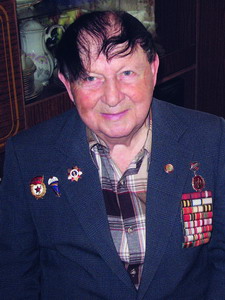
I did not count on it. And he could not demand this.
Why?
Such a law was - we did not have the right to be captured.
Not a very fair law.
It was a law ... And after the uprising I got to the partisans, then in the current army, I took Brest, after Brest, with the army, I entered Poland, we took Danzig, then the Obser force ... See - I returned to our army, fought and survived. He made 998 parachute jumps. I was lucky.
Do you think that you were lucky?
Yes. Of course ... You see, life is an expensive thing. You have to fight for it.
When you returned after the war to the city where you spent your childhood, did you find relatives?
All my relatives were shot by the Germans.
Meet to kill
Thomas Blatt, one of the prisoners of Sobibor, met in 1984 and talked with Karl Frenice, commandant, one of the most brutal killers in this camp. He was convicted only in 1966, but in 1980 he was released. Would you like to meet this person? What questions would you ask him?
I could meet him only to send him to the next world. I would not talk to him. No. In this conversation, published in the book, Frenzel claims that he dreams of a camp every night. It should have dreamed ... It was a beast: if he noticed some disobedience, if he didn’t like something, he took out a weapon and killed ... It’s hard for me to talk about it as well because some of our tormentors-of those who killed thousands of people, killed his own hands, killed him with pleasure-are still alive. And they have no place among the living ... And some were liberated and calmly died in their families. Some were not found. Therefore, it is even harder for me to remember that time ...
Why did Frenzel slow down?
He had to die in prison.
Gustav Wagner, one of the executioners of Sobibor, also hid from justice until 1978 ...
(Pause.) I do not want to talk about him ... He torn into pieces of babies in front of his mothers ... He should not be said to him at least a word. You can’t forget it. But it’s impossible to remember ... Now I tell you and ... I’m shaking all ... After all, I lived all this, it all happened to me.
Kurt Bolander, also one of those who worked in this camp and took an active part in the extermination of people, was hiding until 1961.
He set dogs on people, forcing them to pull out pieces of meat ... He called his dog - a man (Mensch), and people with dogs. When he set, he shouted: "Man, grab the dog!" What I had to endure, the Lord God knows. All, all this is raging in my head ... I still see everything. But telling about it ... I can't. To tell, you need to move away from this. I did not move away.