The world in South Ossetia can be considered restored only if you believe in official sources. If you look with your own eyes and ask Georgian refugees - a different picture
August 22
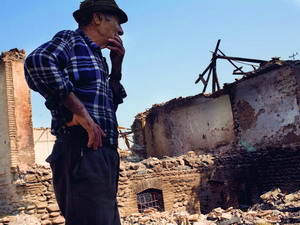
Gia, along with the few in the village of Karaleti, saw the inhabitants how the endless column of Russian military equipment drove past their burned houses on the road to Tskhinvali. This evening, the old people remaining in the village sheltered, and in the light of the candle, we drank for a long time for the world, which, it seemed, had to come the next day. But the next morning broke hopes: the troops left, the peacekeepers remained. The territory 26 kilometers wide between Gor and Tskhinvali became a buffer zone, without the right to any control of the Georgian authorities, and therefore without any rights for residents in this zone. The next night, the first house in Karaleti burned down the next night, only 500 meters from the Russian post, as if on a edification to all those who believed that the peacekeepers would protect.
Residents of most villages in the buffer zone are still cut off from the world. Rare food supply reaches only in villages located near Gori. 300 g of sugar and 1.5 kg of flour, one loaf per person. Further 15 km from Gori no one goes: neither religious nor international organizations, not It depends on the fact that three posts of peacekeepers are worth from Gori to Tskhinvili.
August 24
Nino Garly in the village of Tkaviwi lies paralyzed after a stroke since August 12. No matter how hard we tried to call her ambulance from Gori, no one came. “This area is under the auspices of the Russians,” the employee of one of the Georgian humanitarian organizations explained to me. On Sunday, August 24, we saw about a hundred people in Tkvai, but all of them scaredly hid in the yards as soon as we heard that a car was traveling along the road. “Ossetians come every day in the evening,” these people said. - They rob the remaining houses, we are hiding in the gardens at that time. Nothing has changed, our life is still in danger. ”
August 25
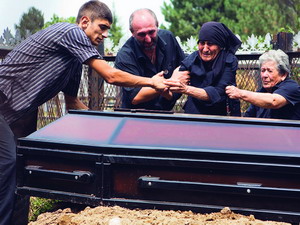
By Monday, about half of the inhabitants returned to Karalet, and the relatives finally were able to dig out of the garden and bury Alik Bibilashvili executed by the Ossetian militias. For two weeks, the old people who remained in the villages physically could not bury their dead in the cemetery, and they were afraid to move away from the house. There are 16 such graves in the gardens and cellars - 16. The bodies are buried very close to the surface, and people talk about the possibility of an epidemic.
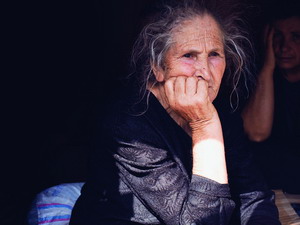
On Monday, August 25, people whose Ossetians call militias, and Georgians - militants came to the villages of Eredvi, Ergneti, Nikozi, Megvrekisi - all in Pyatikylom The three zone around Tskhinvali. The seven of the last residents of Eredvi, who reached Monday at night to Tyrdznisi, told me about this. They drove part of the way by the car of Ilya, the former traffic cop, one of those Georgians who, risking themselves and not counting on the help of the government, are trying to save refugees. The refugee from Eredvi Natela (an elderly woman gets out of the car at the Georgian post) says: “For three weeks now, the corpses of the dead old people have been lying on the streets. Those closer to our houses, we dragged into houses, but there are many more in the village. Their bodies are eaten by dogs, and we spent all 20 days in gardens, ate only peaches. But there they found us, the boys came from Tskhinvali, with the words: "This is our land, leave now, otherwise you will die." The peacekeepers traveled around the village and everyone saw: they saw how they burned and shot at people at home and turned away. We left at night, and the remaining houses burned behind us. ”
August 26
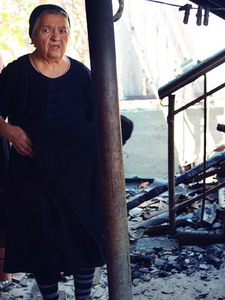
In the evening on Tuesday, I stood on the road leading from the village of Chertuli to Tskhinvali, and saw the smoke in the vicinity of Tskhinvali (from the devil about 8 km to Tskhinvali along the country road). Three old people from Megvrekishi wandered along the way. One of them, Demetrius (with bruises on his hand and on his face, with a receiver in his hands - photos on page 31), said: “We are the last who stayed in the village, our homes are burning, a little remained whole, but they said that there should not be a single one. Yesterday they beat me with a butt with the words: "You are Georgian, you must die." These were not Ossetians, I can distinguish speech, these people came to the BTR in Russian form, shot home from machine guns. They seemed to be furious yesterday, before the old people had not touched, but suddenly we began to interfere. ” Near Megvrekishi there is the main post of peacekeepers, the last to Tskhinvali, And according to the elderly, in the field in front of the village there are more than 100 units of military equipment. A little later, two more old women and the old man who came from Ergneti, who came in the devil, became in the devil. Lali (in a blue vest - in the picture on the right) says: “The militants go to the houses and shoot inside, I don’t know if there is someone or not, or they scare those who are hiding. It became so scary that it was already impossible to stay in the village. There is nothing left there except death. ” Refugees say that on Monday, on Monday, Ossetian militias took four men from Tyrdznisi to Tskhinvili, and on Tuesday they set fire to two houses in Tkavivia (7-8 km from Tskhinvali).
August 27
All Georgian refugees who managed to return to their homes in the hope of peace, already on Tuesday evening, fled back to the schools and camps of Tbilisi. The Georgian government left its people living in the 26-kilometer zone to the arbitrariness of peacekeepers, and the peacekeepers themselves sometimes pass along the central road, they clearly give complete freedom of action to the Ossetian militias, Ossetian police and simply groups of armed people, about which they are not known who they are. Georgian refugees, whom the author met from Monday on Wednesday, say that ethnic cleaning in the five -kilometer zone around Tskhinvali was carried out everywhere. People say that no one lives in Georgian villages there. Georgian peasants are increasingly talking about the partisan war, they say that they can no longer allow to kill and burn on their land, and it is quite simple to get weapons in these places. So for the buffer zone, the war is still ongoing.