The first precedent of the dismissal of the teacher for the publication in the press
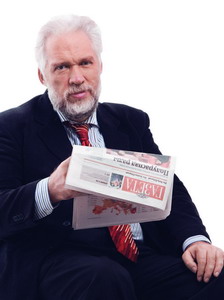
On September 22, a professor at the Russian State Social University (RSSU) Boris Sokolov was supposed to give another lecture on the course “Physical Anthropology”. He will not read: the professors were forced to write a statement about the departure after the publication of the article in the newspaper Gazeta about the results of the war in Georgia
The historian and sociologist, doctor of philological sciences Boris Sokolov will no longer teach at the Russian State Social University. The rector urgently changed the schedule, transferring his load to another teacher - lectures and seminars on the subjects “Physical anthropology”, “Modern paradigms and scientific approaches in sociology and social anthropology”, “Study of regional identity”, “Anthropogeography”, “Philosophical anthropology”. The surname of Professor Sokolov disappeared from the schedule for students on September 17.
The leadership of the university to the professor stated that people with a different view of life and events in the country cannot teach at the university, which is reflected in a state position, Boris Sokolov himself told The New Times. “They began to put pressure on me from the end of August. I was told that the presidential administration demands my dismissal. Our university leadership, if desired, will always be able to survive me. What could I do? " - says the professor. According to him, no formal claims were made as a teacher. “There were some discontent with publications, but it was an initiative within the framework of the Russian State Service. In this case, the rector himself asked to pass through the dean that he regrets this whole story, ”he added. There were no concrete accusations: “It was only about the article in the newspaper Gazeta. Moreover, in this article it was not even indicated that I am a professor at the Russian State Service. Obviously, they (the presidential administration. - The New Times) found this when they “ran into the newspaper,” says Sokolov. He was not named the surname of the man who called twice to the rector from Old Square.
Do not meddle
An article entitled “Li Saakashvili” was published in the “Gazeta” on August 19, 2008 with the subtitle “The results of the war in Georgia are not as clear as official propaganda draws them”. Boris Sokolov wrote that "the current Russian Georgian war with its external lightning and success for Russia, most likely, in the long run, is the military-political and diplomatic defeat of Moscow." The source of The New Times in the newspaper "Gazeta" said at the beginning of last week that the dismissal of editor -in -chief Peter Fadeev was expected. From August 28, he was on vacation. According to Sokolov, the owner of the publication (Vladimir Lisin, the owner of the Novolipetsk Metallurgical Combine. - The New Times) also called with comments on the “discrepancy”. Pyotr Fadeev told The New Times that he was still holding the position of chief editor. As for discontent from the presidential administration, then, according to the chief editor of Gazeta, he does not know anything about this: “Now the editors are not made to the editors. Only when they are “alive”, like Venediktov, come across eyes. ” However, other sources in the newspaper claim that the chair under the chief editor was still staggering, and precisely in connection with the publication of Sokolov. But, probably, the Kremlin and the owner of the publication somehow agreed and decided not to aggravate the situation. The General Director of Gazeta Andrei Sidorov refused to comment on the information about the call from the presidential administration, noting that Sokolov was not a regular author. Regarding further cooperation, Sidorov said that it is possible: “If he brings something, maybe we will publish. The question is - will it bring? " At the same time, the general director and representative of the owner of the “Gazeta” noted: “We try to be without extremism and balanced. But we all live in a competitive environment, the law is written for everyone, and we must respect it. ” The editor-in-chief Peter Fadeev later cooperates with Boris Sokolov: “I don’t think he will want to publish anywhere.” Sokolov himself says that he was advised to "do not meddle" in the editorial office.
A pleasant person
“We returned to Soviet times - you see what we have the limits of freedom of speech,” says Professor Sokolov. In the meantime, they say that Sokolov himself submitted a departure application, and he was immediately signed. At the same time, the rector Vasily Zhukov immediately after that ended up on a business trip in China, and there was no connection with him at the time of signing the number to the seal. Representatives of the scientific community from other universities pay attention to the fact that the leadership of the RSSU has always been distinguished by sovereign views. And they suggest that the direct indication of "Fire!" The presidential administration was not received, they only expressed dissatisfaction with the professor who writes the self -sided articles, and this was enough. I.O. Dean of the Faculty of Sociology of the Russian State Service for RSCU Dina Tanatova told The New Times that she did not know anything about a call from the presidential administration: “Boris Vadimovich Sokolov resigned of his own free will. And I am very sorry that he wrote this statement. He is a very pleasant person, respects among students. ” Tanatova believes that "work in the university of him (Sokolova) does not attract so much, this is not the main thing in his life."
Censorship in universities
This is the first case of direct repressions for the performance in the press, notes the supervisor of the Higher School of Economics Yevgeny Yasin. True, Professor Yasin recalls that for dissenting the teachers of the Faculty of Sociological Faculty of Moscow State University1 had previously fired, but this did not happen so frankly: “At the social faculty of Moscow State University there were students' performances, support for colleagues. And now we all were alone. ” Evgeny Yasin calls the actions of the rector with anti -democratic terror: “I know that this happens everywhere, and to us (to the Higher School of Economics. - The New Times) call. They don’t call me, but they clearly hint to my rector, they say something. He speaks out, talking with people. But from this, no one draws such conclusions from this. ” “A normal rector to such telephone calls replies:“ We are with all my soul with you, dear Kremlin, but we can’t do anything with the professor, because competitions, competitive deadlines, special legislation, ”says Alexander Auzan, professor of the Faculty of Economics of Moscow State University. He believes that, despite the pressure, Boris Sokolov should not have written a statement about leaving: “The professor cannot be dismissed like that. I know real cases when rector defended employees. Political dismissals pass only when a person agrees to abandon his rights. ”
“This is sad,” says Nina Sorokina, candidate of philosophical sciences, dismissed from the sociology of the Moscow State University. - Each teacher, the scientist has the right to his point of view. This is established by the Law on Education, recorded in the contract that we sign with the administration. We have freedom of teaching, scientific research. If in practice this academic freedom is violated, then something needs to be done. For example, contact the Commissioner for Human Rights. We are actually returning to those times when there were enough rumors, judgments to deal with an objectionable person. ” According to Sorokina, against the backdrop of the reform of higher education and university reduction, this trend will only intensify and teachers will more and more depend on the administration.
From the article by B. Sokolov “Li Saakashvili lost”, “Gazeta”, 19.08.2008
“... If there was no Georgian blow to Tskhinvali, Moscow would have found another reason. Most likely, they should have been an operation of Abkhaz formations against the Kodor gorge. The Georgian troops could not help but react to her, and this would give Russia an occasion to accuse Georgia of using prohibited troops and weapons in the security zone and throw the 58th Army for the peacekeepers for a rapid march on Tbilisi. A marine corps of the Black Sea Fleet would land from the sea. <...> Saakashvili would be overthrown, and the only pro -Russian Georgian politician Igor Giorgadze would proclaim the president (not without reason he is now in Abkhazia). ”
“Pro -Russian forces established control over the Kodor gorge, conducted ethnic purges in Abkhazia and South Ossetia. The threat of Georgian invasion of these republics was eliminated. That's all the pluses. There are many more minuses. For the first time since 1991, Russia faced the threat of international isolation. Her behavior was too reminded by the Western partners by Germany’s behavior in 1938–1939 and the Soviet Union in 1939-1940. <...>
About the "Medvedev thaw", which many liberals recently dreamed, now you will have to forget. The West, on the other hand, it seems that he was finally seriously concerned about Russia, "rising from the knees."
_______________
1 The New Times wrote about this in No. 5, March 12, 2007.