70 years ago, a section of Czechoslovakia was held - the famous "Munich Conspiracy." He became almost the main step to the Second World War. In the stereotypes that have developed around this event, The New Times sorted out
This is a betrayal bell ringing.
Whose hands were his hands swayed?
Dear France, proud Albion.
And we read them so much!
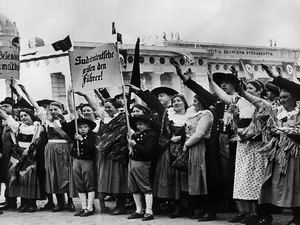
The Czech poet Frantishki Galas wrote these bitter lines in the fall of 1938, after by the decision of the leaders of the four powers (Great Britain, Germany, France and Italy), gathered at the conference in Munich, his country lost the border regions inhabited mainly by the Germans.
Few historical events have earned such an unambiguous assessment of historians and the public as the "Munich conspiracy." It is considered the most scandalous example of a policy of pacification of the aggressor, which not only disgraced Britain and France, who refused to come to the aid of Czechoslovakia, but also turned out to be a strategic mistake, since it did not reach its main goal - to prevent the war. She still erupted a year later, and the Western powers had to fight with Germany, but the starting conditions in 1939 turned out to be noticeably worse than in 1938.
Despite the uniqueness of assessments (maybe, just thanks to her), much in the events of 70 years ago deserves a more detailed analysis and clarification. Around Munich there were several stereotypical representations that interfere with the adequate perception of that situation.
Stereotype No. 1
France and Great Britain deliberately “surrendered” to Czechoslovakia to Hitler.
The position of London and Paris in relation to Prague was not the same. If France in 1935 entered into an agreement on a military union with Czechoslovakia, according to which she was obliged to come to the aid of an ally in the event of an attack on him, then Britain had no formal obligations to Czechoslovakia. The Neville Chamberlain government was interested primarily in the preservation of the British Empire, and the situation in Central and Eastern Europe was not too important for London. In November 1937, the British Messenger Lord Galifax hinted at negotiations with Hitler that London "did not hold the opinion that the status quo [on the European continent] should be maintained at all costs." Galifax only noted that Britain is against the redistribution of borders by military means.
France went to the idea of peacefulness of Germany not so fast. As early as July 12, 1938, Prime Minister Eduard Daladier stated: "Our obligations in relation to Czechoslovakia are unshakable and holy." However, the British position influenced the French. Paris did not want to fight without the support of London, he clearly preferred a diplomatic decision, but did not want to lose his face. As a result, on the decisive September days of 1938, the Western powers sent conflicting signals to Prague, then achieving the Czechs of recognizing German claims to the Sudeten region, then supporting the desire of the Czechoslovak president Benes to resist the dictatorship of the Germans (for example, after the announcement of universal mobilization on September 23). The inconsistency of London and Paris played at that moment no less fatal role than their excessive pacifism. The French and British governments did not want to fight, and therefore the initiative passed into the hands of the Germans, who were ready to take the risk of war - or in any case pretended to be ready.
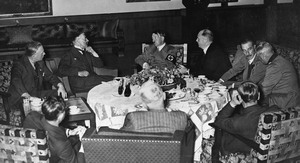
In the end, Hitler and Mussolini outplayed Chamberlain and Daladier, offering the idea of meeting four leaders. It corresponded to the traditions of the diplomacy of the 19th century, when the great powers struck the map of Europe, without asking the opinions of more "small" countries and peoples. The difference was that for Hitler the Munich agreement from the very beginning was a piece of paper, the formality necessary to take another step along the path to dominance over Europe and the world. The Western partners of the Nazi leader understood this only in March 1939, when Germany, grossly violating its Munich obligations, dismembered the rest of Czechoslovakia. Before that, they quite sincerely believed that Czechoslovakia could exist in a cut-out form, and the joining of the Sudeten region to Germany is a generally fair step that corresponds to the principle of self-determination of nations. Chekhov was “surrendered” not from evil intent, but rather by thoughtlessness, from the weakness and lack of strategic thinking among the then Western politicians. The traditional great -power neglect of the fate of small peoples also played a role.
However, Daladier, unlike Chamberlain, guessed the fragility of Munich agreements. Fleaning after Munich to the Paris airport, the prime minister noticed that a huge crowd was waiting for him below, and thought that these people came to protest against the transaction he had concluded. Upon learning that the opposite is the contrary and we are talking about a welcome manifestation, Daladier quietly said: "Fool." The French parliament almost unanimously approved the Munich agreement. In the British parliament, many deputies spoke out against, including the future Prime Minister Winston Churchill, who said: “We are experiencing a terrible historical moment when a pan -European balance turned out to be disturbed. And the story has already uttered the formidable words to Western democracies: "You are weighed on the scales and found light."
Stereotype No. 2
The decision of Czechoslovakia to make the Munich dictate was heavy, but inevitable.
The main supporter of such an assessment was the one who on September 30, 1938 and made a fateful decision - President of Czechoslovakia Edward Benesh. In the radio show to the people on October 5, he said: “We went to the extreme concessions possible for us. The development of events led to the fact that a difficult international conflict arose, during which we would have to defend our boundaries with military force. It was clear that the consequence of this would be a European catastrophe. In these conditions, four powers ... agreed among themselves about those victims that they demanded from us in the name of the world, and we were forced to bring them. " Thus, Benesh agreed for his country with the role of a helpless and passive object, and not an independent subject of history.
Disputes about whether the president was right, making (by the way, without proper coordination with parliament) the decision not to resist, continue in the Czech Republic to this day. In his book “The Munich Complex”, which received scandalous fame thanks to the sharpness of the assessments contained in it, the Czech historian Jan Tesarge claims that Benesh's views on Munich, spreading in the Czechoslovak society, led to the creation of a myth that was very convenient for national self -awareness: “We did not want to fight, but we are not guilty of it ...” according to this, according Tesarge, this position is dangerous, since it justifies the weakness and irresponsibility of the Czechoslovak ruling elite, manifested by the autumn of 1938. There is always a choice, even if this is a very difficult choice, the Polish historian Peter Mayevsky also believes, who devoted a whole monograph to the then defense of Czechoslovakia. In his opinion, Czechoslovakia had no chance of winning the war with Germany, but it could resist Nazi aggression longer and more successfully than Poland a year later.
History, as you know, does not know the subjunctive mood. But many circumstances make it necessary to assume that if Benesh had made a choice in favor of the war contrary to the dictatorship of the four powers, this would help to avoid many horrors that were waiting for Europe in 1939-1945. In particular, it is known that in the fall of 1938 there was a strong opposition in the ranks of the German command: many generals considered Hitler the policy of Hitler. In the event of a war with Czechoslovakia, the general conspiracy could lead to a fall in the Nazi leader, especially if the stubborn resistance of the Chekhs led Britain and France to the need to take a more stringent position in relation to Germany.
Stereotype No. 3
The USSR was ready to disinterestedly provide assistance to Czechoslovakia.
According to the 1935 Czechoslovak -Soviet agreement, Moscow and Prague pledged to help each other in case of aggression against them from another European state "provided that the assistance of the victim of the attack would be provided from France." The union with Moscow was considered by Benes only as an addition to the main “insurance” - to the Union with Paris. Until the last moment, the Czechoslovak president did not believe that France would not fulfill its obligations.
If France was looking for a pretext in order to evade the fulfillment of the promises given by Czechoslovakia, then the Kremlin gave the obvious instructions on September 20 in Prague of Alexandrovsky: “1. To the question of Benesh whether the USSR will provide ... the immediate help of Czechoslovakia, if France ... will also help her, you can give ... an affirmative answer. 2. You can give the same answer to the question ... whether the USSR will help the USSR, as a member of the League of Nations, on the basis of Art. 16 and 17, if in the event of an attack by Germany, Benesh appeals to the League Council with a request to apply the aforementioned articles. ” (In these articles The Charter of the League of Nations was talking about helping the victims of aggression.)
In fact, demonstrating the will to fight German aggression, the USSR risked little. Firstly, due to the terms of the 1935 agreement, a lot still depended on the position of France. Secondly, the provision of military assistance to Czechoslovakia was difficult because it was separated from the USSR by the territory of Poland and Romania, and these two countries did not agree to allow the passage of parts of the Red Army through their lands. It is also characteristic that on September 30, when Benes had to answer the four powers, he asked Moscow to express his opinion on the possibility of rejecting the Munich dictate. The Soviet People's Commissariat of Foreign Affairs, knowing that the time of time has been on his watch, delayed sending a return telegram - until Prague decided to surrender without a fight. He did not seek to fight for Chekhov alone. His policy in 1938 looks like a skillfully launched trial ball: understanding the weakness of the position of the Western powers and their unwillingness to fight with Germany, Stalin began a turn in his foreign policy, which ended with the signing of the Molotov -Ribbentrop Pact in August 1939.
Lessons
Munich became a consequence of a complex combination of historical circumstances, objective and subjective factors, political bluff, emotions and errors. He was not the first, but probably a decisive step in the Second World War. However, this event is often used to conduct not always justified historical analogies. The point is not whether it is legitimate to compare, say, Abkhazia and South Ossetia with the judges of the 30s. Munich has a much more important lesson: in a confusing political situation, the best is not the most natural and simple (“the main thing is that there is no war”), but the most responsible and strategically verified decision. In modern politics, such decisions, alas, are no more than 70 years ago.
Munich myths • New Times • RIMA — Russian Independent Media Archive