The only journalist is the prisoner of Guantanamo al-Hajah-The New Times
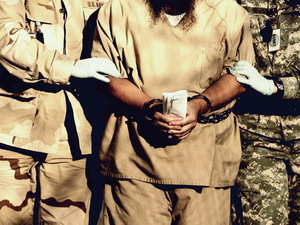
The journalist was released on May 2, 2008. The US military landed at the airport of Hartum, the capital of Sudan. Prisoner No. 345 was carried out on a stretcher and immediately delivered to the hospital, the diagnosis: irreversible consequences of a 17-month hunger strike and acute suicidal syndrome. And what happened in the Guantanamo camp, al-Haji himself told in an interview with The New Times
Ourselves, back to the beginning. In December 2001, three months after the tragedy in New York, the filming group of Al-Juzira was sent from Pakistan to Afghanistan to cover hostilities. You were detained on the border. What happened next?
On December 15, 2001, my colleagues and I passed the border at the Shamansa border point, Pakistani police stopped me and said that my name was mentioned in the special lists of Pakistan’s special services, I was immediately arrested. 23 days later, on January 6, 2002, the police transferred me to the US military at the Kvet airport, from there I was already sent with a group of other detainees to an airplane at the American military base in Bagram. We transported us with black bags on the head, tied with arms and legs, inserted in the ears. We were all poured out of the plane, I could not see anything, so I fell and broke my knees, it was very difficult to move. We were greatly beaten there, and then on cars were transported to some place. While being transported, they continued to beat. There they kept us 16 days, and they remain the most terrible in my life. Military dogs were lowered to me and locked in a cage. Throughout this time, we were not allowed to talk with anyone, forbidden to get to our feet, gave 200 grams of frozen food a day, almost did not give water. It was very cold, and the blankets were not enough for everyone. It was impossible to even pray.
During this time, did any of the military spoke to you?
I was all the time for interrogations and asked why I was making a film about Osam Ben Laden. I explained that I had never done this and was not a part of the television group that met with him. The film was shot after I left Afghanistan and arrived in Doha on October 1, 2001. I even have a stamp in the passport that I was at that time outside Afghanistan, and the ticket I left for. Seeing my documents, they asked: "Well, if we let you out now, what will you tell us about us?" I said that as a journalist I will tell about everything that happened there and how they try to the detainees. The senior in rank only laughed in response. After that, we were sent to Kandahar 2 . They also beat us, forbidden to pray, practically did not feed, had to celebrate the need where we were kept, since there were no toilets, They did not give drugs. We had no connection with our families, they did not know at all whether we were alive or not and where we were. So we spent five months. And then we were sent to Guantanamo. Together with me - more than 800 people: men, adolescents and even very young children. A child who did not fulfill the year got into prison with us: his father, Afghan, was detained on the border between Pakistan and Afghanistan with a baby in his arms. The Pakistani special services recognized him with the activist of the Taliban movement, he was sent to Guantanamo with the child. A year later, information about his involvement in the terrorist organization was not confirmed, and he was released with the child.
How was the transfer of prisoners to the Military Prison of Guantanamo?
On June 13, 2002 they came for us - after lunch, as I remember now. We put bags on their heads, so we did not see anything, changed into other clothes (destroyed ours) and transported to the place near Kandahar airport. About nine in the evening we were taken to the airport and put on the plane. Instead of packages, they put on special masks on their eyes, inserted gags in the mouth and put the plugs on the ears - we did not hear anything, did not see and could not make a sound. During the flight, we were not allowed to drink, eat, they were not allowed to sleep. If you noticed that you were moving, beaten, began to fall asleep - beaten. Each had shackles, arms, lower back and legs were tied with chains. I am tall, and for me the chain was too short, so I had to be in a bent state all the time. We were not allowed to go to the toilet, so we flew for more than 18 hours. There was a stop in Turkey, where we were transferred to another plane. While flying, no one knew where we were being taken. Most hoped that we were finally sent home.
What happened in Guantanamo?
Each prisoner was contained in a single chamber. There were insulators, in them the prisoner did not see anyone and did not hear for months, and sometimes more. We were never allowed to talk to each other, deprived of sleep: every five minutes the overseer came up and demanded to move his hand or foot to make sure that you were not sleeping. At first, they did not turn off the light in the cell 24 hours a day, so that it was more difficult to fall asleep. During interrogations, the warders behaved with every different way, but torture was applied to everyone. We were constantly beaten, forced to undress, someone was sent to the insulator for more than a year, they very often brought dogs and let them go to us. Loud audio recordings with human screams, screams of animals were included in the cells. They never gave medication, even if you were dying of pain. Many prisoners lost their hands and legs there only because, for example, that they had sores or abscesses on the skin, and all the local doctors did was amputated the affected parts of the body, without medicines, without attempts to somehow cure. We, as before, were forbidden to pray. Before our eyes we abused the Qur'an - they tore it into pieces and lowered it to the toilet. They limited the connection with our families: the first letter that I received from my family was given to me only 10 months after the arrest. I still remember this day: September 21, 2002. Some have not received a single letter. We contained two prisoners there - father and son. For all my six years in Guantanamo, they were not allowed to see them.
Have you been allowed to communicate with someone these six years?
For the first time I spoke with someone from the outside only four years later-in 2005, with my lawyer. In prison, sometimes we still managed to communicate: in some rooms, divided into partitions and similar to containers, we could hear each other and even see each other. Special noise machines were installed there so that it was impossible to talk, but we learned to hear each other, despite the wild roar and noise. Special prison psychologists communicated separately with each individually: they carefully studied each prisoner, and then explained to the jailers who had to interrogate us, who had any weaknesses and what we need to put pressure on.
And what did the psychologists consider your weak side?
Family, especially the son. That is why they could not give me letters that the family sent for a very long time. But even if the weaknesses did not work with one of the prisoners during interrogations, they used a proven method-they beat. They beat until you answered the question. They used absolutely everything, even black magic, because some prisoners are very afraid of this. Back in 2005, many prisoners declared a hunger strike in protest against the brutal from the military. My hunger strike lasted 17 months until I was released. I lost 20 kg. We did not eat for thirty days, but then we began to force us to force us to prevent us from dying. Food was administered through special tubes, which were inserted into the nose twice a day.
Upon release, psychologists diagnosed you with acute suicidal syndrome and a complete unwillingness to live. ” How did you manage to hold out for six years?
All the first three years in prison they told me that I got there by mistake and they would soon be released. There was a feeling that I would soon go free, and that is why I need to remember as many details and stories of prisoners as possible, then to tell you about it. Perhaps only the feeling that I am there as a reporter, I kept me. I collected more than 500 prisoners, I wrote down some, some people wrote for me myself. Most of the records I handed over to my lawyer.
Why do you think you were detained?
They were sure that I was an operator who, in October 2001, shot a film about Osama Ben Laden for the al-Juzira channel. They need people like a source of information. I was asked how Al-Jazira goes to Ben Laden, how much the channel pays for the records with video shows it transfers precisely to Aldzazire. 90% of the time of all interrogations with me concerned the channel on which I work.
Did you believe in your liberation?
In 2005, the lawyer informed me that various international organizations were making attempts to achieve my release, but he could not tell me any details, because he had no right to talk about everything. During interrogations, I was repeatedly told that I got into Guantanamo by mistake, but since I am a journalist, they can’t let me go just like that, without starting to cooperate with them. They told me: “You will continue to work on the channel, but when the next time Usama Bin Laden will contact you to transmit an entry or interview, you just tell us about his whereabouts.” In return, they promised me American citizenship and money. Of course, I did not agree.
Thanks to the joint efforts of the International Federation of Journalists, Amnesty International, “Reporters without Borders” and the Arab human rights organization “Alcarama for Human Rights” in May 2008, you still managed to be released. What now?
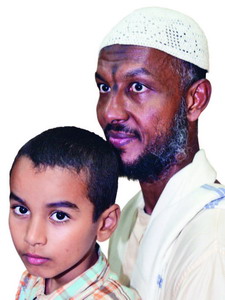
Nearby, my son is now the most important thing. When I was arrested in 2001, he was only a year and a half, and after the release I saw an eight -year -old man. I returned to the al-Jazira channel in Doha, in Qatar, but now not an operator, but the host of the new program “Freedom and Human Rights”, which is launched in the very near future. To begin with, we will tell the stories of prisoners in Guantanamo, which I brought to freedom with me, these are more than half a thousand stories. In addition, together with lawyers, we plan to publish a book about what is happening within the walls of the prison.
The operator of the Arab television channel Al-Jazira himself was arrested in 2001 on the border of Pakistan with Afghanistan. The name of the operator was listed in the list of Pakistani special services, according to which he was suspected of aiding the Taliban terrorist movement. Al-Haja themselves suspected of aiding Islamic terrorists in Bosnia and Chechnya in the mid-1990s, when he worked in a Qatari company. He was also suspected that he had repeatedly traveled to Azerbaijan to transfer money to terrorists. The lawyers themselves denied everything. Official charges were not brought to him. The trial of the journalist did not take place.
Since 2002, the Guantanamo prison has been operating on the territory of the US military-grade in the southeast of Cuba. America rents a base (indefinitely) since 1903. Prison's prisoners do not apply to the laws of the United States
_______________
1 capital of Qatar.
2 province and city of the same name in Afghanistan.