There is still a lot of obvious in the fall of 1993 in the fall of 1993.
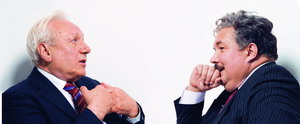
How was the famous Decree 1400 on the dissolution of the Supreme Council what was happening in the White House and the Kremlin, how was the decision on the shelling of parliament from tanks and why? The editors of The New Times met active participants in those events from opposite parties: the former head of the Presidential Administration Sergey Filatov and the former People’s Deputy, Chairman of the Committee of the Supreme Council for Judicial Reform and the work of law enforcement agencies Sergey Baburin
Why did the conflict go so far? Was it possible to avoid tanks, shooting at the White House and Blood?
Sergey Filatov: The most difficult conflicts are personal. The complete loss of confidence between the president and the chairman of the Supreme Council, the expectation of something terrible: for the president, say, this is impeachment, for Khasbulatov, I think, arrest or something else ... Hasbulatov, maybe it was enough for Boris Nikolaevich to call him the first to talk.
Sergey Baburin: Khasbulatov really aggravated relations with Yeltsin at that moment, they could not bear each other to the spirit. But it is impossible to reduce the drama of the 93rd year only to a personal confrontation. After all, it was an artificially created psychological dilemma - they say, a Russian alcoholic is better than a Chechen addict. This is a quote from that time from the media. And of course, for us, since I was one of the leaders of the parliamentary opposition, it was obvious that the confrontation is deeper.
Uncompromising
Baburin: I believe that Yeltsin in this case acted as a person who really fights for his understanding of Russia, and the authorities, and everything else. For Boris Nikolaevich, the main ideology was not communism, not anti -communism, but power and their place in power. He fought to manage everything.
Filatov: Trust was completely lost at the IX Congress, when impeachment did not take place. And then Yeltsin began to look for ways in order to somehow untie his hands and make reforms. The first step in this direction was a referendum. And it seemed to me that the victory allowed us to come out primarily to the adoption of a new constitution. But from July 12, when the draft constitution was actually blocked, events began that showed that reconciliation did not occur. On the contrary, a war is being prepared on both side, to unleash this knot.
Neither the Kremlin was ready for a compromise, nor the Supreme Council? ..
Filatov: Boris Nikolaevich was not ready. I think that Khasbulatov was not ready. Although, I must say when the first negotiations in the Holy Danilov Monastery were held on October 1 between Sokolov (Veniamin Sokolov-Chairman of the Council of the Republic of the Supreme Council of the Russian Federation), Abdulatipov (Ramazan Abdulatipov-Chairman of the Council of Nationalities) and our team (Soskovets, Luzhkov and I), they were generally approved by Khasbulatov, and the results were approved by the results They are not blocked by them, but by another team.
Baburin: negotiations on the initiative of the presidential side were reduced to the disarmament of the Supreme Council, which, of course, was absurd. Therefore, the position of Abdulatipov and Sokolov did not receive support. We were cordoned off from all sides, and even they say: fold the weapon ...
The third decree
They said that Yeltsin was not quite adequate when he signed this decree?
Filatov: Nothing of the kind. Boris Nikolaevich was very tormented. After all, it was the third decree. The first two were in winter and spring, when he tried to take special powers to manage the economy and reforms. And both times did not work out. I remember exactly how, on the second decree, he said: “Boris Nikolaevich, it is impossible to sign a decree without agreeing it with the vice president and with the Security Council.” He twitched then: “How? I kind of president ... "But I agreed. However, it so happened that through the hands of Rutsky this decree was in the Supreme Council and in the Constitutional Court. A terrible noise rose ... Decree 1400 was supposed to appear on September 19. But Yeltsin stopped the fact that on August 19 and September 19 - these two dates were corresponding. And when he showed me a decree and we talked to this topic, he was absolutely healthy, normal.
What did you tell him?
Filatov: I said: "Boris Nikolaevich, such a decree cannot be signed." He said that such things should be seriously prepared. The subjects of the Federation will rise, but how, by what forces to clarify? Then he had a meeting where Chernomyrdin, Erin, Golushko, Barsukov, Korzhakov, Ilyushin, Kozyrev and I came. Before signing the decree, he was holding the last council. And I first talked with everyone on the phone and realized that everyone, in general, did not really approve of these actions. At the very beginning, I asked for words, he stopped me with his hand and said: "I know your opinion."
Who else was against this meeting?
Filatov: Nobody. But someone was just silent. Actively for Kozyrev was, and Korzhakov was very actively speaking, he was absolutely convinced that there was no other way out.
Alternative troops
What did Yeltsin hoped, signing Decree No. 1400, if there were no loyalty to the security forces? On October 3, and especially at night, there was no police on the streets of Moscow. What was the calculation for?
Filatov: Yeltsin had hope for the Ministry of Internal Affairs and the army. There were two people, Erin and Grachev, who headed these structures and to whom he absolutely trusted.
Was the army loyal to Grachev?
Filatov: At least the teams were all executed.
Then they wrote that Yeltsin was forced to go to the Ministry of Defense because there was no confidence in the loyalty of the district commanders. Isn't it?
Filatov: No, the Security Council was sitting there. Yes, they called the district commanders from the Supreme Council, asked them questions: are you loyal to the constitution, are you ready to protect the constitution? They answered: yes, according to the law - yes. But the leadership of the Supreme Council understood this so that the military on their side, but in fact, they simply answered the state -owned question by a state -owned answer. We knew about this because there were reverse calls from there. All the threads were at the Minister of Defense, without any doubt.
Baburin: There were two ministers at that moment: Grachev, who obeyed Yeltsin, and Achalov, who obeyed the Supreme Council. And the worst thing was that from the 3rd to the 4th, after the events of Ostankino, both ministers of the defense began to raise the troops, and some troops rose and walked on the orders of Grachev, others rose and walked by order of Achalov.
Filatov: Well, by order of Achalov, troops did not go.
Baburin: They walked, Sergey Alexandrovich. It is another matter that when they arrived, they already saw the burning White House, and the command made Solomonov’s decision ... By the way, before that I was at the headquarters of the Moscow Military District at the commander and made sure that the commander was trying not to intervene and tries to stop all the troops - and those that Grachev raised, and those raised by Achalov. After that, I went to Lubyanka, met with members of the college. There was a heavy conversation. Of course, I was struck by the then position of the leadership, they said: "State security outside politics." I say: “How is it? You have an obligation to protect the constitutional system and the Constitution! ” To which I was told: "No, according to the new law, we do not have the obligation to protect the constitutional system." That's all, point.
Did you wait for shooting?
Baburin: I was a supporter of the action, therefore, on September 21, when the Constitutional Court, and then the X Congress recognized the fact of the coup and the need to delay President Yeltsin, who violated the constitution, I advocated that the deputies, fulfilling my Work, went to enterprises, to the ministries and, as the commissioners of the last century, convinced and forced people to fulfill the constitution and law. This was not done in connection with the position of Khasbulatov and Rutsky, they still counted on agreements with Yeltsin.
Filatov: Neither a congress, nor your decisions of legitimacy and legal force.
Baburin: The decree of 1400 was illegitimen.
Filatov: I agree with this.
Have you been afraid of the civil war?
Baburin: We did not want a civil war. That is why, leaving the burning Supreme Council, I proposed and we accepted the appeal to the citizens: not to take weapons and not respond by force to Yeltsin’s coup, but go to the referendum and respond with voting. I think both sides played a role in the fact that the civil war did not receive a continuation. Firstly, we resisted the desire to answer, and secondly, Yeltsin either, or all the same, under the influence of those people who were near him, abstained from the conflict already in the scale of the Russian Federation. Although he compiled “black lists” on us, to the deputies, but this did not go further! And there were no repressions regarding supporters of the Supreme Council in the regions, the elections took place in a semi -cybated manner, and many of us again then became deputies. And of course, we were inspired in the early days that the minister Glazyev said that he condemned the coup and resigned in protest. Then I found out that his resignation has nothing to do with our affairs.
Filatov: Absolutely none. It should have been removed: after checking its ministry, the control department there were facts of corruption. But he asked for a day to prepare, or something, his retreat, and this day used to the rally region: he collected a press conference in protest is not clear what ...
Demonstration of power
Why were tanks needed? Why is this action of intimidation?
Filatov: I myself am tormented by this doubt, it also seems to me that it was possible to do without tanks. But in general, the army had to be entered, it was obvious, because on October 3 the Ostankino was a real battle, the city hall was taken, there was also a short battle. We were always asked to give security - the television center in the Yamsky field, the ministries were asked. Only the Kremlin had some strength. Given the fact that the weapon remained in the White House and the generals remained there, there was a danger that everything would resume in the morning. Then do not forget that a large number of underground utilities come from the White House, through which at different points in Moscow you can enter and exit. This, unfortunately, was not controlled. Although state security was supposed to do this. But I did not. And when everyone gathered in the Ministry of Defense, then a languid silence hung. Chernomyrdin led, he asked the question: what are we going to do? And in this silence, Korzhakov’s voice is heard: “Boris Nikolaevich, my second rank captain has a proposal on this score.” And he sets out the proposal: what needs on the field behind the White House to bring several tanks, idle to hit the bottom of the house. Preventive shots to show the seriousness of the intentions that people come out of there, give them such an opportunity. Of course, there was a very difficult question that it was difficult to answer: what to do if the White House has a crowd of people, as in the 91st year? Should I use tear gas or go and slowly collect everyone? Or something else? Then the question arose of who should enter the first - “alpha”, “pennant” or internal troops. And when they began to discuss-no one speaks out, a single proposal that is accepted ...
About tanks?
Filatov: Yes, at six o’clock the collection and, in my opinion, at seven beginning. It was a surprise to me that the tanks came up, stopped at Kutuzovsky Prospekt and did not start anything for a very long time. It turns out that they did not bring shells. Either confused - they took the battle, but it was necessary to idle, or something else. And this was lost time. It all started not at 6 or 7 hours, but, in my opinion, at the ninth hour, when there were already many people on the bridge. Of course, there were very big difficulties. They said that Alpha did not want to go to this at first. Because they do not take part in such operations. They participate where enemies, and these are their people. And yet they began to shoot from the bridge ...
Fighting?
Filatov: No. All this building would have smashed the combat. By the way, the 17th floor did not catch fire from the shell. This is the floor on which secret and financial documents were stored. It was this corner that burned.
That is, set on fire?
Filatov: It's hard to say, but such a coincidence causes suspicion. And the first floor was burning, where there was computer equipment. I had an absolute conviction that very hard steps should be taken, because it is impossible for this to spread in the morning. We had information that some regions were sending their detachments. There was an alarm that some part of the population would begin to support, and then we are on the verge of civil war. It was necessary to extinguish. Another thing is methods. Many times I returned to the question of tanks - I think that it was completely unnecessary.
Ghost of the Civil War
Sergey Nikolaevich, when did the shooting began, where were you?
Baburin: In his office on the 6th floor. But my office, fortunately, went to the site in front of the first entrance. Therefore, the shells that flew into the building flew in parallel. The office was shot only from machine guns and machine guns.
How did you leave the building?
Baburin: They left in the evening. The first half a day we were generally cut off in our wing, because the first person who tried to go to the center of the building was wounded by a sniper from the roof of the Mir Hotel opposite. And it was impossible to go through the landing. Therefore, the whole period of shelling we were in my office. There were 11 of us: three deputies, two women, a child of one of them ... and there were several officers, one counteratmi. Weapons, I notice you, no one had. The myth of weapons, which was intensively distributed the day before, was scattered by the Prosecutor General’s Office, which conducted an investigation. It turned out that there were no grenade launchers or machine guns that the weapons that were in the Supreme Council were several boxes, and the machine guns were distributed to the defenders who remained instead of policemen. The investigation found that not a single person was killed and wounded from the weapon that was in the building.
And what did the city hall take?
Baburin: The city hall was taken with weapons, but the weapon was not used. And the first shots were not from the Supreme Council. Why did Andrei Babitsky be removed from the Radio "Freedom"? For the fact that he was on the beginning of the tragedy at Ostankino on the 3rd of the day, he confirmed that the shot was from the building, and not in the building.
Achalov really raised the troops?
Filatov: I know the opposite: the troops did not rise. There were separate groups. In fact, support on the phone, which the leaders and especially the military unit hoped - Rutskoy, Achalov, Barannikov, all this is a myth. Fortunately, this was not.
Baburin: The fundamental mistake of Rutsky in the first two days was that he and Khasbulatov refused to support the military. I personally brought the commanders of the units to him four times who reported: “Such a colonel, the unit commander of such and such. I am ready to bring my part, deploy hiking kitchens here and take protection. ” To which he received the answer: “And go! Do not draw me into a provocation. We will all solve politically. ” This illusion is that everything can be solved politically ...
That is, you were a supporter of a military solution to the issue?
Baburin: I was a supporter of ensuring the action of the constitution.
But if the military units would begin to defend the White House, it would be a civil war.
Baburin: We did everything to avoid this. Thank God that the Civil War that broke out here did not cover the country. But she was here. I really was.
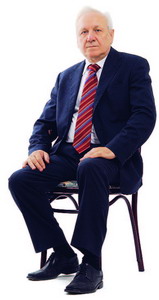
Sergey Alexandrovich Filatov is the president of the Fund of Social, Economic and Intellectual Programs. From 1990-to the beginning of 1993-People's Deputy of the RSFSR, Secretary of the Presidium, then First Deputy Chairman of the Supreme Council of the RSFSR. In 1993-1996 he headed the administration of President Yeltsin.
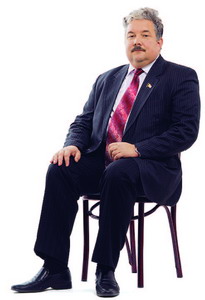
Sergey Nikolaevich Baburin is the leader of the People’s Union party. In 1990-1993 - People's Deputy of the RSFSR, member of the Supreme Council of the RSFSR. He was elected as a deputy of the State Duma of the Russian Federation of the first, second and fourth convocations, was the vocepa of the State Duma of the Russian Federation.
Filatov vs Baburin • New Times • RIMA — Russian Independent Media Archive