
Translated material
Russian microbes are the first to fly to the Mars satellite and return back
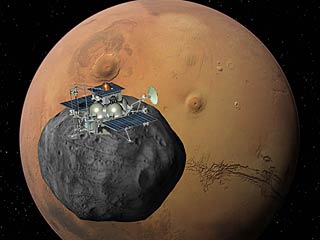
A batch of experimental earth microorganisms will go to Mars Fobos’s companion as part of the Phobos-Grunct project and then return back to Earth, Alexander Zakharov, the scientific secretary of the RAS Institute for Space Research (IKI), told Interfax . The results of the experiment will help to check the theory by which life on Earth is brought from space. In addition, this experiment will become one of the stages of preparation for human flight on Mars.
"The meaning of the experiment is to study how the microorganisms will feel during a long space flight. The capsule with bioturists will be installed on the returned apparatus. Thus, they will visit phobos and return back," Zakharov said.
He added that the Americans will make a container for sending microbes, and scientists will pick up microorganisms in Russian laboratories. According to the organizers of the experiment, it will help scientists establish, in particular, whether microorganisms can move from the planet to the planet in meteorites. "The returned device, as it were, models the meteorite in which there are microorganisms," said Iki's scientific secretary.
Earlier, the director of the Institute of Space Studies of the Russian Academy of Sciences, Lev Green, said that this experiment can be considered as one of the stages of preparing a person’s flight to Mars. In addition, space experience could help check the theory by which life on Earth is brought from space, he said.
According to him, the microorganisms in question are strains of bacteria. Scientists will check how space radiation, weightlessness and other factors of interplanetary flight will affect them. At the same time, special attention will be paid to excluding the possibility of the spread of earthly bacteria on phobos. The capsules will be well protected, and the strains themselves are isolated.
The Fobos-Gront experiment is included in the federal space program until 2015. In accordance with it, two Martian missions will be held. Within the framework of the first, the apparatus will go to Phobos approximately in October 2009. The second mission is associated with a direct flight to Mars.
Her exact date has not yet been defined, but it will take place no later than 2015. During this mission, a number of applied research on energy and landing will be carried out.