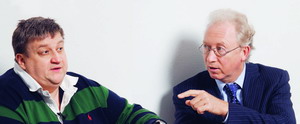
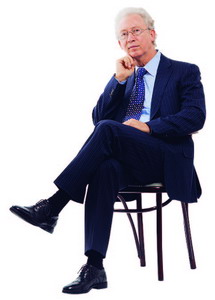
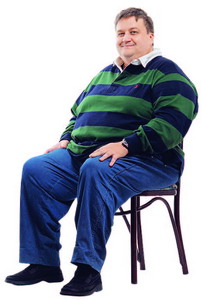
In search of the bottom. The RTS index stubbornly moves down. However, the situation in the financial market is already not interested in anyone. Will banks collapse? Will there be products in stores? How many people will lose their jobs? How seriously will you have to tighten your belts? The co-chair of the Club 2015 businessman Nikolai Kovarsky and the chairman of the board of directors of the MDM Bank Oleg Vyugin argued about this at The New Times.
Have we reached the bottom in this crisis?
Oleg Vyugin: Probably close to the bottom.
Nikolai Kovarsky: It seems to me that not. We are talking about a process that will go for another six months or a year at least. It is already pointless to talk about the stock market: it reflects only the level of hysteria of the participants, nothing more.
Vyugin: When banks become state -owned banks, trust will be restored, but the markets will not yet understand what with the economy. They still look at what will happen to the profit of companies. And this is still unclear.
Kovara: But I was amazed at the speed of reaction of the governments of the world. They demonstrated a deep interest in what was happening, which, in my opinion, was not in the history of crises. What they did, at least temporarily postponed a serious disaster in financial markets. But the main thing is that it is not yet clear what will happen to the industry. The whole business world crouched and began to think about the prospects of what each of them is doing. How much have been produced last year and how much now they should produce, who needs this steel. What will happen to cars, with teapots, with dishes, with furniture. Are they needed in such quantities. This, in fact, measures the depth of the bottom.
Hitchcock suit
Will the largest banks in the world crashed?
Vyugin: Europe and the States, so that this does not happen, decided to simply enter the capital in these banks. And then, probably, they will not crash. But what will happen to the real sector? It was all built on a loan. And if there is no loan, then, in essence, there is no economy. Here is a good example - the supply of fertilizers. Now I will try on Hitchcock. This is a seasonal product, it is needed at a certain time, when the peasants are preparing for sowing. If there are no fertilizers, there will be no crop. And now the largest traders are the same Glenkor - who bought fertilizers from companies using a loan, and then, using futures markets, sold to the peasants, They stopped working, no one gave them loans. This means that, for example, Russian companies that produce fertilizers are now turning out production. Peasants will not receive fertilizers, there will be no crop, there will be few products.
Kovara: Yes, and we will be with us in 2010. I spoke with one of our largest manufacturers: the freight has fallen several times over the past weeks, the fertilizer trade has risen. This summer, they will catch up with something else, and in the summer they will not have time, because the “plug” will last until spring, at least.
Vyugin: You can hope, to be optimists, so that everything will be restored faster ...
Kovara: Can I be a pessimist? The banking problem gradually began to flow into another - into the feeling of people, which is generally not clear how many fertilizers they need ... And this pause threatens to drag out ...
What will happen to the price of oil?
Kovarka: Well, if Khichkokovsky, then oil may well reach $ 15–20 per barrel. I spoke with the oil workers, they told me that in Russian companies, the price of security is about $ 70, taking into account capital investments. Below $ 70 they are already bad.
Is the price of a yacht in $ 70 for a barrel?
Kovara: Well, yachts will stop buying. There is a giant outflow of people from queues for luxurious cars, for example.
And the price of gas?
Kovara: it is attached to the price of oil for objective reasons. There is the possibility of fostering by a number of objects that consume energy in Europe. Therefore, of course, the price of gas will fall.
What will happen to our steel, aluminum industries - world prices fell?
Kovara: Steel is direct agreements. And there is an understandable consumer. This consumer has completely stood up. In the St. Petersburg port, the number of cars that have accumulated there over the past weeks, simply unimaginably. Port owners ask citizens if there are storage sites. Steel mainly goes there. And the steel are already reducing production.
What else should get up?
Kovara: Coking coal, I think how part of the production should stand up.
Vyugin: He did not get up, he is reduced - about 20%somewhere. The production of non -ferrous metals will also be reduced.
Kovarsky: Nickel, for example, - it goes mainly for the automotive industry. Construction, building materials.
Vyugin: There may be a decrease in demand for raw materials. For Russia, this is mainly. The drop in export proceeds is a reduction in the influx of revenue. This means soon a decrease in income growth. Or maybe the termination of income growth. And this already affects those who produce consumer goods. And retail networks will feel this. And the whole service, which is around consumption.
Kovarsky: The budget will feel, of course.
What will happen to such huge industries as Norilsk Nickel?
Kovara: He will fall in price.
Vyugin: Already fell.
Kovarsky: For the Norilsk Nickel, it seems to me that it would be better now an option if the state took it.
That is, renationalization?
Kovara: Yes. Unemployment in Norilsk is an impossible thing, they have nowhere to go, the city is closed, there is nowhere to go. Given all this confusion, which has been around the enterprise for the last year, it seems to me that this is going on. One way or another, from the pledges of the action will be transferred to the VEB when redesigning it by the state. Nationalization goes around the world a creeping way: for some time, all governments will be forced to assume obligations of both banks and large companies. In America, as I understand it, as I understand it, the ransom from the automakers of large lots of cars in order to immediately let them under the press.
Vyugin: There is logic. They gave a large loan to everyone - to work, people have worked, but they cannot give a loan. What happens in this case? Either the redistribution of property is underway, new people come, who, of course, take it all at a completely different price, per ruble, or the state comes.
Back to Ussr?
In the UK, the government nationalized the bankrupt Royal Bank of Scotland. But Prime Minister Gordon Brown said that when the economy will recover, the bank shares will be sold in the market, and the money will thus return to the bank saved the bank. And what will happen to us?
Vyugin: If some renationalization occurs in developed countries, then it will then be launched in the opposite direction. We have more political risks. If renationalization occurs, then the step back will be more difficult.
Kovarsky: And it seems to me that they will sell back.
Vyugin: Today, the most important enterprises in Russia, with rare exceptions, are somehow controlled by the state either directly or indirectly: the owners of these companies follow in the fairway of the interests of the state, so to speak. Therefore, a national task - to certainly receive a share and put an official to lead - no. Maybe there are personal interests of specific people, but in general not. Therefore, there may be nationalization, but forced: a large bank of non -state falls ... although there are almost no such ones. Or indeed, since we were already hooked by the Norilsk Nickel is a social problem. Well, the state will intervene, obviously.
Kovarsky: I agree, the state, from my point of view, has no desire to go to any nationalization. If they do this, then with great displeasure. Nobody wants to get Norilsk Nickel, which will sell products in extreme cases. Banks, apparently, will be taken at least for some time under control. Perhaps some retail companies. The Americans can hardly mumble the word "nationalization", but nevertheless do this in fact. What to do if the most last gearbox for people is the state?
Banks, banks, banks ...
Banking system: What is the worst scenario?
Kovarsky: We have 1100 banks. Probably 200 will remain. This is in a good scenario. In the bad - maybe 50. This will clean the banking system of many problems. But this will be given giant blood, because even in those banks that may not be considered banks, nevertheless, some people and institutions keep accounts, and they will lose specific money.
Vyugin: Now it is obvious that there will be little business for all banks. Previously, there was practically unlimited access to funding, it was possible to get abroad - there was a lot of money. And the population took a loan with pleasure, and enterprises sat down with pleasure on the credit shoulder. Now foreign markets are closed and will be closed for a long time.
How long is it?
Vyugin: About a year and a half, I think. There will be purchases, mergers. There will be, perhaps, the participation of the state in this, so that, if that, the savings guarantee. 700 thousand is 90% of all savings. That is, they will give money to people.
Will the state have enough money? How many reserves of the stab fund are enough?
Vyugin: Money in the Deposit Insurance Agency. But they are not enough, of course-about $ 100 billion. But it must be borne in mind that more than 60 percent of the savings-Sberbank and VTB, where the state guaranteed everything a long time ago. Then, there are quite strong banks that, of course, will remain. Banks that hold 10% savings will leave, no more.
Has the banking system seriously invested in all sorts of shares?
Vyugin: an average of 20% of assets - securities. This level is not dangerous. It is dangerous when 40% of assets are in securities. Then this bank can be killed at any time. So, in fact, it happened with some.
The 98th year can repeat us?
Vyugin: No. Each crisis has its own nature, and now a completely different nature of the crisis: a mechanism has been destroyed, which has been the last decade, the growth of the world economy, including Russia.
Fell and did not squeeze
Why did the Russian stock market lose many more than others - about 80%?
Vyugin: China has lost more.
Is the Chinese miracle ended?
Vyugin: Everything is relative. China had a 200%market growth before. Therefore, 100% can be lost. The Chinese miracle was also built on raising funds ... But China has another advantage - a huge market. There is even such a theory: a country that has a huge domestic market can engage in protectionism of the Moscow Region, and a country that has a small market is small, protectionism is harmful, it should be open. But Russia is in the interval. And that's why we are twitching all the time: either we need to engage in protectionism, or you need to remove all the barriers at all ...
Kovarsky: It seems to me that we have lost so much, because there were big expectations from investors from our market. And then it suddenly turned out that it was generally an ordinary Emerging Market and lives according to its laws, and money from such a market always leaves for being Tree.
Why didn't they leave Poland, Hungary?
Vyugin: I have my own point of view. Our stock market, that is, the stock market, if we talk about domestic investors, was built on the fact that the shares were bought with credit money. This was done by all: brokers (why they all burned out now), and the company of the non -financial sector, and banks. And such a market is always very sensitive to fluctuations. The bail was given the same shares that have now fallen. That is, a vicious circle. Further: the Russian market is very dependent on foreign investors - it is 40% (and even more) shares. And they were under pressure from the global crisis. They are forced to sell papers because their shareholders say: cache is needed. And non -residents dropped the market. Marzhin-collars for all our comrades who have a dollar in the eye instead of pupils and who so wanted to earn. We do not have a classic (stock) market that companies come to, make an IPO, receive funds from this market, invest them, then begin to pay dividends, disclose information, improve corporate governance. We improved corporate governance to leave for the cache, place already in London, get 600 millions there ...
Kovarsky: And finally, relax in the little ...
Vyugin: Yes, and finally, to say: life has been made, succeeded ... Such a market lives poorly.
And political risks?
Vyugin: They went to the bottom of a large swamp, which arose on a global scale. If there were no world swamp, probably we could refine these risks, calculate. Now it’s not up to it. Now I don’t give a damn that Vladimir Vladimirovich said about Mechel, and no matter what happened with TNK-BP. The ruble would drag the latter.
Grocery shelves
We are dependent on imports in many of the positions very important for ordinary people: medicines, products and much more. What will happen here?
Kovara: I am a little afraid for the fate of the retail as a whole, retail ...
Food?
Kovarka: Yes, first of all. This applies to both TVs and washing machines, but that's okay, let's wait ... five years. But with products it is impossible to wait. The problem is that the real retail covers 25-30 countries, and then unevenly. I mean large networks: “Crossroads”, “X5” in general, “Magnit”, “Ribbon”, “Victoria”. And as far as I know, their situation is not very good, because they are all on loans, they are forced to put pressure on their suppliers, who are also not given loans. But this is half the whole. The country is served by small retail networks. These are 3-5 stores that spin around 2-3 wholesalers. These are markets. Not the expensive ones that we have in Moscow, but those that trade from containers on the outskirts, where the bulk of the population is cooked. They are all on loans.
Explain: the owner of the store buys everything in debt, then sells to us and gives a loan, right?
Kovarka: Most of the trade goes through installments. That is, you put me today, and you will receive money in 3-4 months - this is a tremendous term. Very few will survive in this situation. Surely financial discipline in such organizations is not the highest, and it will be very painful. That is, in some cities there may be interruptions in the supply of products. Not that there is no food, but just everything went bankrupt, which could, and residents from one area should go to another area. Here is one of the big problems.
Will there be hunger?
Kovara: No, there will be no hunger, of course, but interruptions can be.
Can this be foreseen in advance?
Kovarsky: This is provided, as far as I know, they are intensively thinking about this in the government. A lot will depend on the regional authorities. I have already heard that the regional authorities are nationalizing supporting banks on their territory. This is probably the first step to that in these territories some grocery networks take control, if that. The second thing that bothers me is an electric power. It seems to me that some companies may have problems with capital investments related to the fact that the industry itself has just left the giant redistribution and not all companies have enough money to finance current activities. And this is warm in houses. And we have cold winters. And heat stations on loans live.
And they will not be able to buy fuel oil, coal, gas?
Kovarsky: fuel oil, coal, boilers, details, grates, fittings, many other things that are important in the production process.
Vyugin: No, they received a lot of money when privatizing RAO UES. Every OGK has money, they just don’t know where to attach it now so that they do not disappear ...
Small -optical grocery networks, electric power industry ... what else? Construction?
Kovara: Well, what is the construction? Probably, all those houses that are in the initial stage-stood up, and which in the final, probably, will somehow bring under the “housing” program and will end them, then sell them to the population. Some attempts in this direction are made. But this is not so important. We say that this industry stood up, a branch of the production of building materials stood up, and from this some people, of course, will suffer. We will all suffer to some extent.
If large factories or construction sites arise, it is unemployment. The picture looms gloomy ...
Vyugin: Life will really be more modest, for objective reasons.
Can products with products also arise in Germany and the USA?
Kovarka: Why not? We have not seen such a crisis yet.
Vyugin: The main thing is to physically food. In the end, if trading networks for some reason cannot provide an assortment due to the fact that the wholesalers have no money, open the markets, will come again trucks, drop board, and there will be a bunch of products, and people will fit and buy. A rich man will come, whose couple of millions of dollars are hidden somewhere. He will see that this is a business, sign a contract for the supply of dairy products with German companies. Just some established mechanisms can collapse. New ones will appear.
Kovara: people are very difficult to get used to the bad. The process of restructuring will be painful, that's all. Then, it seems to me that our population easily returns to the gardens in case of all kinds of troubles.
It is hard to imagine that in the USA, say, there was a serious discussion of the issue that somewhere in Oklahom there will be nothing to eat and should be stored with chips ...
Kovarsky: They have a national distribution system under the National Guard, as far as I remember. I'm not sure what we have. I am not very sure of Rosrezerva in this case. Now, if we were confident in Rosperture, then at all such a question would not be. We have an option of nationalization, and full -scale, not only banks. Then we do not return to the “scoop”, but close to that. Другой вариант, если государство этого не делает — это хаос, нехватка продовольствия и так далее. Но и в первом случае это не будет «совок». Временно государство возьмет на себя функции бизнеса в той части, в которой бизнес не сможет их обеспечить. Оно их потом с удовольствием вернет, когда все закончится.
Вьюгин: Мы сейчас говорили про распределение, но не про объемы производства. Больших трудностей с распределением не будет. Они могут быть у крупных розничных сетей, созданных в последние 5–7 лет, которые по своей природе работают на кредитах. Значит, нужно обеспечить кредитование, и тогда они будут и дальше работать…
И это может сделать только государство?
Вьюгин: Есть несколько способов. Самый простой: обязать Сбербанк выдать им необходимые кредиты на рыночных условиях. Посчитали, провели совещание, определили, сколько надо, а дальше Сбербанк с ними работает, на рыночных условиях кредитует. Раньше-то он их кредитовал, а почему сейчас не может?
Коварский: Наверняка они уже сидят в приемных ВТБ и Сбербанка с бумагами…
Вьюгин: Вопрос весь в физических величинах, насколько все эти проблемы в финансовой сфере приведут к рецессии в мире и как это отразится на России. Такая логика подсказывает, что сокращения темпов и рецессии в некоторых странах не избежать. Соответственно, это будет воздействовать на Россию как на открытую экономику. Но это не значит, что в России будет голод. Поскромнее будем жить. It's OK.
Кризис со знаком плюс
А Олимпиаду будут проводить? Вот господина Козака назначили вице-премьером по Олимпиаде. What is it talking about?
Вьюгин: Взяли обязательство, пионерское слово дали — теперь надо выполнять.
А как можно выполнять, если основные заявленные игроки — Дерипаска, Потанин — очевидно, не смогут вытащить ее на себе?
Коварский: Будут другие игроки. Мне кажется, что и эти останутся, и другие будут.
Кризис может стать инструментом, который выметет с рынка неэффективные компании? Или, если государство их поддержит, все останется как есть — неэффективные менеджеры, вороватые управляющие?
Коварский: Государство будет поддерживать точечно.
Вьюгин: Да, по отношению к частным компаниям государство очень жестко действует, и по идее кризис выметет плохих. Эффективность повысится: когда действуют бюджетные ограничения, это срабатывает. Ставка сделана на защиту госкомпаний. Нефтяникам, у которых акции заложены под кредиты, уже сказали, что все выплатят из золотовалютных резервов, все долги будут закрыты. Why? Чтобы акции не пропали. Госбанки: первое движение государства было загнать туда несусветные деньги. Причем зачем, еще неясно.
Коварский: Пока не загнали.
Вьюгин: Немножечко совсем. Но потенциально движение такое, все будет рекапитализировано. Why do this? Ответ такой: государство — акционер, а акционер должен защищать свой банк. Кризис укрепит госкомпании. Не знаю, будет ли у них выше эффективность, но положение на рынке укрепится. А эффективность частных компаний повысится: и производительность труда, и затраты на единицу продукции… Либо эти компании исчезнут.
Коварский: Частные компании, прежде всего финансового и банковского секторов, очень сильно затронет безработица.
А промышленность?
Коварский: Мне кажется, здесь она будет принимать скрытые формы. В строительстве, например, она высокая, но строители же у нас сплошь и рядом не россияне. Иммигранты уедут домой. Что касается больших предприятий, мне кажется, там будет скрытая безработица. Людей будут оставлять и платить им какие-то деньги…
Без вины виноватые?
После кризиса 98-го года в отставку ушло все правительство, поменяли все руководство ЦБ. Здесь нам надо чего-то ожидать или нет?
Коварский: На уровне и правительства, и ЦБ будут какие-то изменения.
Вы хотите сказать, наше все?..
Коварский: Нет. Владимир Владимирович, конечно, останется. Do not worry.
Кудрин сохранится?
Коварский: Думаю, да.
Тогда какие изменения в правительстве? Сечин, я надеюсь, тоже сохранится?
Коварский: Игорь Иванович, мне кажется, сохранится.
А тогда кто отвечает за кризис?
Коварский: Ну, правительство огромное. Я не могу сказать ничего про персоналии. Я даже не могу себе представить, кто за это ответственный. Никто не ответственный.
В демократических странах, когда кризис случается, это в конечном счете приводит к отставке правящей партии, правительства…
Коварский: У нас правительство, которое было настроено на экономический рост, а поскольку неизбежно какое-то поджимание, потребуются другие люди, другие решения. Меняться будут персоналии именно в этом. Это касается, наверное, и национальных программ. Они все были рассчитаны на то, что мы будем расти и будет много денег. А теперь денег мало. А национальные программы нужны, никуда не деться. Мне кажется, по целому ряду направлений будут какие-то другие лица возникать. Может, из бизнеса.
За нацпроекты у нас отвечал Медведев Дмитрий Анатольевич… Вы же не хотите сказать, что он…
Коварский: Медведев теперь отвечает за все и всех нас.
Говорят, что во власть могут призвать, например, Михаила Прохорова… А в США и Обама, и Маккейн собираются пригласить на пост министра финансов Баффета…
Вьюгин: Всякие варианты могут быть. А что касается того, кто и за что отвечает... Кто отвечает? Мы выбрали такой путь развития страны, как открытая экономика. Я считаю, что выбор был правильный. Мы приняли условия мировой игры. Мы, Россия, хотим получать от мира инвестиции, технологии. И вынуждены реагировать, когда правила игры меняются. Мне трудно сказать, что в этом кто-то виноват.
Олег Вьюгин — председатель совета директоров МДМ-банка. 1996–1999 — заместитель, первый замминистра финансов РФ. 2002–2004 — первый зампред Центробанка, затем, до 2007-го — руководитель Федеральной службы по финансовым рынкам. Candidate of Physical and Mathematical Sciences.
Николай Коварский — бизнесмен с 20-летним опытом, один из пионеров российского предпринимательства, бизнес-консультант. Член совета директоров «Промстройгрупп». Сопредседатель объединения менеджеров и предпринимателей «Клуб-2015».