
Translated material
The building in which Berezovsky was judged will become a hotel
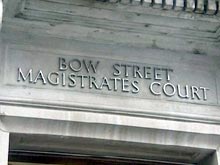
The building of the London Magistratian Court on Bow Street, where in 2003 there were hearings about the extradition of businessman Boris Berezovsky and Chechen emissary Ahmed Zakayev, will turn into a hotel whose visitors can spend the night in former chambers for prisoners, RIA Novosti reported with reference to the London press.
Open in 1881, opposite the Royal Opera and Ballet Theater of Covent Garden, a court building, in which there was a police station and a chamber of preliminary detention of prisoners, was decommissioned in 2006. The court itself was combined with the magistrate court of the London district of Westminster.
A multi -storey building made of light stone, which is an architectural monument, was sold to the Irish developer company Edward Holdings for $ 25 million (about $ 47 million).
As a result, the city authorities approved a plan for converting a former court into a hotel with a museum. Of the 90 hotel rooms, sixteen will be placed in former chambers for prisoners, which will allow guests to feel the “charms” of prison life, although in a slightly more comfortable option.
“These rooms will give visitors to experience their own sensations from an overnight stay on a bed, albeit covered with a high -quality mattress. There will be a“ parash ”, though placed in a glass museum window, but the“ amenities ”themselves will be more modern. Breakfast will not be served in jerpens, but hotel employees,” writes one of the British newspapers.
The internal interior of the building is instructed to arrange the famous British designer of women's hats of Philip Tracy. Historical scenes will be projected onto the walls of the hotel, and interactive exhibits will be created in the museum telling about the history of the court on Bow Street and its inhabitants.
Recall that in 2003, the Magistral Court on Bow Street regularly appeared in Russian news reports - it was here that hearing about the extradition of the accused businessman Boris Berezovsky and the emissary of Chechen fighters Ahmed Zakaev, whom the Russian authorities were considered involved in terrorist activities and military crimes.
In November 2003, at the end of the trial, it was decided not to issue Zakayev to the Russian authorities because of the fears of the unfair trial of him in Russia and the possible persecution of him for political and religious beliefs. Soon after, the British authorities provided Zakaev asylum in the country.
A little earlier, in September 2003, Judge Timothy Warcman officially rejected the request of the Prosecutor General of the Russian Federation on the extradition of Berezovsky. The judicial procedure in his regard was canceled in connection with the provision of asylum in the UK.
The Russian side continued to achieve the extradition of Berezovsky, but in June 2006, the same judge rejected the second request to issue a businessman who, this time, was charged with action, falling under Article 278 of the Criminal Code of the Russian Federation (forcible seizure of power in violation of the Constitution of the Russian Federation).
In his verdict, Warkman noted that Berezovsky could not be extracted to Russia because he was already provided with asylum in the UK, and he was protected by the Geneva Conventions and the UN Convention on 1951 refugees.
The consideration of this case became one of the last in the history of the Magistratian Court on Bow Street, which was officially closed in July 2006.