
Translated material
Congress intends to investigate the actions of Bush, even if Obama is against
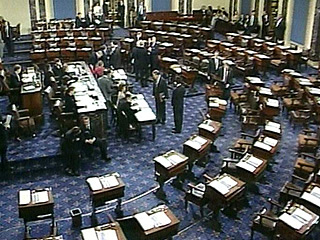
Democrats in the US Congress are preparing to investigate the actions of the Bush administration and are afraid that he will be able to take advantage of the privilege, which the ex-president Harry Truman first used in 1953, and will be able to impede the investigation, writes The New York Times . The newspaper notes that the newly elected US President Barack Obama may also oppose investigations.
When the Congress Committee in 1953 summoned the ex-president of the United States Harry Truman almost a year after he left his post, he refused, citing the immunity that the constitution gives him, regardless of the acting president or the former, reminds the newspaper.
"If the doctrine of the separation of powers and the independence of the presidency acts in a little less, it should be equally applicable to the President after the expiration of his authority," Truman said in an appeal to the Congress Committee.
Then the Congress retreated, creating a precedent that ex-presidents have the opportunity to maintain a secret for their administration for a long time. Now, when the democrats congressmen are preparing to investigate the actions of the Bush administration, they are afraid that the Truman argument will be used again.
“The Bush administration exceeded its power and can continue attempts to hide information from the American people after resigning,” said Senator -Democrat from Rhinod -Aleland Shelend Witehaus, sitting in two committees - justice and foreign intelligence, which study the aspects of Bush policy.
According to the newspaper, an open investigation requires serious interrogations of suspects, criminal investigation against the former Governor of Alabama Don Siegelman, a study of secret documents of the law department of the White House of Karl Rowe and Garietta Mayers in the dismissal of federal prosecutors.
Bush used his powers to block the requests of Congress regarding documents and testimonies from former assistants. But investigators hope that the Obama administration will unveil the documents and cancel the privileges that allow the Bush administration to refuse to testify.
In addition, two human rights organizations, American Civil Liberties Union and Human Rights First, prepared detailed reports for the new administration requiring a criminal investigation on charges of abuse of arrests.
However, as notes the publication, it is unclear how President Obama will act with such requests. Lawyers say that the investigation of Bush’s board will raise strict political and legal issues.
Since each president, ultimately, leaves the White House, the new president always has an incentive to cancel the investigation of his predecessor's affairs. So, Bush took advantage of this in 2001, when he blocked the investigation of the Republicans in Congress against the Clinton administration.
Obama has already expressed concerns about too many investigations. In April of this year, he said in an interview with The Philadelphia Daily News that "it is necessary to distinguish between a really stupid policy and a policy that leads to an increase in criminal activity."
“If the crimes were committed, they must be investigated,” said Obama, but at the same time added: “I don’t want my first term to be spent on the party’s“ Witch Hunting ”, because, in my opinion, we have too many problems that we must solve.”
But, even if his administration rejects calls for investigations, Obama cannot guarantee the same behavior from Congress or ships, where several claims to the Bush administration are already there.
Democrats in the Congress, for their part, say that they are determined to continue the investigation and that they will deal with the investigation and other issues after the Bush administration finishes their work. “We are ready to spend all the next four years to investigate Bush’s actions,” Whitehouse said.
But, if Obama decides to protect his predecessor from persecution, Bush could refer to the privileges of the president, having submitted the corresponding claim, says Peter Shein, a professor of law at the University of Ohio. However, in this case, the court ban will not concern the publication of the documents of the Bush administration and the interrogation of his assistants. The dispute, probably, in this case, will go to the Supreme Court, says Shane.