
Translated material
The average retail chains are waiting for the winter of defaults, and their visitors - rising prices and narrowing of the assortment
In Russia, the number of defaults by bonds will significantly grow in early 2009. About 20 defaults are expected in the first quarter alone, another 24 companies may not receive an offer to conclude new contracts in the amount of 38 billion rubles. Such a forecast is given by analysts of IR Veles Capital. According to experts, it is most likely that a number of average regional trading retailers will not be able to return money to creditors. In this regard, analysts predict the possibility of increasing products and narrowing of the assortment in retail chains, writes RBC Daily .
According to Veles Capital IR, in total, 29 cases of technical defaults are currently recorded, 20 of which are already settled, and nine can, respectively, can grow into real defaults. Only in November, according to CBONDS, the amount of unfulfilled obligations amounted to more than 4 billion rubles.
According to the analyst of the IS "Capital" Andrei Ignatov, in recent years they have not fulfilled their obligations mainly by companies that resorted to active lending. He notes that a lot of defaults are observed with companies that are engaged in the supply of products, for example, Parnas-M (supplier of meat), Sorus Capital (produces, imports and sells vegetables). “Their real defaults were observed in November,” Ignatov notes.
According to the deputy chief of the analytical department of Veles Capital IR, Ivan Manenko, the greatest risk of default on bonds in the first quarter of 2009 among trading companies with network business. “For them, the main source of working capital is usually a loan, while their own funds are recapitalized,” Manaenko explains.
The consumer sector of the IS "Capital" Marina Samokhvalova also expects a number of defaults in the field of retail. “It is mainly small regional companies,” she said. According to her, a number of companies are now trying to solve financial problems by selling retail space. "In addition to retailers, there are manufacturers of agricultural products, construction and machine -building companies under the blow," says Ivan Manenko.
According to analysts, numerous defaults will stimulate activity in the mergers and acquisitions. "The transactions on entry into capital will most likely be held before defaults: in the process of bankruptcy, the company is no interest to the strategic investor," explains Konstantin Tserazov.
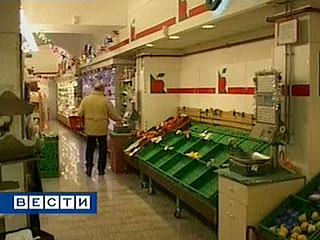
Analysts suggest that defaults on bonds, in particular, retail retailers will also be reflected on ordinary buyers. According to Marina Samokhvalova, in this situation it is possible that many retail chains will increase their income by raising prices for goods. “Because of this, conflicts with suppliers of products will probably arise,” she says. Also, according to her, the assortment of goods may also worsen. “Everyone has hearing half -empty shelves due to problems with suppliers in Mosmart networks,” says Marina Samokhvalova. According to Ivan Manenko, leaving the market of domestic manufacturers leads to an increase in the share of foreign companies, whose products are also becoming more and more expensive.