
Translated material
Vekselberg: If the government does not reduce the tariffs of the State Monopolia, the oil industry will have to be hard
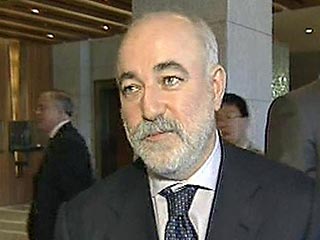
The Government of the Russian Federation may return to the issue of reducing tariffs for the services of natural monopolies at the beginning of next year. This was stated on Friday to journalists by the Executive Director of TNK-BP Victor Vekselberg after a meeting of the Board of the Russian Union of Industrialists and Entrepreneurs.
"The government decided in the direction of increasing the tariffs of natural monopolies in 2009. The government had its own justification," Vekselberg told reporters.
According to Vekselberg, the Government of the Russian Federation explains the decision not to change the tariff plan for next year by the fact that "the growth of tariffs will allow natural monopolies to implement investment projects and, therefore, support the internal demand for the goods and services of these companies," ITAR-TASS reports.
- Dvorkovich: Now you need to focus on previously accepted tariffs
- Morozov's candidacy for the post of head of TNK-BP will be submitted for approval on December 11
- The Ministry of Energy of Russia did not heed the requests of oil workers - they will not reduce the pace of liberalization of the energy market
At the same time, he continued, the growth of tariffs, will have a negative impact on other sectors of the economy, including oil. Vekselberg expressed confidence that sooner or later the current situation would force the government to return to the possibility of reducing tariffs for the services of natural monopolies.
This week, the Federal Tariff Service made a scheduled decision to increase tariffs for the electric power industry for next year by an average of 18%. Similar decisions were made for the oil and gas industry, notes Reuters.
Meanwhile, the head of Russian Railways Vladimir Yakunin is sure that for many years the tariffs for the services of one of the natural monopolies - railway transportation - have been greatly underestimated, which led to the fact that over the past 5 years the transport component in the price of goods of many industries has significantly decreased. For example, in metallurgy, this indicator decreased to 4-5%.
Earlier, the adviser to the President of the Russian Federation Arkady Dvorkovich, speaking at the Congress of the RSPP, assured that the Government of the Russian Federation decided not to suspend tariffs for the services of natural monopolies for 2009.
Vekselberg also believes that the export fee for oil in 192.1 dollars per ton at the current price for gasoline does not leave oil companies the possibility of implementing investment projects. In his opinion, this bet allows "the company to survive, but not to develop."
Morozov’s candidacy for the post of head of TNK-BP will be submitted for approval on December 11
Denis Morozov, ex-head of the Norilsk Nickel, the candidate of the Norilsk Nickel, will be submitted to the post of head of the TNK-BP for approval of the Board of Directors of the company on December 11. This was announced on November 28 by the Chairman of the Board of Directors of TNK-BP Viktor Vekselberg.
"We will try to have time to make a new candidate for approval of the board of directors on December 11," he said. At the same time, Vekselberg noted that Denis Morozov has competitors, ITAR-TASS reports on the post of head of TNK-BR.
Earlier it was reported that Morozov’s competitors to the post of head of TNK-BP are the former banker from Morgan Stanley and the vice president of Rosneft Peter O'Brien and the ex-head of the Russian representative office of the German chemical group BASF Peter Golitsyn.
Recall that in the spring of 2008, among the shareholders of TNK-BP, the conflict flared up due to the fact that the consortium Aar (Alfa Group Mikhail Friedman, Leonard Blavatnik and Renova, Viktor Vekselberg), who represented the managing director of TNK-Robert Dadli, who represented the interests of Russian shareholders. "He runs the company in the interests of only one shareholder, namely BP," although the shares in this joint venture created in 2003 are divided equally - 50 to 50.
Russian managers also filed a lawsuit against Robert Dudley , accusing him of discrimination and violation of labor legislation - the document noted that Russian employees had less salaries than the British one and a half to two times.
In early September, the shareholders of TNK-BP agreed that Robert Dudley would leave the post of managing director before the end of this year. The new one will nominate BP, and to say - the board of directors of the company.
On October 3, at a meeting with the President of the Russian Federation Dmitry Medvedev, the co-owner of TNK-BP, the chairman of the Board of Directors of the Renova Group of Companies, Viktor Vekselberg, said that the shareholders of TNK-VR completely settled the conflict within the company and expected until the end of December to legally draw up the agreements.
Dvorkovich: Now you need to focus on previously accepted tariffs
The Russian Federation should focus on the previously made decisions on the indexation of prices in discussions about the possibility of changing tariffs for the services of natural monopolies, said the assistant to the President of the Russian Federation on economic issues, Arkady Dvorkovich, speaking at a meeting of the RSPP.
"Now, when planning actions for the next year, you need to focus on the decisions that were made earlier," he said in response to the question of the head of the RSPP, Alexander Shokhina.
Dvorkovich believes that the balance must observe in this matter, because, on the one hand, monopolies need to perform an investment program, maintain the rates of gas production and transportation, and on the other hand, to be safe from excessive growth in costs, Reuters reports.
"If necessary, such a decision will be made, but still, I believe that it is necessary to focus on the previously made decisions," he said.
Transneft was going to finance at the expense of the tariff to build a new expensive pipe to China along the Eastern Siberia route - the Pacific Ocean (VSU). In August, the Federal Tariff Service (FST) has already raised the cost of the tariff for transneft services by an average of 10.7% and due to expenses for the VSU, although earlier the authorities did not promise to transfer the cost of the pipe to the oil industry.