
Translated material
Prices for Moscow housing: Results of November
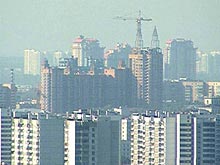
The average price of supply in the secondary housing market in Moscow decreased in November by 2.7% to 7.91 thousand dollars per square meter. meter. In November, the average ruble prices, taking into account the fluctuations in the course and inflation, increased by 0.9% to 216.3 thousand rubles per square meter. meter. This is evidenced by the data monitoring of the residential real estate market of the analytical center of the Incom corporation, which is quoted by the Prime-Tass agency.
In the Moscow region, average ruble prices increased by 1.1% to 91.7 thousand rubles per "square", dollar decreased by 2.5% to 3.36 thousand dollars per meter. In total, since the beginning of the year, dollar prices have risen in the capital by 30%, in the region? 31%.
In Moscow, dollar prices were reduced in most administrative districts and in all types of housing in the range from 3 to 6%. In absolute terms, the decline was up to $ 300 per meter. The exception was elite houses, as well as apartments located in the Central Administrative District, where prices have not changed for November.
In the Moscow region, a decrease in dollar prices amounted to 1% of elite apartments (an average of 4.1 thousand dollars per "square") to 5% for panel Khrushchevs (an average of 3 thousand dollars per meter). In absolute values, the decrease was from 100 to 200 dollars per square meter.
In November, an increase in the total offer of apartments took place at a slower pace. In Moscow, the increase amounted to 9.1% (versus 19.8% in October), reaching a record level of 47.3 thousand objects. In the Moscow region, the increase amounted to 6.4% (in October - 12.7%), up to 26.6 thousand objects.
Traditionally, Moscow was most actively offered to sell an apartment in houses located in CAO and CJSC (36% and 25% of the total supply). The structure of the proposal by type of housing has not changed, the main share was on a typical and modern panel, as well as monolithic houses (24%, 18% and 22%, respectively).
In the Moscow region, the proposal structure also remained approximately the same: a typical panel and brick houses with a large kitchen were 26% of the total supply.
In Moscow, the proposal in the segment of inexpensive housing most intensively grew. The volume of supply in panel "Khrushchevs" grew by a month by 19%, in a modern and typical panel by 10% and 6%, respectively. In total, a proposal increased by 1% in the segment of Stalin's houses. In the Moscow region, the proposal evenly grew in the segment of panel Khrushchevs, brick apartments with large kitchen and Stalin's houses? 15%each.