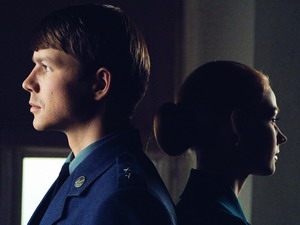
The film "Malaya Moscow" caused an unprecedented scandal in Poland, although the director Waldemar Kshistek shot just a love story. The picture of the tragic love of the Polish lieutenant and the wife of the Soviet officer resurrected the anti -Russian complex and forced to once again recall the "Soviet invaders." The tape will soon be released on Russian screens. In the circumstances of the Polish Russian love-adavism, The New Times sorted out
At the 33rd festival of Polish feature films, held in GDYNA, Malaya Moscow was awarded the Golden Lions Grand Prix and the awards of Polish TV, and actress Svetlana Khodchenkova received a prize for the best female role. And then a scandal erupted.
Its main reason is that the film was overlapped by an unexplored Polish complex in relation to the former "older brother" - Russia. Therefore, few people paid attention to high acting and operator skills, accurate directing and lyrical music.
The very next day after the verdict announcement, some Polish newspapers condemned the jury's decision to give the main prize to the film about the love of the Soviet woman and the Polish officer: “The festival of Polish cinema was spoiled,” one newspaper was indignant, and the other wrote: “Let us remember this verdict.” The film has a lot of opponents.
However, the “Vygal newspaper” reacted very carefully: “The truth of this film is the presentation of our mixed with the charm of fear of Russia. Is this the same complex that makes our president sacrificially and with the risk of substituting in Georgia under the shots and believe that not anyone, but Russians? ”
Waldemar Kshystek, screenwriter and director of Malaya Moscow, answered the attacks: “Political resonance should not matter in the perception of this film both in Poland and in Russia. We should not look at the relations that are now observed between our presidents. This is a film about people and relationships between them. Spectators will find in him everything that is beautiful in the cinema - love, laughter, tears, big dramas and joys, as well as the truth about those times and deep experiences. ” But few people listened to the director’s words.
The divided legend
KShistk took up the topic that first rises in Polish and, perhaps, world cinema - the post -war dislocation of the Soviet troops in Poland. The period is the most stressful: the eve and the beginning of the invasion of Czechoslovakia with "fraternal help."
The film takes place in the legend, a hundred thousandth city in the west of Poland. It was here that a significant grouping of Soviet troops was located. The city was actually divided into the Soviet and Polish units. In addition to the barracks, the airfield, the underground headquarters were also special areas, where officers with families lived. Soviet schools, shops, hospitals, cinemas, clubs, and the prosecutor's office worked here, and a large prison was in the very center. About 30 thousand Soviet citizens from different republics were constantly living in lesnitsa. That's why the leder was called "Malaya Moscow."
The Poles consider the withdrawal of Russian troops one of the most important events of the last decade of the last century, which ended on September 17, 1993. But in the time shown in the film, they willingly talked with liberators, who are now called the invaders. Trade, household services, household assistance flourished. The biggest honor was used by Soviet military doctors. Polish-Soviet intimate relations also happened. Coming in sex, it was still possible to get rid of a reprimand or promise "not to do this anymore." But love was strictly punished and was a categorical ban ...
Slave of love
The main character of the film Vera is the wife of the pilot who arrived in the Soviet garrison, the failed astronaut. At the Soviet-Polish evening dedicated to the anniversary of the October Revolution, a young Polish officer Michal falls in love with it. Their love becomes the subject of close attention of the command, party organs and the KGB.
Vera and Michal at first are thoroughly hidden, knowing that they risk many. But their novel is eventually taken to the "public court."
The young woman, who became the prototype of the heroine Svetlana Khodchenkova, was actually called Lidia Sergeevna Novikova. The secret of her tragic death - murder or suicide - remained unsolved. Historians of the leder (whose inhabitants call the deceased “slave of love”) they say that the cause of the tragedy was the order of the command of the Soviet garrison about Lydia’s immediately departure and her husband to their homeland.
“Slave of Love” forever remained in the Legend and became her legend. On the plate of the modest grave of Lydia Novikova, the initiation was knocked out: "Daughters, mother, sister." People constantly bring flowers here. After entering the Small Moscow screen (the legery were the first to watch the picture), two thousand lamps were lit on the grave of her main character. In August of this year, the authorities signed an agreement with the Russian embassy in Poland on the reburial of Soviet military personnel and their families, who served in the northern group of troops. Legalnitsky cemetery will be one of the three Polish necropolises with mass graves. But the Legery really want the remains of Lidia Sergeevna Novikova to stay in place ...
The film was opened not only by the anti -Russian complex (as well as love for Russia) Poles, but also by the Antipol Complex from Russia. It is characteristic that the Polish filmmakers intended to make the film together with the Russians, but not a single Russian studio or the company accepted the proposals for cooperation. But the rental in Russia of the film "Malaya Moscow" will still take place. Love sometimes defeats politics ...