
Translated material
The strongest devaluation among the currencies of the CIS countries survived the Ukrainian hryvnia
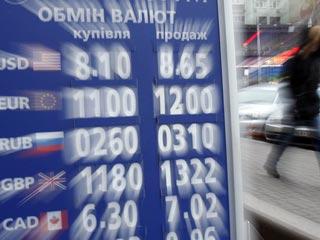
The observed devaluation of most national currencies of the CIS republics in relation to the dollar is closely interconnected with the situation in the global economy and is explained by the influence of negative macroeconomic factors of both internal and external nature, experts surveyed by the BFM.ru portal believe.
At the same time, the Ukrainian hryvnia fell the strongest in relation to the dollar. Over the past three months, her rate in relation to the dollar decreased by 67% and amounted to 7.9 hryvnia per dollar compared to 4.7 hryvnias in mid -September.
“Small states have serious problems involving financing. In fact, they cannot finance themselves. One of these countries has become Ukraine, the situation of which, among other things, is complicated by external debt,” says Andrei Tolstousov, manager of the Grandis Capital IR.
According to Dmitry Aleksandrov, the leading analyst IR Fayneshl Bridge, full political uncertainty, restrictions on the National Bank of Ukraine, as well as the fact that investors are in a hurry to withdraw assets from this state over the national Ukrainian currency.
Georgian Lari also distinguished himself. Over the past three months, the fall amounted to 14%. Now you can buy 1.6 Georgian Lari for one dollar, and not 1.4 as before. In addition to the military operations in the country, analysts see other reasons for the fall of this national currency.
“The economic situation in Georgia cannot be called ideal, in addition, the country is completely dependent on foreign injections,” explains Dmitry Alexandrov. “Moreover, this, as far as I know, is the only country in the CIS whose authorities are not received from the state budget. In these conditions, it does not make sense to talk about national currency at all.”
The Kyrgyz catfish began to cost 10.5%less, the Belarusian ruble - by 4%, Uzbek Suma fell into 2%, Kazakh tenge - by 1%, and Turkmen manat - only 0.2%.
But there are those who strengthened
The growth leaders were the Armenian drama (+1.3%), as well as Azerbaijani (+1%) and Turkmen (+0.4%) manat.
“Export duties form a significant part of the budget of Azerbaijan,” Dmitry Alexandrov explained to Bfm.ru. “The country's economy is more archaic compared, for example, with Russian. Therefore, even in case of reducing oil and gas supplies, Azerbaijan will be able to provide for itself. Hence the strengthening of the currency.”
Another factor: the lack of developed foreign trade makes the national currency quite stable. According to experts, this rule is applicable to the economy of Turkmenistan.
“According to our forecasts, most national currencies will continue to devalue next year,” says Julia Golysheva. “The sharp devaluation of the currencies is now presented with a negative factor for the economies of the CIS countries, however, in the case of structural macroeconomic reforms and increasing the volume of state support, the governments will adhere to their currencies in order to stimulate economic growth.”
As of December 16, they gave for one dollar:
2201 Belarusian rubles
120.7 Kazakh tenge
7.9 Ukrainian hryvnias
0.8 Azerbaijani manat
307.9 Armenian dramas
1.6 Georgian Lari
39.4 Kyrgyz soms
3.4 Tajik somoni
14250 Turkmen manat
1383.7 Uzbek soums
10.4 Moldavian lei