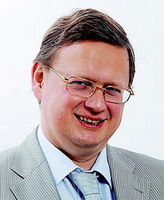
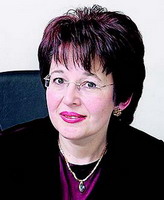
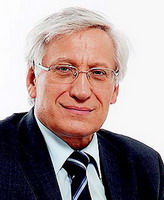
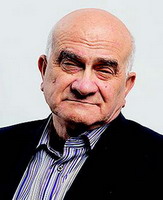
Crisis-2009. Economic forecasts for next year are a traditional genre for the media at the end of December. However, now, in the midst of the crisis, such a forecast goes far beyond the forefront of journalistic entertainment. Where is the ruble rolling? Will inflation increase? What will happen to our income and savings? Does Russia face mass unemployment? The New Times decided to look in 2009 with experts
The survey took part in:
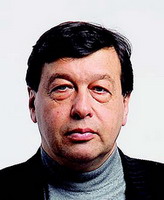
Evgeny Gontmamer, member of the board of the Institute of Modern Development
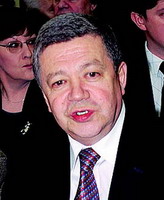
Ruslan Greenberg, Director of the Institute of Economics of the Russian Academy of Sciences
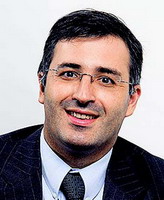
Sergey Guriev, Rector of the Russian Economic School
Anton Danilov-Danilian, Chairman of the Expert Council of Business Russia
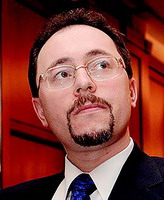
Mikhail Delyagin, Scientific Director of the Institute of Problems of Globalization
Oksana Dmitrieva, deputy of the State Duma
Alexander Khandruev, First Vice-President of the Association of Regional Banks
Evgeny Yasin, Scientific Director of the Higher School of Economics
How will the ruble exchange rate change in relation to the dollar?
Guriev: If we assume that the price of oil will not fall dramatic and amount to an average of $ 50 per barrel in 2009, then the ruble will decrease by about 10% by March and another 10% by December. Most likely, the central bank will continue the policy of the gradual weakening of the ruble. However, if the losses of reserves are accelerated, then the central bank can increase the rate of weakening of the ruble - for example, not by 1%, but by 2% per week.
Delyagin: The ruble will be depreciated. At the beginning of the year, while there are reserves, smoothly. And the future fall, when the reserves end - collapse. Because, on the one hand, the state does not control the colossal funds that it pours into the economy. On the other hand, the rate of reduction of reserves simply shock: in four months they decreased by $ 161 billion.
Khandruev: Everything will be determined by the course policy of the Central Bank. If the Central Bank continues currency interventions, then it will lose reserves, but will provide a more or less stable ruble exchange rate. I think that the evolutionary trend for the weakening of the ruble will continue, but it will not be sharp.
Danilov-Danilian: The Central Bank will have enough reserves to prevent a serious devaluation of the ruble in relation to the dollar, whose power now looks too exaggerated. I think that an average of a year below 30 rubles per dollar will not fall, although there may be one -time short -term “subsidence”.
Dmitrieva: If a reasonable monetary financial policy is being carried out, then there will be about 40 rubles per dollar. And if one does not take place (if you analyze the current actions of the authorities, it is difficult to believe in reasonableness!), And oil will continue its fall, then the rate can collapse to 60–70 rubles per dollar.
Greenberg: Of course, there will be a decrease in the course - I believe, to 34 rubles per dollar. But only on condition that the government and the Central Bank will continue the current policy of smooth devaluation, which I consider the only right one. Moreover, it had to be carried out earlier - in the "fat" years: then the process would not be so painful.
What will be inflation?
Guriev: A lot depends on raising gas tariffs, electricity, transport, housing and communal services. Most likely, inflation will be above 10%. As usual, in January, prices will greatly increase, but subsequently the rate of price growth will slow down.
Delyagin: prices for everything related to monopolies, including transport and housing and communal services, will increase. And not of the first necessity for goods, most likely, they will fall. In general, inflation will certainly be higher than 8%planned by the government. If the collapse of the ruble does not occur, then by the end of next year, I think we will see inflation of 12-15%.
Danilov-Danilian: In Russia, a monopolized economy, and therefore the crisis does not lead to deflation or reduction of inflation, as in other countries. This can happen if the government begins to take real actions to limit the appetites of natural monopolies. In the meantime, it fights with them only in words, so my forecast is not lower than 12%.
Khandruev: Two multidirectional trends will affect the pace of inflation. On the one hand, a recession on a global scale, which will mean that the amount of supply is higher than the volume of demand. And this will work to reduce prices. On the other hand, our economy is greatly monopolized, and monopolies are always striving to lift prices. In addition, the financial support of various sectors of the economy that the authorities are now provided will be affected by the growth of inflation. And if the ruble deprivation of the ruble is also accelerated, then we will not see less than 10-12%.
Dmitrieva: Inflation depends on the degree of ruble devaluation. And if this devaluation is collapsible, then we will not see inflation of less than 20%. But how much it can be higher - it’s scary to imagine: maybe you will have to remember 1998.
Greenberg: Inflation will be no less than this year: somewhere around 12-15%. It is clear that over the year we will not be able to change the monopolized nature of our economy. Plus, the consumer market in one form or another will result in those 5-6 trillion rubles that our government pumps into the economy.
How will the real incomes of the population change?
Gontmamer: On average, they will decrease, but the average figure is not indicative here. Pensioners, military personnel, state employees will probably have a small growth - in any case, it is in the budget. And the main blow will have to be employees of the real sector: the income fall will reach 15%. Especially experiencing this by the employees of metallurgy, engineering, and the chemical industry - where a decrease in income can be 50%, especially in single -industry towns built around one enterprise.
Delyagin: The incomes of the population will decrease very much, they are already rolling in inclined since September. Another thing: I doubt that Rosstat will show this, because he considers the average figures where the income of those who have lost their jobs develop with the income of the oligarchs.
Danilov-Danilian: The income will cease their growth, which, I note that all the last years it has been very significant: 10-12-15%.
Khandruev: income will definitely decrease. How exactly depends on the timing of the continuation of the recession. Optimistic forecast - by 3-5%.
Greenberg: Real income will fall. The nominal may be able to hold. But the real, of course, will go down due to the depreciation of the ruble and inflation.
What will happen to unemployment?
Guriev: Unemployment will grow, but not very much. Most likely, on average in the country is 2–4%. Many enterprises will introduce an incomplete working week and send workers on vacation. But in some cities, especially where there are city -forming enterprises that suffered from the crisis, there will also be a huge growth of open unemployment.
Gontmamer: Now we have official unemployment - about 6% of the economically active population: 1.3–1.4 million people. Given the fact that in Russia there are 700 single -industry towns in Russia, we will have 2 times more unemployment in a year - 12-15%.
Yasin : Unemployment will grow, but it is unlikely to be above 5-7%. Just because the Russian labor market responds to a crisis differently: our people are ready to endure temporary leave, a decrease in salaries or their long -term non -payment, just not to lose the workplace.
Danilov-Danilian: Unemployment will grow, but not much: the maximum of 5-6% will increase to the current level of another 2%. Another thing is that in some regions dependent on those industries that are especially affected by the crisis, this growth can be much more noticeable.
Dmitrieva: The growth rate of unemployment will correspond to the rate of decline in production. It should be borne in mind that now, unlike the early 1990s, the situation with a small business is worse: there are no more free niches for the start. Plus, the quality of the labor force worsened: relatively speaking, the engineer can be re -taught to the manager, but on the contrary, it is unlikely. So, according to my forecasts, it will be 30% more unemployed than now.