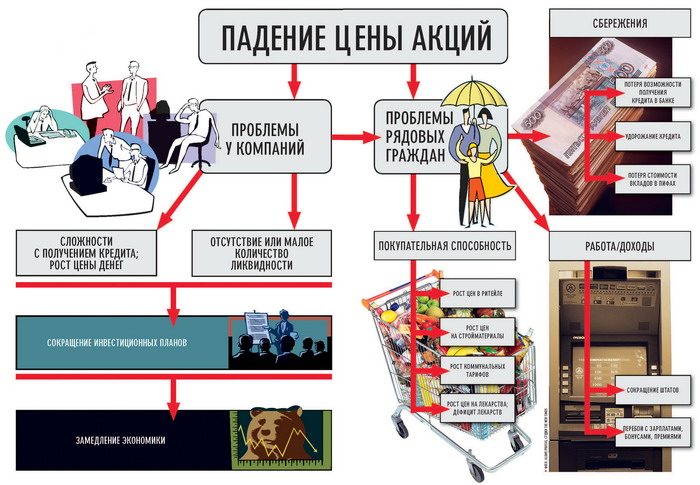
When this scheme was published The New Times, the crisis in Russia has just begun. Reality not only confirmed our forecasts, but also surpassed them in the severity of the consequences. The crisis began with a powerful fall in the stocks of shares in the stock market. This process directly affected the interests of those people who are owners of shares of companies quoted on the exchange. Their hopes to save or increase their accumulations by investing in the action collapsed. The further influence of the crisis turned out to be much wider than direct losses from changes in the value of shares. Enterprises have problems obtaining loans. Even if these loans are available, they become more expensive in a crisis: the price of money rises. Therefore, you have to reduce costs. And this means a reduction in jobs and a reduction in salaries. And at the macroeconomic level - a reduction in investment plans, coagulation of business activity and, as a result, a slowdown in GDP growth rate.
Than the crisis threatens an ordinary citizen
The crisis strikes three directions. Firstly, it affects personal savings: it is more difficult and more expensive to receive loans in banks, accumulations are bought in cases where they are invested in PEFs. There are also risks of bankruptcy of banks, although no one canceled the deposit insurance system. Secondly, there are troubles at work: it is likely to say goodbye to the hopes for bonuses and raising salaries, or even completely lose your workplace due to problems in the market. Thirdly, the purchasing power of the population is reduced. It is already clear that the crisis has influenced the availability and prices of imported goods, especially drugs and products of foreign production.