
Translated material
The euro for the first time in history has become more expensive than 40 rubles
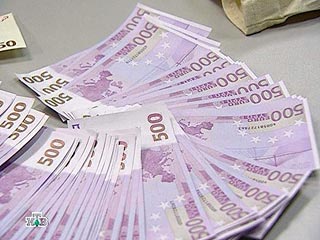
The Central Bank of Russia announced official courses on December 26. During the day, the euro rose in price by 22.94 kopecks to 40.1859 rubles. The dollar in Russia also rose - by 6.16 kopecks to 28.6735 rubles.
Meanwhile, the euro at the MICEX has already crossed a mark of 40 rubles several times, but this indicator has never become an official course of the Central Bank of the Russian Federation.
- Experts: the dollar will soon overcome the line of 30 rubles
Exchange centers have been operating in courses above 40 rubles for the euro for two weeks.
It is worth noting that on the eve of Russian President Dmitry Medvedev said that there would be no sharp devaluation of the ruble in the Russian Federation . The national currency course "should be effective, and it must correspond to the real state of our economy."
It should be "a little more flexible than it has been recently in order not to create intra -economic problems," Medvedev pointed out. State measures, therefore, should not "lead to losses from citizens of the Russian Federation."
We also add that the Central Bank the day before again devalued the Russian Dennuts .
Since mid -December, the Bank of Russia markedly accelerated the rate of weakening of the national currency: if starting in November, the Central Bank expanded the bivalve basket corridor by about 1%once a week, then only last week it was done three times (December 15, 17 and 18), and twice more than 1%. This week is the second (December 22 and 22) weakening.
According to the first deputy chairman of the Central Bank of the Russian Federation, Alexei Ulyukaev, the Bank of Russia deliberately pursued a policy of "smooth" weakening of the ruble in the interests of citizens and business, giving them time to choose a currency strategy and trying to prevent panic.
However, such tactics, according to experts, leads to a rapid reduction in international reserves. Now the Central Bank is forced to go to a sharper weakening of the ruble, which is also responsible for the interests of the Russian economy.
Avoiding a one -time collapse, the Central Bank of the Russian Federation step by step expands the corridor of the bivalve basket course, which measures the ruble strength - about 1% in one step,Smartmoney noted. Since January 1 of this year, the ruble weakened by 15% relative to the dollar and 9% relative to the euro.