
Translated material
Nabiullina offers to use a crisis for buying cheaper enterprises abroad
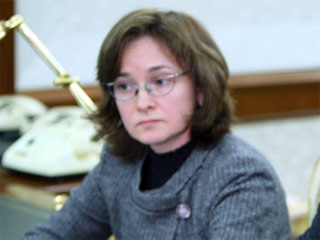
The Minister of Economic Development Elvira Nabiullina proposed to use a crisis to buy cheaper enterprises abroad.
According to RIA Novosti , Nabiullina performed on January 23 at a meeting of the Council on Foreign Economic Activities and called on Russian companies not to refuse due to a crisis from foreign expansion.
“Of course, minimization of losses is an important task today, but the conditions of the global crisis must be used to ensure subsequent growth and development. First of all, this concerns the presence of Russian business in the economies of the states of the post -Soviet space.
Conditions for expanding the positions of Russian business in the markets of goods and services, the acquisition of cheaper assets and participating in infrastructure projects, ”Nabiullina said.
The minister noted that Russian state bodies on their channels receive a lot of information about the situation in the economy of foreign countries: about specific enterprises sold in full or partially, and, of course, requests of states to provide them with financial assistance.
"Domestic business has its own tasks and interests in these countries, in the implementation of which the government can and should contribute to it. We must decide how to carry out agreed actions," the mayor noted.
She proposed creating a structure that would have taken upon itself the coordination of Russian investment policy in the CIS space and promote promising projects.
The crisis dealt a sensitive blow to foreign direct investments of Russian business. According to the Junctad, the accumulated investments from Russia increased from $ 20.1 billion in 2000 to 255.2 billion at the end of 2007. According to this indicator, Russia reached 13th place in the world and 2nd place among developing economies.
If in 2000 the accumulated ZPI in Russia amounted to 7.8% of GDP, then by the beginning of 2008, 19.8%. Their volume reached in 2007 16.8% of the gross investment indicator in fixed assets. One could talk about the emergence of a parallel external economy, which became an organic component of the internal (national) economy of Russia.
The tendency to expand expansion abroad, which continued and the first eight months of 2008, gave way to a sharp coagulation of its size. If 47 transactions were made in January-August, then in September-December-13, or on average 3.3 transactions per month.
In general, in 2008, 60 transactions were made on the acquisition of foreign assets worth about $ 17.5 billion (excluding assets exchange). These are fewer indicators of 2007 - almost 100 transactions for $ 23.3 billion. True, in 2008, already agreed transactions were postponed by at least $ 8 billion.