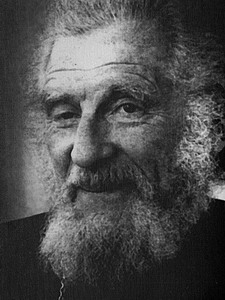
The church can recover only through repentance, Father George Edelstein is sure. To repent, having forever parted with the Soviet past and experience in cooperation with special services. The New Times visited one of the main in -church oppositionists in his small Kostroma parish
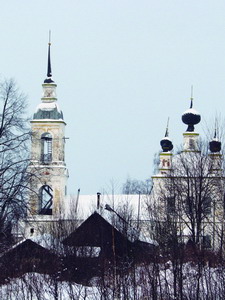
The farther from Kostroma, the more people in the cold bus. At each new station, one or two old women come in and silently go further. All come together in the village of Karabanovo - 20 km from Kostroma - and also silently, along the path of the Guska path, go to the Church of the Sunday. Sunday liturgy begins at 8.30, but the surrounding residents gather in advance. In total, by the beginning of service in the temple, a little less than 30 people. Mostly women from 40 and older. Several men - who have served two for two, who for three deadlines and who came here, having heard about a good father.
In the dense corner
People enter the temple. One of the parishioners lays a candle on the table. Women take off their outer clothing - for this there is a special hanger in the right corner, approach the table, leave someone as many as more than 50 rubles, take candles, light, pray, wait for the start of service. Some grandmothers in the same corner are stacked by hotels for the priest - Father George: bread, vegetables, buns that themselves baked. Karabanovo, like the surrounding villages, the village of poor and almost extinct. There are no people on the streets, and that someone still lives here, you can only guess along the paths between the houses. There are no children in the village at all. Neither the club nor the store (the products are imported), nothing: the Church of the Resurrection is the only place where people can meet. Father George, whose house, built by himself, stands across the road from the Church, comes earlier than anyone - at 6.30 in the morning. Lights light, opens the windows, sets anal for prayer books. About 15 minutes before the start of the service, one of the parishioners helps the priest to clothe: Father George, tall, stately, despite his 76 years, puts on by a subscriber, epitrachil, guarantee (sleeves), a belt, a robe. He serves the Liturgy, Natalya helps him, who for the rest of the time works with the father with the economy: neither the headman nor the clerk, the priest has no other assistants. Father George sanctifies water (the next day the Epiphany Festival), reads a short sermon. “At Christmas, we talked not in vain, this time in all notes the word“ God ”was written with the title letter, as it should be written,” Father George addresses his few parishioners. It sprinkles them with holy water. Grandmothers smile. The flock also silently and goose leaves the church, so that someone is by car, who is on the bus to return to Kostroma or to burst into neighboring villages. “More than today, people come only for Christmas and Easter,” Father George shares.
In Karabanov, Father George settled in 1992. Before that, he happened to serve in similar rural parishes in the Kursk and Belgorod regions. In the same poor 92nd, Father George was at the same conference in the United States, where he was promised to allocate $ 30 thousand for the restoration of Orthodox churches. Having enlisted such support, he came to the Archbishop of Kostroma and Galich Alexander and asked him to send him to one of the parishes in which it was necessary to restore the temple. “Vladyka Alexander, grinning, took out a list of 50 temples then and said:“ Choose! And if not enough, I can easily call you 50 more. ” Father George chose Karabanovo, and in addition received two more parishes in the long -extinct villages of Knyazhevo and Kozur. Then, in the 92nd, on the site of the current Church of the Resurrection, Father George found three and a half walls. In the Soviet years, in the temple, built back in 1833 under Emperor Nicholas I, there was first a tractor workshop - part of the northern wall was demolished for its arrangement: the tractor was an unbeliever and did not go through the door. Then the collective farm "Soviet Army" arranged a warehouse of mineral fertilizers here. Together with the church, collective farmers destroyed the cemetery. Including the burial of the poetess Anna Kotruseva, published in the "Contemporary" by Alexander Pushkin.
The Church of the Father George and a few local residents had to restore on their own. The former prisoners helped - the closest neighbors of the priests who came to Karabanovo, having heard about the good priest. And the priest contributes to them products, cigarettes, when he can - money.
- Not scary with such neighbors?
“No,” Father George shakes his head. - They are peaceful, especially when they do not drink. I’m saying one thing recently: “What are you, a pig, yesterday came to such a state?” And he answers to me: “Sorry, Father George, we first drank a bottle of vodka yesterday, and then we got two liters of alcohol, and so we fogged down.” Well, of course, what could have been from two liters of technological alcohol with them?
He says, not condemning, rather regretting and fearing, but not for himself, but for them: "At such moments, they begin to rush at each other with axes."
Priest-opposition
Father George has been restoring his church soon for 17 years: he did not receive a penny from the Moscow Patriarchate. He built and collected, as he himself said, by people: the parishioners collected money, icons and candlesticks brought the attic, they mined building materials: “Grandmothers come to the service, I look, and they have bricks in adhesions.” Recently, Vladyka Alexander, the head of the Kostroma diocese, instructed the priest to restore the church in a nearby village, where the descendants of Ivan Susanin rest. To restore the church in the family village of this historical hero for the church is a fundamental matter. They say that the Russian Orthodox Church is actively preparing for the magnificent celebration of the 400th anniversary of the Romanov dynasty. 1 money for the project, however, is not yet allocated. “Well, let's wait,” Father George philosophically thinks philosophically. “The anniversary only in 2013, so maybe in 2-3 years financing will begin, we have time to do something.”
However, it is pointless to count on the help of the church leadership to Father George in any case. Relations with the ruling bishops of the Russian Orthodox Church have long been tense. Since 1965, when the laid -laid layman Edelstein helped priests Gleb Yakunin and Nikolai Ashleyman write the famous letter to Patriarch Alexy I (Simansky) about how the state security authorities suppress the rights and freedom of believers: both author were deprived of the dignity for this. By the way, it was Nikolai Ashleyman, who died in 1985, Father George, after many years, dedicated his book “Notes of the rural priest”, which had already been published several times at the Publishing House of the Russian State University. Later, becoming a priest (he was ordained by Metropolitan Chrysosta in 1979), Father George conflict with Soviet secular and church authorities where he served, in the Kursk and Belgorod regions. The KGB officers and the committee on believers 2 were annoyed by the clergyman who stubbornly refused to comply with the rules imposed on him. There was a ban on wearing cassocks in public places, but Father George wore; They were forbidden to catch the dead in the cemetery, but he buried; They demanded to report on the christening and reports what believers were told on confession, but the priest believed that the church sacraments were not for the KGB ears.
In the early 90s, Father George became one of the few who declared the need to cleanse the church through repentance. The main evil in the church, Father George considers "Sergianism." In 1927, the Locumines of the Patriarchal throne Metropolitan Sergius (Stragorodsky), in the future - the Patriarch of the Russian Orthodox Church, issued the famous declaration, which stated that the church, along with the Soviet government, should fight "with the sabotage activities of our foreign enemies." “The church should be separated from the state,” Father George is sure. The priest, together with the few followers, called on church hierarchs to repent in relations with the KGB: the archival documents that appeared after the failure of the State Emergency Committee testified that the vast majority of the leaders of the faiths, including the Hierarchs of the Russian Orthodox Church, were somehow associated with the Soviet special services.
“The agent nicknames of the metropolitans, who are still leading to the Russian Orthodox Church - Cyril, Juvenal, Clement, Methodius, Vladimir, Filaret, but they didn’t go further,” says Father George. The only bishop, which publicly admitted in cooperation with the KGB, was Metropolitan Chrysosta - the one that at one time ordained Father George. In 1990, a chrysosta was the Archbishop of Vilensky and Lithuania, supported Lithuania’s desire for independence and publicly announced that he was breaking his cooperation with the KGB. “He admitted, but did not repent,” said Father George. - Because he believed that there was nothing shameful in this. This is all the "Sergianism" - the bishop believed that the church saves a lie. " Father George, on the contrary, believes that the actions of the hierarchs who collaborated with the Soviet regime cannot be considered as a lie to salvation, especially in the late Soviet period: neither Solovki nor executions did not threaten them, and to betray the secrets of the confession, they went from the situation - to go abroad, to make a career. “The church can recover only by repenting,” the priest believes.
As a result, the scandal around the bishop-chekists ended in nothing. To take the eyes, recalls about. George, a commission was created, led by one of the youngest bishops, now the Kostroma archbishop Alexander, but it turned out to be stillborn.
Already in 2002, the theme of the KGB agents in the Russian Orthodox Church by the efforts of Father George surfaced again. During a serious illness of Patriarch Alexy II, Vladimir Putin awarded the Order of Friendship of Metropolitan of Voronezh and Lipetsk Methodius. Methodius, along with Metropolitan Smolensky and Kaliningrad, was then considered among the main candidates for the post of future patriarch. The rural priest made an open appeal to the President, recalling that at the 1992 bishop's Cathedral of 1992, Metropolitan He Chrysosta called Methodius "an officer of the KGB, an atheist, a vicious person." “Although the Kremlin administration considers in some parameters a more worthy candidate Metropolitan Methodius, in no case does I intend to say that preference should be given to Metropolitan Kirill. They are both much worse, ”Father George wrote to the president. - The official document of the Russian parliament, distributed in March 1992, says: “The agents, marked by the nicknames of“ Svyatoslav ”,“ Adamant ”,“ Mikhailov ”,“ Nesterovic ”,“ Kuznetsov ”,“ Ognelenko ”, etc. were carried out along the line of the Association of the KGB. instructions indicate the uncertainty of the specified department from the state and its transformation into the hidden center of the KGB agent among believers. ” 3, the chairman of the department of external church relations (ACCS), this “Hidden Center for the KGB agents among believers” was then to this day the Eminence Cyril, ”wrote Father George in a letter.
“President Putin, by the way, did not answer the letter to me,” Father George smiles. “Well, he is the president, where he will answer all appeals.” Although the Pope John Paul II answered my letters. ”
The next will be worse
The policy of Metropolitan Cyril, who is now considered the main contender for the Patriarchal throne, Father George calls the policy of merging the church with the state, the policy of destroying the Church, and the personification of the very “Sergianism”. In an interview in the mid-90s, Father George said: “Quietly and calmly, Metropolitan Cyril strangled everyone. Cyril knows how to wait. " Then these words were about how the head of the department of external church relations dealt with his other potential competitor for the Patriarchal throne Metropolitan Pitirim. Over the past 2002, Vladyka Kirill removed from his road and Methodius, who was sent to lead the distant and poor Kazakhstan diocese.
- If you were a delegate and could vote, who would you support from the current bishops?
“No one,” Father George answers a little thought. “It doesn't matter to me who will become the next patriarch.” I know only one thing: whoever they choose, it will be worse than the previous one. So we add up. The followers of Sergius of Stragorodsky said that he was a true ascetic and theologian. Absolute truth. Supporters of Alexy I (Simansky) called him a true aristocrat. Indeed, a descendant of a noble kind. About Alexy II, probably, they will also say something like that ...
_______________
The first Romanov, Mikhail, was called up to the kingdom in 1613 in Kostroma, the delegation was accepted in the Ipatiev monastery.
2 The Committee on Believers (the unofficial name of the Committee on the Russian Orthodox Church) was one of the most important institutions of the Soviet state, which, together with the department of the fifth main department of the KGB, was entrusted with supervision of the ministers of all faiths and believers.
3 "Private determination of the Commission of the Presidium of the Supreme Council of Russia to investigate the causes and circumstances of the State Emergency Committee." - The New Times.