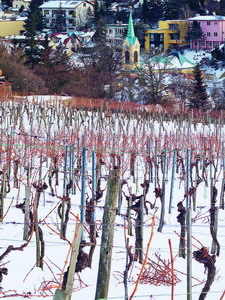
In the dispute between the vine and the malt, truth is born. Austria is a beer country, you can’t argue with this. But the vineyards in the capital of Austria are growing in the middle of the city, on Mount Nusberg, and the main metropolitan winemaker bears the surname Winginger, which means Vienna. What helped Austrian winemakers achieve world fame - found the New Times
Austria is divided into two unequal parts: beer (3/4) and wine (1/4). Vienna - in wine. Fritz Winginger tells about himself as follows: “I took the household from my father, I thought, if I can’t get it, I will arrange wine holidays in zucchini. I went to an internship in California, began to make wine, and it immediately began to enjoy success. And Falstaff 1 declared me a winemaker of the year. The scandal of the 80s helped me a lot. ”
Sweet poison
In 1985, European buyers of Austrian wine discovered that it contains a dietalen glycol - a component of antifreeze, which was added to wine for sweetness. Austria is a cool country, because its traditional dry wines are white and sour, erupted. The Austrians are accustomed, their stomachs on this acid are already set up for how many centuries. They still love such wines, but who will add sugar for export, and who is antifreeze. It would seem that sugar would be poured - and there would be no scandal. But the point is the legislation. Tafelvain - table wine, there are no obligations. In Kalutsavin - high -quality, or stroke wine - you can add sugar (for solidity in a wine language, this is called chapta). And expensive wine, Cabinet Kalittswyn, it is forbidden to sweeten it. Even more expensive, “selected”, with which Austrian winemaking has always been famous, is all the more forbidden to sweeten. Therefore, some winemakers went along the slippery path. They will find packaging with sugar on the farm - they disqualify, but they will not think to look for dietilen glycol ...
As a result of the scandal, no one bought Austrian wines anymore, and it was necessary either to fold winemaking, or to carry out cardinal reforms. The Austrians chose the second. It took twenty years to reform. They adopted the experience of the French, Americans, introduced a tough classification of their wine -making regions. There are four of them: Lower Austria, Burghenland, Stiria, Vienna, with a division of 16 terruars. 2 and already in 2006, updated wines began to receive the highest grades for the classification of Parker. The American Parker, oddly enough, became the chief expert for winemakers around the world, ratings in his wine guide (the highest - 100 points, it is only borderly wines) - verdict. True connoisseurs and stars of winemaking chuckle at the “sentences”, but for the Needstants and collectors Parker is the wine Bible. Austrian wines began to receive grades up to 98 points. True, only one world -famous winemaker Alois Cracher was honored with this figure, but he recently died at the age of 48.
Wine ambitions
The largest vineyards are in Lower Austria. 36-year-old Bernhard Ott-a fourth-generation winemaker, whose white wines are in any expensive Austrian restaurant-showed his endless possessions. Previously, these lands belonged to Prince Metternich, his descendants gradually sold them, leaving themselves only a castle and a few lands. When Bernhard was 21 years old, his father handed him the vineyards, because from the childhood of Bernhard only winemaking and carried away. Seeing how he carefully engaged in vineyards, the neighbors gradually sold him their plots. Now the Most of the Metternikhovsky land belongs from that. He cultivates the Gruner Weltliner variety - purely Austrian. It is amazing to see how balanced wines (this is Terruoar Vagram) from Ott, and another revered winemaker, an alcinger, in the glorified Wahaau (the same Lower Austria), any of the wines - pure acid, burns the stomach. But the fact of the matter is that the “spoken” Austrians-Tyrols have an addiction to sour (like Russians-to salty: herring, cucumbers, cabbage, caviar), and OTT-a winemaker for foreigners and Austrian “Westerners”.
The fact that Austria is the east of Europe is felt at every step. Here in everything, light negligence, it was infected with winemaking, but now wine ambitions - as the Chancellor Metternich at one time leaped on political ambitions - again prevailed over the laziness, persuading to make wine easier, quickly and sell more expensive. Now the Austrian wines that fall on the world market are deservedly expensive and have a good reputation.
Related goods
The Austrian winemakers also preserve centuries -old traditions that you cannot meet, for example, in France. In addition to wine, they make jam, pumpkin oil, schnapps, tinctures - all under their own brand. The scale is homemade, but the comfort of the rural entourage is: the Donabaum winemaker (wahau) plus the listed also a mill under the window. On the other path - the 21st century - the manufacturer of the best, the taste of the author, the white Austrian wines Tement (the names of the winemakers - they are also the stamps of the VIN). He also has a glass of glass, with an exquisite design in the high-tech style attached to the rock, and the cellar is natural ’coral reef. 20 million years ago there was a sea, now all its vineyards are at an altitude of 300 meters above sea level, and the border of Austria and Slovenia passes along them. Previously, he would have to get through the border guards with dogs, now without a card you will not find out where one country ends and another begins. Teren Tement is a winemaker only in the second generation, his father died when his son was sixteen years old, and left him in the inheritance of 1.5 hectares of vineyards. Now Teren has 65 hectares. He is on Vinnaya jargon - the “owl, that is, it makes wine from Austrian varieties (Rining, Gruner Weltliner, Traminer, Neburner), but Suvignon Blanc is his horse. Having entered the “path of the XXI century”, he is engaged in biodynamics, plants different herbs in vineyards (they affect the taste), experimenting with the soil, adding sulfur and copper. He also has red grapes of the Austrian variety of Tsweigel (70% of Austrian wines - white, 30% - red), but from it he makes only juice, because he does not consider it worthy of a high title of wine. By the way, I never drank such delicious grape juice. But no stoop-stitches on the farm, only grapes.
When Teren began, Sovignon here was exotic, an accident - still a French variety, with almost absent acidity. He does, like all the respected Austrian winemakers, “selected” sweet wines: Shpetleze, Ausleze, Berenauzleza, Aiswyvin and Troccenbereauauusleza, which is often written on bottles of abbreviated - TBA. This is in order to increase sweets and fortresses - wine from overripe, sprayed, touched by noble mold (bodyridis) of berries. TBA is a completely pure “honey. Nature most contributes to the production of sweet wines in the Burghenland region, on the border with Hungary. Therefore, in fact, Hungary is famous for sweet current, that there is a lot of moisture and heat. Temper is south, in the Shteria region, and in the more eastern burgrenland, most red wines are also made in addition to sweet.
With wines - like with people ...
Unlike French winemakers that produce from two to five marks each, Austrians make twenty. Nitnus - the oldest hereditary winemaker from the 17th century - makes “everything”: dry, sweet, red (90%), white, Austrian varieties and French, and all wines are very good. In the Vinnoy guide, Falstaff received the “excellent” and “very good” mark, but a neighbor, a weninger, has a “outstanding” mark (like the aforementioned starch). If you do not know underwater currents, you will accept a clean coin. In the real And Nitnius can be bought without looking at the label - anyone will be excellent, but the wenger (not to be confused with the Vienna Winger) is far from everything “edible”. The winger Jr., by the way, makes red wines “across the road”, in Hungary. Buyers are sometimes perplexed: why on some bottles of Austria the Made in Hungary is listed. Austria-Hungary is recreated as a wine power. Well, yes, the Czech Republic is too northern, but it also supplies the Austrians with glasses and bottles of its Bohemian glass.
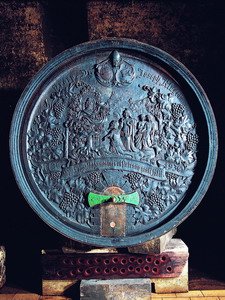
Austrian winemakers are going further along the path of world fame: the producer of sparkling wines Steininger built a museum of wine in his vast economy, where everything is coming, like a ripened vineyard, as if passing the “transformation into wine”, and then he is familiar with history. Opposite the museum, several winemakers were built by the wine-designed hotel-spa "Loizium". The people are breaking: year -round vacation in vineyards plus treatment in a pleasant way.
Austrian wines appeared on the Russian market recently - thanks to the Austrian businessman Paul Schobel, who has been living in Russia for twenty years. Paul’s business is construction, but at some point he became a wineryman, he carries wine from manufacturers, sells in a shop that he opened specifically for this, and distributes it on restaurants (here with a press: to sell, you still need to pay). So far, for him this is a continuous loss, but it is nice that Austrian wines have become in demand.
The author has a bottle of white wine “Salomon” of 1960, which was brought from Austria, was stolen from the manufacturer. After all, with wines, as with people and poems (Tsvetaevskoye “my poems, like precious wines, will come as a turn”): some spoil with time, others acquire the status of jewelry and go at auctions for astronomical amounts. Experienced Frenchmen know that how much the Austrian winemakers themselves do not know that they brought their wines age, therefore they gave them vigor. I haven't opened it yet ...
_______________
1 Austrian wine guide.
2 This is called a set of natural factors that determine the type and features of wine.