
Translated material
There is no infertility?!
| Institute of Demography State University Higher School of Economics | ||
 |  | Electronic version of the ballot |
| 101000, Moscow, Pokrovsky Boulevard, 11; Fax (495) 628-7931 | ||
Infertility ceases to exist as a demographic problem

If a woman lives in marriage and her pregnancy does not occur during the year of regular sexual life (in sexual intercourse at least 1 time per week) without the use of means and methods of contraception, marriage is considered barren.
Physiological infertility ( Latin Sterilitas) - the inability of persons of childbearing age to reproduce offspring due to violation of the processes of fertilization or implantation of a fertilized egg - has always been one of the important demographic factors limiting the growth of the population. At the same time, for many years in demography, it was accepted for the axiom that the percentage of infertility was approximately the same in all historical eras (at least within the same country), as well as that a significant part of the diseases causing infertility is neither lending to cure or overcoming in any other way. In other words, barren people do not have offspring if they do not adopt children born to other people, and in any calculations of the birth rate “offspring” of barren, one can and should not be taken into account.
According to various estimates, the percentage of barren couples in different eras and in different regions ranges from 1 (Benin, 1996) to 30 or more percent in some areas of the Central African Republic in the 1950-1960s-according to our information, this is a historical maximum [1] .
The cause of barren marriage may be violations in the reproductive system of one or both spouses, as well as their genetic or immune incompatibility (that is, a situation where one or both spouses could have children in marriage with the other man / woman).
There are absolute infertility associated with incurable changes in the sexual apparatus of a man or woman (the absence or impossibility of functioning of the sex glands and/or uterus due to developmental defects, operational removal, injuries, infections), and relative , the causes of which can be eliminated using conservative (therapeutic) or surgical treatment. Although, I must say, the boundaries between relative and absolute infertility have always been unsteady and obscure.
Infertility is primary if this woman has never had pregnancy from a given man, and secondary, if before pregnancy were.
The main causes of infertility are inflammatory lesions of the genitals, endocrine (hormonal) disorders, malformations, as well as combinations of these factors. Infertility is often a consequence of some somatic (general) diseases, as well as methods of their treatment (peritonitis of any origin; cancer, in treatment with radiation or chemotherapy and other potent drugs; etc.). The infertility of an unclear genesis is also found, the causes of which, with a modern level of development of medicine, are not fully understood [2] .
Although all of the above remains true, moreover, according to some, not fully confirmed, information, the reproductive health of mankind as a whole gradually deteriorates in connection with an increase in environmental problems, infertility in our time in a certain sense does not exist: any form of not only relative, but absolute infertility of the couple or individual can be overcome (although it is still cured-not all can be cured), and not all), not all), and not The traditional way of adoption, and in a demographically significant way - so that a new person will be born (often several new people).
Thus, potentially infertility ceases to exist as a demographic problem.
Already several of the best Moscow reproductive clinics (perhaps this also exists in St. Petersburg) for certain money offer an “turnkey” service, that is, they guarantee the completion of the “treatment” of infertility by the appearance of the desired child or several children. There are “buyers” of this service, there are the first results.
However, a degree of enthusiasm must be slightly reduced, since all this is, and not quite so. That is, in reality, of course, now not only pipe infertility is overcome (when only a purely mechanical obstacle interferes with a natural meeting of the sperm and eggs - the so -called “fertilization in the tube” was originally developed for this), but the “ cellular” factor (the absence or impossibility of the correct functioning of human germ cells, that is, cells intended for the production of offspring), as male, as male So female, and those cases when a woman cannot independently endure pregnancy due to problems in the uterus .
But how are they overcome? Methods are not so simple from a medical point of view, expensive, ambiguously perceived ethically and even legally, come across resistance from representatives of religious faiths, and as a result, not everyone is available and far from all acceptable for everyone.
New reproductive technologies
Modern reproductive technologies have stepped far forward, which Runet can tell. True, when considering the proposed possibilities of overcoming infertility, at least minimal knowledge from the field of anatomy and physiology of female and male organisms are necessary.
IVF [3] : The procedure is that with the help of intramuscular injections of hormone -containing drugs in the woman’s body, several eggs are grown, which are then extracted under anesthesia and fertilize the sperm of her husband or donor in a special laboratory bowl (Petri Cup) simply placing each egg in a portion of sperm, containing many spermatozoa, the process of penetrating the penetration itself The sperm in the egg occurs in a “natural” way, a specific sperm for fertilization is not selected.
The eggs “get” from the ovary of a woman not through surgery, but with the help of a much simpler and more harmless procedure - puncture, that is, puncture of each follicle with a hollow needle that sucks its contents with the aim of subsequent release of the egg from it.
After fertilization for several days, embryos are grown in laboratory conditions, and then transferred to the uterine cavity of a woman. All these two weeks, a woman takes the drugs of progesterone - “hormone pregnancy” (and sometimes also other, additional, hormonal drugs) - for “support”, perhaps the onset of pregnancy, although only after 2 weeks of residence of embryos in the body of a potential mother can be said with a sufficiently great degree of confidence whether pregnancy occurred or not.
IVF in the “natural” cycle: if there are contraindications or in confidence in good reproductive health of a woman, you can use IVF without stimulating hyperovulation, using the fertilization procedure in the tube of the only barrel of the eggs of the eggs with subsequent lingering in the uterus. It is often used for the male factor of infertility or, if a woman desired, to avoid unnecessary "harm". However, the effectiveness of this method is low.
Hormonal stimulation of superovulation: it is used both as part of the “treatment” in the process of IVF, and as an independent method for the treatment of purely endocrine infertility, if the pipes are passable.
Its goal is to increase the chances of pregnancy. For this, a woman is prescribed special medicines that cause the simultaneous ripening of several follicles in her ovaries (or stimulate the maturation of at least one, in the absence of their own ovulation). Stimulation consists in daily intramuscular or subcutaneous administration of special hormonal drugs for a long period-from 5 days to 15, with ultrasound control of follicles containing eggs in the ovaries. At the time of the greatest maturity of the follicles, the patient is recommended to the coatus for conception (that is, the moment of fertilization itself occurs in a “natural way”). They begin stimulation from the 2-5th day of the menstrual cycle. The dose of the injected stimulant can vary towards (with a poor ovary response) and to the direction of decrease (with a too powerful start).
ICSI: an injection of a separate, “selected” in terms of the quality of the spermatasoid into the egg. The sperm is immobilized, sucked into a special needle, then this needle is inserted into the egg, a small amount of liquid from the egg is sucked, and then the spermatozoid with this liquid is released into the egg. It is used in cases where the “spontaneous” fertilization of the egg in a portion of sperm is impossible due to the poor quality of spermatozoa (a small number of moving spermatozoa of the “correct” form). Before and after injection of a sperm in the egg, everything happens in the same way as in an ordinary IVF program.
One of the causes of failures in eco/ICSI is the lack of fertilization of germ cells. Often it is not possible to establish the reason for this, despite the wide knowledge of scientists in this area (human reproductology).
Artificial insemination (AI) is a method of auxiliary reproduction in which sperm is introduced into the woman's sexual paths artificially. The entire further process occurs naturally: spermatozoa flees from the uterus to the fallopian tubes, where they meet the ripened, emanating ovaries and also an egg that has fallen into the uterine pipes, fertilize it, and then the fertilized egg enters the uterus, where it is attached to the wall of the uterus and gives rise to pregnancy.
Insemination is carried out near the time of ovulation (the release of the ripened egg from the ovary), approximately in the middle of the menstrual cycle. Previously, the introduction of sperm in the vagina was used, however, the introduction of sperm into the uterus is more successful - the so -called intrauterine insemination (VMI). With intrauterine insemination, sperm is pre -processed, making it similar to the composition that sperm acquires in the vagina on the way into the uterus with natural sexual intercourse, and selecting the “squeeze” from the most capable of fertilization of the amplosyides.
The method is indicated in some forms of male infertility (since the “best” spermatozoa are selected), as well as in the presence of sperm antibodies in the woman’s cervix. Otherwise, a woman who uses this method should be gynecologically healthy.
Intrathubarny transfer of gametes (gift): the egg follicles obtained as a result of the follicle follicles are connected to spermatozoa by conventional methods adopted in embryology. Then they are transferred not to the test tube, but to the fallopian tubes. At the same time, natural conditions are created for fertilization of the egg and maturation of the embryo on the way to the uterus. Doctors do not control whether fertilization occurs. The transfer of female and male germ cells to the pipes is carried out by laparoscopy or under ultrasound control through the uterine cavity. In the first case, the cells are introduced into the pipes from the ovary, and in the second - from the uterus.
The gift is used for infertility of unclear origin and with endometriosis, when the foci of this disease do not allow the egg to get into the pipe. In this case, the pipe must be passable, and the man in the pair must be reproductively healthy.
Intrathubarny transfer of zygot (ZIFT): The eggs obtained by puncture are fertilized “in a test tube” and the resulting embryo is transferred to the pipe. Unlike the gift, there is control over the fertilization of eggs, so a strictly limited number of embryos is usually planted in the fallopian tubes. Just like a gift, Zift is indicated with obscure infertility and endometriosis, as well as with a male factor. But here the first requirement is the presence of well -passing pipes.
The promotion of the embryo through the pipe creates physiological conditions for its maturation.
10-15 years ago, when auxiliary reproductive technologies were in a state of active development, the gift and zift successfully competed with IVF in efficiency. The frequency of positive results was up to 30%. However, the more rapid development of IVF techniques has led to the fact that the last two methods began to be forgotten not only by patients, but also by doctors. They remain in the shade and do not develop. In Moscow, they resort to only in one institution, there is no data on Russia at all. In the official form of the annual report of European and American clinics, IVF does not even have a form for summing up the results of the gift and zift.
Cryoconservation: today in clinics, human germ cells are frozen (cryoprophony) (spermatozoa, oocytes), and embryos at various stages of development obtained as a result of Eco and even tissues of organs (ovary).
The remaining after the transfer in the “fresh” (that is, stimulated) cycle embryos of only good quality, because Subsequently, they will safely undergo defrosting.
Sperm freezing is used in cases of cancer in men in order to ensure sperm stocks before the onset of chemotherapy and the subsequent use of frozen sample to obtain healthy offspring, the uncertainty of the presence of a partner during the collection of sperm for IVF - the situation characteristic of nonresident patients, donation, in cases of planned postponed paternity. Perhaps, due to a noticeable decrease in male fertility, the storage of sperm of young men will popularize for the future.
Eggs freezing are used in cases where stimulation is not recommended or contraindicated (for example, oncological and other diseases) or it is impossible to carry out the fertilization of cells in this period. Mature oocyte (female cell) is extremely fragile due to large size, liquid contents and the location of chromosomes and during freezing/defrost procedures is easily damaged. The frequency of childbirth after fertilization and insemination of frozen-frozen oocytes is 3-4%.
Fasting ovarian tissue is used if cancer is detected and can be used for subsequent ovary transplantation. During freezing and freezing procedures, 7% of follicles are lost. The pregnancies that occurred after the ovary are not reported. There is only data on the restoration of the endocrine function of the ovary from 9 months to 3 years.
The transfer of defrosted embryos (embryos created from frozen and then thawed gametes) can occur in “natural” (without injection of hormonal drugs) and “programmable” (against the background of intake of estrogen and progesterone) cycle.
Around which they break and break spears
New reproductive technologies give rise to many ethical, philosophical and legislative problems, most of which are associated, however, not with the above basic, most often used technologies, but with those that we will talk about below:
Surrogate motherhood
If a woman has a uterus removed, or the uterus for one reason or another cannot perform her functions, then another woman can take out a child and then give it to a biological mother. Here, many have a serious barrier - both psychological and related to worldview, and that, sin to hide, purely financial, because these services are not at all cheap.
Let's start with a worldview (/psychology). The ancient Aristotelian doctrine, according to which “a woman does not have a seed” , that is, a woman is only a vessel in which the child grows, which does not transmit to this child any “generic”, or hereditary, information, surprisingly, lives and live in the minds and hearts of very many modern people. As a result, they believe that the child’s biological mother should be called the one who carried him out and gave birth, and not the one whose egg participated in the creation of the embryo. The same point of view is supported by Russian legislation [4] .
Accordingly, a lot of ethical, legal, and, in the end, simply emotional, disputes arise around surrogate motherhood. Often, especially in our country, there is a point of view that if a woman gave birth to a child, then she is his mother, and "how can she give to strangers of her child."
Thus, the fear of public condemnation, sometimes - the impossibility and unwillingness of to overcome their own beliefs in this area, in many cases interfere with barren women and couples to choose this path.
However, probably, it is still more often the problem is financial-the payment of a surrogate mother is the most expensive part of the costs in the “treatment” of infertility, and it will never be funded by the state.
This is due to the ethical problematicity of the method and, nevertheless, some “eye on the situation” in other countries, in most of which (almost all of Europe, many Asian countries), surrogate motherhood is prohibited by law or as “objectionable to God” , or as the “bodily exploitation of a woman by a woman” , equivalent, as can be guessed from this formulation, to prostitution.
Moreover, in some places surrogate motherhood is more condemned than prostitution: in the Netherlands , according to my information, it is prohibited, while prostitution in certain forms is legal.
Here, as at a focal point, the reasoning of the feminist and gender theory about motherhood in general as a bodily exploitation of a woman with a society, in this case, reinforced by the fact of bearing and the birth of a woman of a child is not for herself, ideas about the female body, which society/Patriarchate/other women standing on the side of the patriarchate and “deftly able to use its advantages for their own purposes” -exploit and exploit and exploit and exploit and exploit They are assigned to themselves.
Although, on the other hand, again, the feminist point of view (the second wave, the 1980s), the motherhood as such is not necessarily an instrument of enslavement of a woman: she can expropriate her body as a whole and her motherhood in particular, among the patriarchal society, and dispose of it at her discretion, then her motherhood becomes “experience that makes it stronger”, “specifically female power, which does not have a female force, which does not Men ”,“ the affirmation of the superiority of the female world over the patriarchy ” - but, all this is impossible to apply to discussions about surrogate motherhood as such.
Or, at least, no one has yet been able to create a full -fledged feminist interpretation of surrogate motherhood as, for example, female freedom to use their body at their discretion to gain various experience, while gaining feminine financial independence so important for feminism, by analogy with theories that interpret free female sexuality, including “sexual sexual work. "
Donation of germ cells
If a man or a woman does not have the opportunity to produce their own germ cells that carry it or its genetic material, then you can use the services of sperm donors or eggs, and thus, as a result, a “new” baby (instead of the adopted, already “taken into account” democrats at birth), which carries genetic information from only one of the parents, can still be born.
But this is by no means the limit: a “new” child may also appear in a situation where any of the partners, that is, by “adoption” of a completely donated embryo , which otherwise had no chance, would not have a chance to be born.
It can take out such a child as a spouse from a couple who wants to become parents, and, if necessary, a surrogate mother . Thus, the ability to “increase the population” exists even in such an extreme case.
Further, the right to appear in her such child has both a woman who has been consisting or not in any (registered or unregistered) marriage.
That is, a lonely woman can give birth to a child not only from donor sperm, but also using the donor egg - however, provided that she does not need surrogate motherhood - the latter for her is nevertheless prohibited by Russian laws (although, of course, there are cases when these laws are safely dispensed with).
The lonely man (according to the law!) Is deprived of such opportunities, but “the severity of the laws of Russia has always been softened by the optionality of their implementation”, so theoretically he can find a surrogate mother and receive a child as a result of artificial fertilization. He will probably have to overcome the resistance of officials, lawyers and even doctors, and, in the end, to arrange adoption, even if his child is genetically.
More and more children are born as a result of the use of reproductive technologies
Statistics based on the results of auxiliary reproductive technologies (ART) are collected by the RARCH - the Russian Association of Human Reproduction. These are incomplete statistics, since some large clinics do not participate in the collection of data (49 clinics out of 55, or 89.1% of Russian clinics participated in the preparation of the 2006 report). Thus, most of the CBT cycles and their results are still reflected in this statistics. Rarch reports are published in Human Reproduction. The first report (National VTS register) was published in 1996 (in 1995), since then they have been published every year (with delay, because the outcomes of all pregnancies that began in the accountable year should become known). The number of clinics participating in the register is constantly growing, but this is still not all clinics from existing ones: 8 of 9 in 1995, 12 of 16 in 1996, 19 of 27 in 1999, 25 out of 30 in 2000, 32 of 36 in 2001, 35 of 40 in 2002, 36 of 41 in 2003, 40 of 46 in 2005 (Fig. 1).
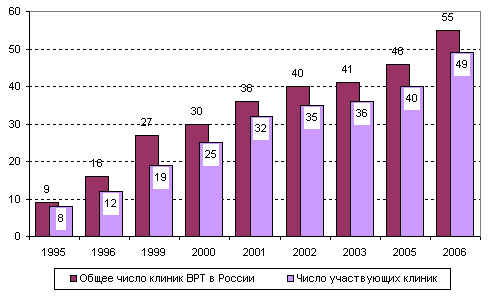 Figure 1. Participation
Most centers (22 of 49 or 44.9%) are located in Moscow and St. Petersburg, but there are already centers in almost all regions (in the cities of Voronezh, Yoshkar-Ola, Kazan, Nizhnekamsk, Nizhny Novgorod, Orenburg, Samara, Saratov, Cheboksary, Ufa, Yekaterinburg, Tyumen, Barnaul, Krasnoyarsk, Krasnoyarsk, Krasnoyarsk, Krasnoyarsk, Krasnoyarsk, Krasnoyarsk, Krasnoyarsk, Krasnoyarsk, Krasnoyarsk, Krasnoyarsk. Novokuznetsk, Novosibirsk, Omsk, Tomsk, Vladivostok, Yakutsk, Astrakhan, Vladikavkaz, Kislovodsk, Makhachkala, Rostov-on-Don, Sochi). Be that as it may, the proportion of the CBT cycles made in the capital's clinics (63.4%) is higher than the share of these clinics among the City Clinics of the country as a whole.
In 2006, 147,9637 children were born in Russia, of which 5355 (0.36%) were born in the cycles of CRT. Children of CITs are greater than childbirth after ART (0.29% of all genera), due to the increased frequency of multi-speed. This percentage, of course, is still minimal, but it is steadily increasing year from year (Fig. 2, 3, Table 1). In countries where the methods are truly “on the stream”, this percentage is much higher-4.2% in Denmark.
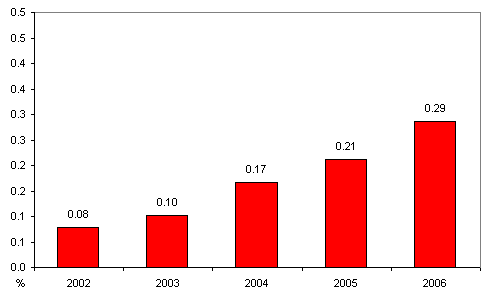 Figure 2. The share of childbirth as a result of the ARC in the total number of genera in Russia, %
Multiplotion is represented mainly by twins, since the development of a larger number of fruits is simultaneously fraught with complications for mother and children. In this regard, more and more often after the fertilization of the gametes outside the body of the mother, no more than two embryos are returned to her body.
In 2006, 21343 medical cycles were performed in Russia in total, it is 23.8% more than in 2005, the number of cycles is growing constantly and steadily (Fig. 3).
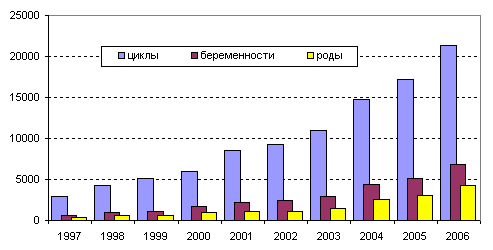 Figure 3. The total number of CBT cycles, pregnancies and childbirths after applying the methods of ART. Russia, 1997-2006 years 1. The number of therapeutic cycles, pregnancies and their outcomes after the treatment of infertility by VTR methods. Russia, 2006
 | Eco * | Ixi * | Transfer Born embryos, PE ** | Donor- oocytes, up to ** | All | |
| The number of the started CET cycles | 10785 | 6469 | 2910 | 1179 | 21343 |
| Clinical pregnancy, everything | 3609 | 2129 | 630 | 480 | 6848 |
| Childbirth (after 28 weeks of gestation) in total* | 2299 | 1272 | 388 | 278 | 4237 |
| including | |||||
| One fruit | 1711 | 931 | 323 | 214 | 3179 |
| twins | 549 | 326 | 62 | 61 | 1996 |
| triplets | 39 | 15 | 3 | 3 | 180 |
| Four or more | 0 | 0 | 0 | 0 | |
| The number of born | 2926 | 1628 | 456 | 345 | 5355 |
** includes information about pregnancies in the cycles in which preimplanting genetic diagnostics (PGD) was carried out or surrogate mothers participated.
Source: RARCH-2006 report.
The proportion of patients over 35 years old is gradually growing (in 2005 33.1%, in 2006 - 33.4%) (Fig. 4), the share of these patients in the program “Donation of eggs” - 69.3%(in 2005 - 70.1%).
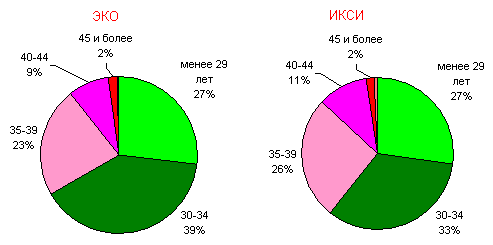
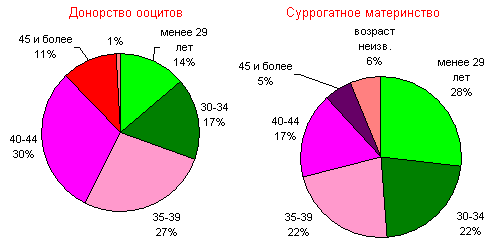 Figure 4. Age of patients with ART. Russia, 2006
The structure of the CBT cycles: the usual IVF in 2006 amounted to 50.5%(in 2005 it was 52.7%, in 2004 - 58.3%, in 2003 - 61.1%) from all therapeutic cycles, ICSI - 30.3%(2005 - 27.5%, 2004 - 23.4%, 2003 - 22.1%), 13.6%of the programs - this is the transfer embryos (PE) (obtained in previous ECO/ICSI cycles), the donation of oocytes (BC) occurred in 5.5%of cases (2005 - 6.1%, 2004 - 6.4%, 2003 - 6.6%) (Fig. 5).
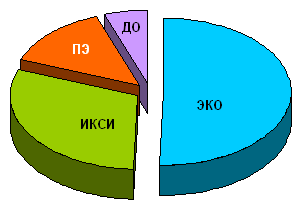 Figure 5. Structure of the Cycles of ART. Russia, 2006, %
In 2006, surrogate motherhood was used in 308 cycles (in 2005 - in 289), as a result, 151 pregnancy occurred (in 2005 - 111), of which 97 ended with birth (in 2005 - 75) (Table 2).
Table 2. Surrogate motherhood. Russia, 2006| Total (n) | |
| Cycles in which surrogate mothers participated | 308 |
| Cycles in which the transfer of embryos was made, in total | 300 |
| Clinical pregnancy, everything | 151 |
| Significant pregnancy | 106 |
| Twins | 34 |
| Triplets | 0 |
| No data on the number of fruits | 11 |
| Childbirth | 97 |
On average, the frequency of the end of eco -clan cycles in Russia was 21.3% in 2006 (Table 3).
Table 3. Frequency of completion of the CET cycles by childbirth. Russia, 1999, 2002-2006, %| 1999 | 2002 | 2003 | 2004 | 2005 | 2006 | |
| ECO | ||||||
| On the cycle* | 13.7 | 13.9 | 15.6 | 17.7 | 18.9 | 21.3 |
| To transfer ** | 17.0 | 15.4 | 17.6 | 19.8 | 21.2 | 23.8 |
| Ixi | ||||||
| On the cycle* | 11.5 | 9.6 | 11.9 | 16.9 | 18.8 | 19.7 |
| To transfer ** | 13.2 | 10.5 | 13.1 | 18.3 | 20.3 | 21.4 |
| PE | ||||||
| On the cycle* | 5.3 | 10.8 | 8.6 | 11,1 | 12.1 | 13.3 |
| To transfer ** | 6.1 | 11.7 | 9.3 | 12.4 | 13.5 | 14.6 |
| TO | ||||||
| On the cycle* | 19.8 | 13.4 | 14.7 | 21.7 | 19.4 | 23.6 |
| To transfer ** | 21.4 | 14.0 | 16.0 | 22.5 | 19.6 | 25.0 |
** This refers only to those treatment cycles in which mature eggs were obtained on puncture, which then successfully fertilized and were transferred to the woman’s uterus, that is, the transfer of embryos took place
In one medical cycle, Eco Pregnancy occurs more often - 33.5% per cycle on average in the country (Table 4). This is averaged data on all clinics, but they, meanwhile, are very different in the “quality” of their work. In the best clinics, the frequency of pregnancy occurs to 60% and childbirth-to 45-50% per cycle, respectively. But the data is not published separately to clinics in Russia.
Table 4. The frequency of the onset of pregnancies in the cycles of ARS. Russia, 1999, 2002-2006, %| 1999 | 2002 | 2003 | 2004 | 2005 | 2006 | |
| ECO | ||||||
| On the cycle* | 23.0 | 28.0 | 28.6 | 30.7 | 31.5 | 33.5 |
| To transfer ** | 28.5 | 30.9 | 32.3 | 34.3 | 35.4 | 37.3 |
| Ixi | ||||||
| On the cycle* | 20.4 | 30.4 | 27.3 | 30.6 | 31.6 | 32.9 |
| To transfer ** | 23.5 | 33.2 | 30.1 | 33.0 | 34.2 | 35.9 |
| PE | ||||||
| On the cycle* | 10.6 | 19.8 | 20.8 | 19.2 | 18.7 | 21.7 |
| To transfer ** | 12.2 | 21.5 | 22.6 | 21.6 | 20.9 | 23.7 |
| TO | ||||||
| On the cycle* | 27.1 | 27.9 | 33.3 | 34.1 | 34.8 | 40.7 |
| To transfer ** | 29.8 | 29.1 | 36.3 | 35.4 | 35.1 | 43.2 |
** This refers only to those treatment cycles in which mature eggs were obtained on puncture, which then successfully fertilized and were transferred to the woman’s uterus, that is, the transfer of embryos took place
The occurreed pregnancy ends with birth in 79.3% of IVF cases, 79.4% of cases of ICSI, 75.2% of cases when defrosting embryos, 76.0% of cases of oocyte donation (Fig. 6).
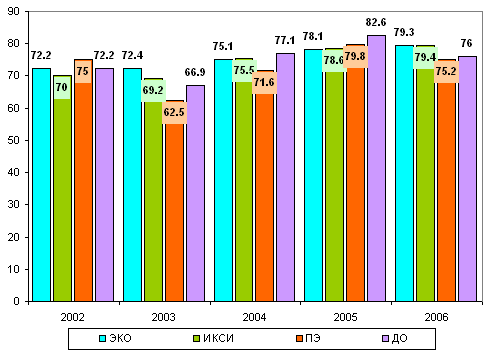 Figure 6. Frequency for completing the pregnancies by childbirth after the treatment of infertility by the methods of VTR. Russia, 2002-2006, %
Children, money, laws and ethical norms
The cost of one attempt by IVF is now in different clinics 50-100 thousand rubles without the cost of drugs and, especially, donation or surrogate motherhood. In general, it can turn out from 100 thousand rubles (a simple eco/Ixi in a “prestigious clinic”) to ... The upper limit is even impossible to imagine.
But there are free IVF programs financed by both the state and charitable funds (for example, the Formula Birth Fund).
Ways to receive grants for free eco differ from region to region, the state grant usually includes two attempts and prescribes a specific clinic where treatment needs to be undergoing.
As part of the National Health program, 7,000 quotas for a free IVF from the federal budget were allocated last year. The main restriction is that the age of a woman should be no more than 38 years. Each quota includes two attempts, the patient is heading to a specific medical center, as a rule, not in his region, if there is a choice, then no more than two centers. The total number of centers where IVF is made at the expense of the federal budget for free is now more than 20. There are also regional centers that offer Eco for free only to residents of their region. As a result, the availability of free eco is very different from the region to the region, but it is also necessary to take into account the costs of medicines (as a rule, they are not paid), travel and accommodation in another city, as well as the fact that a list of diagnoses and other requirements for the recipients of a grant for free eco is also different in different regions of Russia. From the table. 1 In the application, you can see that there are big problems with the uneven accessibility of “free” IVF in Russia. Nevertheless, if the “free” in this area is really widespread, then we can expect an increase in the birth rate using reproductive technologies to really significant interest.
***
Based on the foregoing, it can be argued that as a result of the development and spread of reproductive technologies, genetic parenthood becomes open not only for (part) of people with impaired fertility, but also for sexual minorities of both sexes. There is a separation of not only genetic parenthood from social, parenthood as such from reproduction, but also diversification within non-genetic parenthood, expressed in the separation from each other of its various forms:
- “Propertive” (involving one way or another the creation of a new life, the emergence of a new person) and
- “Appropriating” (without an assessment shade, and in the sense of the implementation of parenthood through the “appropriation” of existing children accessible for such appropriation of children).
Another very important division is into the gestational and genetic “partial” motherhood.
Women who are faced with the problem of infertility are in a sense divided into “batch of ovaries” (that is, those for whom genetic parenthood is important) and the “batch of the uterus” (that is, those for whom it is important to give birth to the very “main” in the spirit of the same Aristotle doctrine).
It would seem that a situation when you can choose between donor cells and a surrogate mother should rarely meet, nevertheless, in reality, women have the opportunity to choose this quite often (since the “client is always right”).
Some easily switch to donor cells after one or two unsuccessful attempts, but are ready for additional operations and heavy “crafts” for pregnancy for nine months; For them, donor cells are an “opportunity”. Others are more likely to pass through 10 stimulations, but they will not accept the donor cell so easily, it is much easier for them to accept that another woman who will have to pay a lot more; For them, donor cells are a “threat”, at least when they face such a proposal for the first time) (Fig. 7).
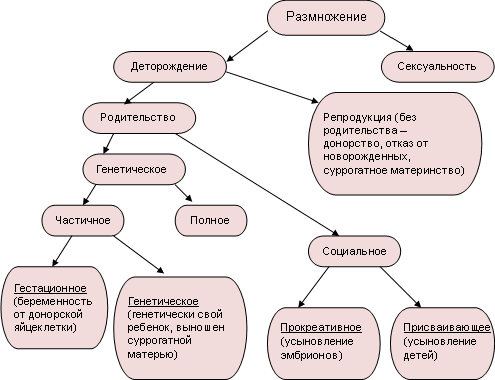
Not only the diversification of combinations of the genetic, partially genetic - partially social and purely social parenthood, but also the diversification of the statuses of all these options in the face of a rapidly changing reality of the law.
In some countries, surrogate motherhood is completely prohibited; In others, commercial surrogate motherhood is prohibited, but “altruistic” is allowed; In third countries, everything is allowed, but a surrogate mother at the birth of a child has the right to leave him to herself; And finally, there are countries where the priority of genetic parents in relation to their child’s right to a child is legally enshrined, if necessary, a genetic examination, but usually simply the very agreement on surrogate motherhood.
The donation of the eggs is also completely prohibited somewhere, only not anonymous is allowed somewhere, somewhere it is possible while maintaining anonymity.
The donation of sperm is completely prohibited only in the most religiously orthodox countries, but in many European countries it is possible not anonymous male donation.
The situation when a surrogate mother is simultaneously an egg donor is completely illegal in Russia and is equated with children's trafficking. Nevertheless, there are countries where it is quite legal, and in Russia there are people who resort to this “biblical” method, not only because it is much cheaper, but also because it is fraught with less possible harm to the health of a surrogate mother.
In table. 5 Collected information on the conditions for reimbursement of expenses for in vitro fertilization at the expense of state financing in different countries.
Table 5. State financing and reimbursement of IVF expenditures in various countries| Compensation for the treatment of ART in the country | Conditions of provision |
| Austria . Since 2000, 70% of the cost of treatment, medical care and drugs for ICSI, is funded by the Extracorporeal fertilization fund, provided only for the clinics in partnership with the Fund and for pairs of patients with insurance. Coves expenses for 4 cycles. If the pregnancy is reached, expenses are covered with another 4 cycles. | The couple should be in an official marriage or a stable union for at least 3 years. A woman is younger than 40. A man is younger than 50. No certificates need any other diseases/diagnoses, except for the fact of infertility as such. |
| Belgium . The costs of 6 CIC cycles are reimbursed, but the number of planted embryos is limited. | A woman younger than 42 years old. |
| Denmark . Medical expenses for three cycles are reimbursed, but only in state clinics. The cost of drugs is reimbursed by 0-85%, depending on the total cost. | No information |
| Finland . Patients pay 25–40% of the cost of infertility treatment; The rest is covered by the national social insurance system. | No information |
| France . Стоимость лечения покрывается до 100%, если оно происходит в государственной клинике. Расходы на лечение в частной клинике покрываются до той суммы, которая получилась бы в государственной клинике, разницу платят пациенты сами. Нет ограничений по количеству циклов, хотя рекомендуется проходить не более 4 циклов ЭКО/ИКСИ с переносом эмбриона, если беременность так и не достигнута. | Пара должна быть в зарегистрированном или фактическом браке более чем 2 года. Женщина моложе 43. Одиноким женщинам расходы не возмещаются. |
| Germany . Около 50% всех расходов возмещается (3 цикла). С разрешения фонда заболеваемости — возможно возмещение и большего числа циклов. Возмещаются также расходы на 6 внутриматочных инсеминаций (с гонадотропином) и на 8 (без гонадотропина). Расходы на инсеминацию донорской спермой не возмещаются. | Пара должна быть в браке или фактическом союзе. У мужчины в прошлом не должно быть операции стерилизации. Женщина моложе 40. Возмещается стоимость только лечения без применения донорских материалов с какой-либо стороны. |
| Греция . Стоимость лечения возмещается, если оно происходит в государственной клинике. Иначе, возмещается определенная сумма на каждый цикл (всего 3 цикла), разницу пациенты платят сами. | Нет информации |
| Ирландия . Не покрывается по страховке, но пациенты могут потребовать возмещения налога на стоимость лечения.. | Нет информации |
| Италия . Процедура частично возмещается только в государственных клиниках или в системе национального страхования здравоохранения. | Нет информации |
| Нидерланды . Максимум 3 цикла ЭКО возмещаются по системе Социального страхования Здравоохранения. Все инсеминации возмещаются стопроцентно. ГИФТ И ИКСИ не подлежат возмещению стоимости. Большая часть частных страховых компаний тоже покрывает стоимость до 3 циклов ЭКО. | Нет информации |
| Норвегия . Возмещается только стоимость лечения, проходящего в государственной клинике. Стоимость лекарств обычно не возмещается. | Нет информации |
| Португалия . ВРТ 100%-но возмещается, если проводится в государственной клинике. | Нет информации |
| Испания 100%-ное возмещение процедур ВРТ, только если они проходят в государственной клинике. | Пара должна быть в браке или фактическом союзе. |
| Швеция . Оплачивается 1–3 цикла, в зависимости от района страны. | Нет информации |
| Great Britain . Национальный Институт Клинического совершенствования. (NICE) рекомендует оплату 3 циклов лечения. Однако, местные медицинские органы власти сами определяют как то, будет ли конкретной паре предоставляться оплата, так и размер этой оплаты, соответственно уровень возмещения существенно варьируется в разных районах страны. | Рекомендации NICE относятся к женщинам моложе 40 в парах, которые уже 3 года не могут добиться зачатия или у них бесплодие неясного генеза |
Источник: Sorenson C. IVF/ART funding and reimbursement // Euro Observer. The Health Policy Bulletin of the European Observatory on Health Systems and Policies. Autumn 2006, Volume 8, Number 4, p. 7.
В целом, очевидна этическая и законодательная мозаика. Религии же, для простоты, особенно в последнее время (римский Папа, сообщества некоторых мусульманских стран) предпочитают огулом осуждать все.
Хотя эта тема этически необыкновенно заострена, давайте постараемся не делать поспешных оценочных суждений. Не будем забывать, что прежде всего все эти методы предназначены для помощи бесплодным людям и дают им возможность иметь детей.
Не стоит забывать и о том, что влияние новых репродуктивных технологий на рождаемость, если не произойдет никаких катастрофических изменений, со временем будет все более и более значимым (уже сейчас 4-5% всей рождаемости в Бельгии и Скандинавии дают ЭКО-дети) не только из-за повышения успешности методов, увеличения степени их доступности для всех (в России в последние годы также значительно увеличено количество квот на бесплатное ЭКО, помогающих многим небогатым людям получить доступ к этой процедуре), но (возможно) из-за роста распространенности бесплодия в мире в связи с экологическими проблемами, и, соответственно, роста потребности в репродуктивных технологиях для продолжения человеческого рода как такового.
ApplicationТаблица 1. Доступность бесплатного ЭКО в регионах России в 2009 году
| Города и регионы России | |
| Ханты-Мансийский и Ямало-Ненецкий Округ | Отделение вспомогательных репродуктивных технологий на базе перинатального центра Окружной клинической больницы г. Ханты-Мансийска. За счет средств бюджета округа. Все проживающие и прописанные в ХМАО и ЯМАО. Требования: трубный фактор, мужской фактор, при наличии специального разрешения — даже женщины старше 35 лет |
| Krasnodar Territory | Есть квоты на Краснодарский Центр Планирования Семьи (мало), в Москву в НЦАГиП и в ММА им. Sechenov |
| Kazan. Tatarstan | Квоты в Казанский Центр Планирования Семьи (много, успешно работают) |
| Astrakhan | Астраханский ЦПС, НЦАГиП и в ММА им. Сеченова (мало квот) |
| Voronezh region | Квоты в Ивановский Центр ЭКО |
| г. Уфа, Башкирия | Квоты дают только в перинатальный центр г. Уфа. Чтоб получить квоту, нужно взять направление из своей ж/к или Центра планирования семьи и пойти в перинатальный центр. Там ставят на очередь, только трубный фактор, очередь на 4-5 лет. |
| Ростов-на-Дону и область | Квоты только в Центр Репродукции человека, Ростов-на-Дону |
| Тюмень и область | Квоты получить очень легко, только в местные центры «Меркурий» и «Малыш», последний считается более результативным |
| Чебоксары, Чувашия | Квоты в местный центр «Семья» при Президентском Перинатальном Центре, а также в Москву в НЦАГиП |
| Vladivostok | Квоты в Москву, центр «Лера» и НЦАГиП |
| Norilsk | Квоты в Санкт-Петербург |
| Ставрополь, Ставропольский Край | В НЦАГиП в Москву или в Ростовский НИИАГ |
| Blagoveshchensk | В Москву в НЦАГиП, при этом сделать ЭКО в Благовещенске за свой счет или в Москве по квоте из-за дополнительных расходов получается дороже, чем съездить в Красноярск и сделать ЭКО там за свой счет |
| Belgorod region | Квоты в свой центр в Белгороде, только для прописанных в Белгороде и области, огромная очередь. Медленно двигается |
| Omsk region | Всего 12 квот на город Омск, в Москву в НЦАГиП |
| Екатеринбург и область | Квоты только в местные центры ЦСМ и НИИ ОММ |
| Krasnoyarsk Territory | В Мосвку в НЦАГиП и в Санкт-Петербург в Отделение репродукции человека при ГУ «Северо-западный окружной медицинский центр МЗ РФ» |
| Санкт-Петербург, Область | Квоты в Городскую Мариинскую больницу, Отделение репродукции человека при ГУ «Северо-западный окружной медицинский центр МЗ РФ» (для пациентов из области);. ЦПСиР на КОМСОМОЛА,4 |
| Moscow | ЦПСиР на Севастопольском проспекте, НЦАГиП, ММА им. Сеченова, клиника Альтра-Вита |
| Moscow region | Био-оптима, Лера |
| Алтайский край, Архангельская обл., Владимирская обл., Волгоградская обл., Вологодская обл., Калининградская обл., Мурманская обл., Новгородская обл., Омская обл., Пензенская обл., Псковская обл., Приморский Край, Адыгея, Башкортостан, Дагестан, Карелия, Коми, Мордовия, Татарстан, Тыва, Смоленская обл., Тамбовская обл., Удмуртия, Челябинская обл. And some others | Отделение репродукции человека при ГУ «Северо-западный окружной медицинский центр МЗ РФ» |
| Курск и область | Очень мало квот, в НЦАГиП в Москву |
| Новосибирски и область | Очень мало квот, в НЦАГиП в Москву |
| г. Иваново и область | Центр в г. Иваново, 150 квот |
| Novokuznetsk | Квоты только в Зональный Перинатальный Центр |
Links on the number of numbers
- Суханова Л. Родиться здоровым
- Русанова Н., Мишиева Н. Позднее материнство и проблемы воспроизводства населения
- Каткова И. Репродуктивное здоровье россиянок
- Кулаков В., Фролова О. Репродуктивное здоровье в Российской Федерации
- Тарасова Г. Здоровье женщин России
- Кессели К., Регушевская Е.В., Дубикайтис Т.А., Кириченко С.И., Роткирх А., Хаавио-Маннила Э., Хемминки Э. Репродуктивное здоровье и фертильность в Санкт-Петербурге
- Нестеренко И., Соломатин Д. Искусственное прерывание беременности как фактор риска гинекологической заболеваемости женщин
- Суханова Л. Перинатальная патология в России: уровень, структура заболеваемости
- Саверская С., Сергеева Е. Проблемы акушерства в России
- Тенденции изменения состояния репродуктивного здоровья женщин в Восточной Европе и Евразии
- Здоровье матерей и новорожденных в Европейском регионе ВОЗ: актуальные задачи и пути их решения
- Бобоев М., Бухарбаева Г., Расулов Ю. Узбекистан: принудительный контроль рождаемости
Notes
[1] Infertility in sub-Saharan Africa, Ulla Larsen Paper presented at the international Quetelet seminar on the topic “Reproductive health in the developed and developing countries: From knowledge to action” at the Institute of Demography of the Catholic University of Louvain at Louvain-la-Neuve from November 17 to 20, 2004.
[2] Википедия, ru.wikipedia.org/wiki/Бесплодие
[3] Описания и определения этого и других репродуктивных технологий взяты с сайта probirka.org
[4] О законодательстве в области вспомогательных репродуктивных технологий см. www.probirka.org/zakon.htm , а также www.probirka.org/zakon_form.htm