
Translated material
Sectoveded Dvorkin was elected chairman
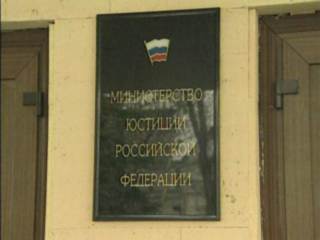
The Ministry of Justice of Russia will conduct a religious examination. The relevant powers were transferred to the Ministry to the law "On Amendments to certain legislative acts of the Russian Federation in connection with the improvement of the exercise of the powers of the Government of the Russian Federation." This was reported to the Interfax agency today in the Ministry of Justice.
By order of the Ministry of Justice, who entered into force on March 31, 2009, approved the procedure for conducting an examination and the Regulation on the Expert Council.
In accordance with the document, the tasks of the state religious examination are: determining the religious nature of the organization on the basis of constituent documents, information on the basics of its creed and appropriate practice; Checking and assessing the reliability of the presented information. The examination will also determine whether the actual activity of the organization corresponds to the forms and methods declared during its state registration.
Meetings of the Expert Council will be held as necessary if the Ministry of Justice sent a request for a religious examination.
Today in Moscow the first meeting of the Expert Council on the conduct of a state religious examination was held. At it, the President of the Russian Association of Centers for the Study of Religions and Sects, Professor Alexander Dvorkin , was elected to the chairman of the Expert Council. His deputies were the director of the human rights center at the World Russian People's Cathedral Roman Silantyev and the imam of the Apanayevsky mosque in Kazan, the director of the Iman Publishing House Valiulla Yakupov.
In accordance with the order of the Ministry of Justice of March 3, 2009, the Council included representatives of the executive and legislative authorities, specialists in state-religious relations, new religious movements and pseudo-religious criminal and extremist structures, representatives of Orthodoxy, Islam, Judaism and Buddhism.
Among the members of the Expert Council are the chief adviser to the department of interaction with public and religious associations of the Department of Mass Communications, Culture and Education of the Russian Government Vladimir Alifanov, senior researcher at the Institute of Oriental Studies of the Russian Academy of Sciences Vladimir Bobrovnikov, the leading employee of the Research Institute of Strengthening the Legality and Law and Acts to the Prosecutor General of Victoria Burkovskaya, professor of the Department of Philosophy of Moscow University Russian Ministry of Internal Affairs Nina Volodina, chairman of the Civil Security Center Evgeny Mukhtarov, leading researcher at the Institute of Sociology of the Russian Academy of Sciences Elena Rutkevich, deputy head of the registration department of religious organizations of the Office for Political Parties, registration of public, religious and other organizations of the Federal Registration Service Andrei Sarychev, department of general history of the RUDN, BAAAR Buddhist Council of Moscow Common Kitinov, senior teacher of the Department of Theory and History and Law of the Russian Legal Academy of the Ministry of Justice Irina Shershnev-Situlskaya, adviser to the Chairman of the Council of the Federation Alexander Shchipkov, Executive Vice-President of the Federation of Jewish Communities of Russia Valery Engel, Head of the Department of Philosophy of Religion and Religious Union of Moscow State University, Professor Igor Yablokov.
“The reorganized council has high hopes not only of government structures, but also by law -abiding religious associations,” R. Silantyev said in an interview with Interfax -religion portal today.