
Translated material
Voluntarism with a human face
Nikita Khrushchev outlined the limits of the capabilities of the Soviet system
The most contradictory of the Soviet leaders Nikita Khrushchev would have turned 115 years old. Perhaps the Khrushchev years were the best in Soviet history. Why - investigated The New Times 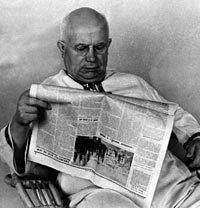
A person is energetic and imperious, Khrushchev squeezed out the maximum from the authoritarian system manually controlled. But he also demonstrated the limits of growth: there is no democracy, there is no free economy - there is no prospect of the state.
To catch up and overtake Nikita Sergeevich was born on April 17, 1894 in the village of Kalinovka, Kursk province, but grew up in Ukraine, where the family moved. He visited Kalinovka after the war and saw the impoverished village. Khrushchev undertook not only to help Kalinovka, but also to prove that the village could be rich.
The local collective farm, named without undertaking the “Motherland of Khrushchev”, did not know anything, received funds regularly, and the yield on the collective farm fields went up. In Kalinovka, roads were laid in an accelerated pace, housing, shops were built, a house of culture and a kindergarten appeared. The neighbors envied.
In the native village of the First Secretary of the Central Committee, his dream was realized: to free the peasant from the "extra" worries in order to build communism without being distracted by personal economy. In Kalinovka, they stopped holding the cows because stalls opened, where they had mercy uninterruptedly. Once a month they gave four kilograms of oil.
Arriving in Kalinovka, Khrushchev saw that fellow countrymen were provided with bread and milk. The case, Nikita Sergeyevich reasoned, for meat. On May 22, 1957, speaking in Leningrad at a meeting of agricultural workers, he proclaimed a loud slogan: to catch up and overtake the United States of America for the production of meat, oil and milk per capita.
The heads of the Ryazan region were the first to fulfill the will of the first secretary. At a meeting in the regional committee, the chairman of the New Way collective farm firmly promised to catch up and overtake America, but asked for help from the leadership: “Comrades, we do not use mechanization, but we work manually, since we are given light for two or three days a week. And all winter they repaired ZIS-150, and he scattered half. We have half of the cars because of the lack of spare parts ... "
Speech at that plenum of the Ryazan regional committee cannot be read without tears. Since the mid-50s, the American economy with which they were going to compete has flourished. The Americans have long lived in landscaped houses with electricity, hot water and sewage. Two -thirds of families got cars, three quarters of the houses had phones. The Americans quickly sold the TVs and got used to relaxing abroad ... The Soviet village, of course, stopped starving, as it was under Stalin, when the peasant was selected, but the collective farms were begging with small exceptions.
And Nikita Sergeyevich promised to catch up and overtake America. In Kyiv, at the Plenum of the Republican Central Committee, excited by his own plans, Khrushchev said: “The Americans are worried about one question - when? I answered them: you can write it in a notebook - in 1970 we will catch you (stormy applause) and go further, and in 1980 we will produce twice more than America produces (violent applause). ”
On December 14, 1959, Khrushchev at the Presidium of the Central Committee explained what a communist society will be: “To take all the children to the boarding school, all children from birth before the end of education take for state security, all the old people from such and such an age are to provide everyone ... I think that when we work one or two five-year-olds, we will be able to go to all people who want how much. We will have bread. Meat - two more five -year planes (this is the maximum), and please eat. Even in capitalist countries there are restaurants where you can pay some and you can eat what you want. Why, with our socialist and communist system, it will not be possible to do this? .. "
Children in the boarding school, free bread in canteens - that was the idea of Khrushchev about communism, that is, about the complete happiness of the Soviet people.
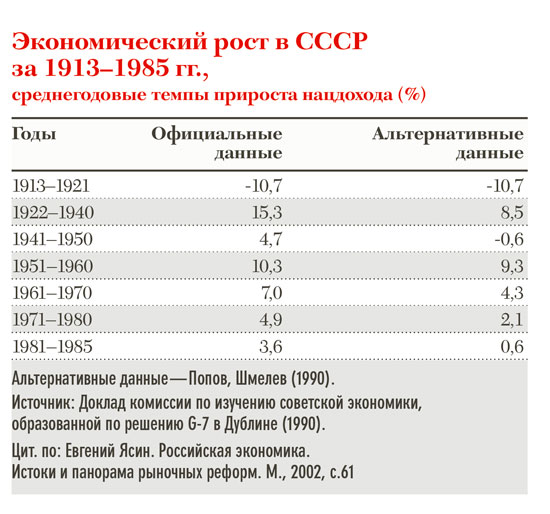
The country was not supposed to know that, by the number of livestock and the consumption of products per capita, the country did not overcome the pre -revolutionary level after four decades of Soviet power. But Khrushchev imagined the state of affairs clearly. The reports of the CSU were sent personally to him in sealed envelopes, the numbers were accurate. Khrushchev wanted to at least be added to feed the country! And to give housing, so he started mass civil construction - for the first time in the years of Soviet power.
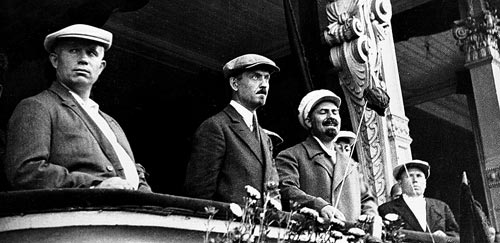
The limits of the system of Nikita Sergeyevich were perhaps the only person in the post -war Soviet leadership who retained the small fraction of youthful idealism and faith in the best future. He released people from the camps not for the sake of glory, but because he believed that they were put lawlessly. Khrushchev’s dynamic policy revealed new opportunities to the young generation. It is no coincidence that the Khrushchev years became the heyday of literature and cinema. Young people responded to his sincerity.
“When Khrushchev’s secret report about the cult of Stalin became known,” wrote the famous literary critic Vladimir Lakshin, “there was a feeling that we were witnessing unprecedented events. The wheel of history, which was habitually crept in a slow swing, suddenly made the first turn of the turn and twisted, sparkling with knitting needles, promising us, young people, to pull into their rim, Sulia movement, change - life. ”
1963 turned out to be lean because of a strong drought. In many cities, cards were introduced. For the first time they bought bread abroad - 9.4 million tons of grain, about 10% of the harvest. Khrushchev, who did not know fatigue, he sewed on negligent subordinates: “Some are old, decorated, and fought. I would say that they were fought in his tongue ... When I arrived at the Central Committee, in the apparatus the rumor spread: Khrushchev came and wants us to calculate how much piglets are pinking and how much cow is pushed. But what should we do? Lectures to give? What fool needs lectures if there is no milk, meat and bread? ”
Khrushchev habitually solved economic problems with organizational and framework methods. But nothing happened! During trips around the country, Khrushchev was sidone, seeing that his subordinates were doing: “Here the Tambov secretary Zolotukhin wanted everything to be fed, to be removed and piled. He found himself guilty and sentenced: yes, Comrade Khrushchev, we must take off his pants and tear me out. He repeated this three times. I could no longer endure and told him: “What are you wanting to take all your pants and show us the ass? Do you think to give us pleasure? "
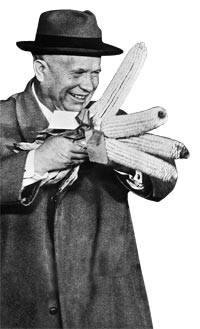
There is socialism, there is no dill, he was the full master of the country. The vertical of power executed any instructions. And the limitation and doom of the manual management system of the country, in which there are no political parties, real parliament, independent court and seal, became clear. Good undertakings turned into a tragicomedy. The zealous performers of the boss instructions were ridiculed by the Merchants of Rudakov and Nechaev.
Went to Voronezh train with cargo
And fell downhill.
For harvesting corn
Someone ruined the rails.
Trutteen did not come up with anything! The first secretary of the Voronezh regional committee of schoolchildren ordered the directors of farms to show Nikita Sergeyevich that cleaning was in full swing. “So there the rails dragged across the field, priming corn, and proved that the field was removed,” Khrushchev said, shocked by what he saw. - These are just Gogol times! ”
Staying at a high post did not make him indifferent. He saw in which trouble the country. Instinctively compared what was happening with the past and could not understand why now it was not possible that it turned out so easily earlier.
“I was better secured in pre -revolutionary time, working as a simple locksmith, I earned forty -five rubles at the prices of black bread in two kopecks, four kopecks for white, a pound of fat - twenty -two pennies, an egg cost a penny, boots, the best“ Skorokhodovsky ”, up to seven rubles. What is there to compare? "
In his lips, nostalgia, which is characteristic of middle -aged people, acquired a political character in the departed youth. He probably did not notice that from his words it was undeniably followed: it was better before.
“I remember my childhood, we literally went to the potatoes. The potato gave birth perfectly. Why is there no potatoes now? .. I talked with the workers. They say: there is no onion, we are sick with scurvy. Well, how can it be that there is no onion? Or there are celery. I remember, in the Donbass, it happened that Bulgarian has a mother or wife buy potatoes, so he gives celery a bunch for free, because this is a trifle ... Well, what a shame? So we will now accustom people that communism, and you eat soup without celery, without parsley, without dill?! There is socialism, but there is no dill, there is no potato and there is no other thing ... ”
“Failures drove him to a dead end,” wrote historian Mikhail Gifter. - The return of the surviving victims of the Stalinist "purges" remained, perhaps, the only pure achievement of Khrushchev. The rest was either halted, according to
Dressed by retreats and reservations, or it was a new arbitrariness ... "
Instead of order - stagnation in recent months Khrushchev seemed to realize that it was necessary to change political mechanisms. In order for collective farms to stop commanding, eliminating rural district committees, lowering the party apparatus in the village until the second -bit role of the party committee of production departments. In the new system of management of agriculture he proposed in 1964, the party bodies had no place for the party bodies. He consulted with his environment: "What do you think that if we create two parties - working and peasant?"
Khrushchev felt that the monopoly on power was destroying the country. Young people are growing, but positions are not relieved for it. We have to wait for someone from the older generation ...
“The bourgeois constitutions,” Khrushchev said a seditious thought, “perhaps more democratically built than ours: the president cannot be more than two convocations. If the bourgeois and capitalists are not afraid that these foundations will be undermined when, after two terms, the chosen president changes, so why should we be afraid? Well, we are not sure of our system or are less confident than these bourgeois and capitalists, landowners? They chose us, and we are the most ingenious? Are people completely undeserved for us? "
Which of those who sat in the meeting room of the Presidium of the Central Committee and listened to the first secretary, could these words like? “If everyone knows that he will be chosen only one term, a maximum of two,” Khrushchev continued to fantasize, “then we will not have a bureaucratic apparatus, we will not have castness. And this means that people will be more bolder, which means that democratization will be in the party, among the people, in the country. ”
It was this idea that brought Khrushchev the most enemies inside the apparatus. In our country, attempts to limit the omnipotence of the top of the time is not possible in our country ...
But Khrushchev did not dare to serious political reforms. And he himself could not imagine real democracy, a market economy or freedom of speech, which he suppressed tanks in 1956 in Hungary.
“Many people write to me,” said Khrushchev to Alexander Twardowski, “that we have Stalinsky, all the Stalinists in the inertia that this device should be ... I answer, yes, we have Stalinists in the apparatus, and we are all the Stalinists, and those that are written, the Stalinists may be the greatest. Because overclocking everyone and the whole issue is not resolved here. We are all from there and we carry the load of the past, but it is a matter of overcoming work skills, the skills of thinking itself, of understanding ourselves the essence. And not to disperse. ”
“We condemned the cult of Stalin, but are there people who vote for him in the CPSU? - Khrushchev said already in retirement. - Unfortunately, there is. Slaves live in the world, both his servants and panties live. “Well, what,” they say, “that he shot so many millions and put in the camps, but he firmly led the country.” Yes, there are people who believe that managing is to whip and whip. ”
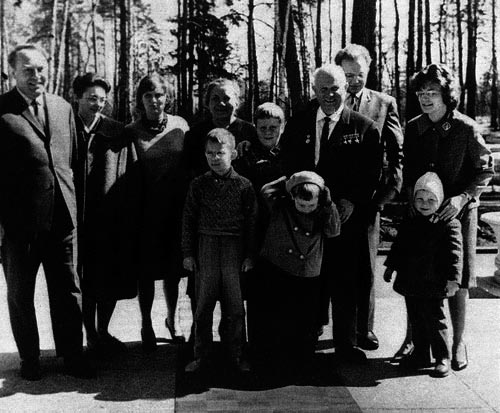
Seeing that Khrushchev was not going to “whip” them, all the offended had lost their fear and united. All his political life, he carefully removed those who seemed dangerous. But in the struggle for power, not a single loud and convincing victory can be considered final ... The overthrow of Khrushchev did not cause discontent in the country. People are tired of his innovations, often ridiculous, longed for peace, order, stability and improvement of life. And they waited for stagnation, which ended in the collapse of the country.