
Translated material
NEEVIENT LATIES
Polish commandos went on trial for the murder of civilians in Afghanistan
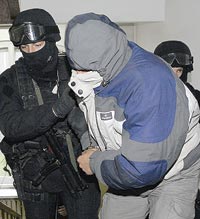
In the Warsaw Military District Court on the dock-seven attack aircraft of the elite battalion of the Polish troops. The prosecutor's office charged them with a grave charge: the murder of civilians in Afghanistan 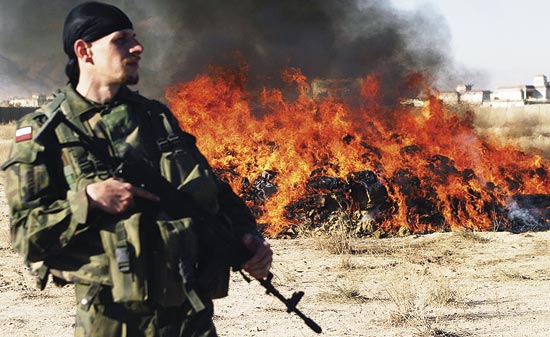
The shelling of defenseless indictments was read out at the first court. His essence is in the words of the prosecutor Yakuba Matyh: “The military knew that they were shooting in an built -up area, they saw moving men, women and children. None of the inhabitants of the village posed a threat. ” The court must determine: whether there was shooting on defenseless civilians intentional or unintentional. Therefore, so carefully, in minutes and even seconds, everything that happened in the village of Nanggar-Khel in the southeast of Afghanistan is versed in August 16, 2007.
On this day, the Polish-American patrol who was planned by the raid, which is part of the international security forces in Afghanistan (ISAF), ran into a mine. From the explosion, two Polish cars were damaged, and the Poles themselves were shelling the Taliban, answered with fire and caused reinforcements. Compatriots-specialists from the elite of the 18th airborne battalion rushed to the aid of those who fell into trouble. Commandos began to pursue the firing militants who had hidden in the foothills.
Further readings diverge. The special forces first opened fire from machine guns, then from the mortar. The nearby village was also under the shelling. Six of its inhabitants were killed: two women, a man and three children. Three more people, including a pregnant woman, were seriously injured.
The replacement of the carpet in the ISAF operational message said that during the persecution of extremist-plots who previously attacked the unit of international forces, Afghan civilians were killed and wounded. The tragic incident was officially commented on: “This event is worthy of regret, our thoughts and prayers, along with families and friends of those who are killed and wounded ... This is another example of the Taliban extremists still draw the local public into a struggle and create a danger to innocent Afghans.”
At the Polish base on the tragic consequences of the operation, it became known immediately, but the authorities tried the incident “Replaces under the carpet”: first at the scene of the incident, and then in the Ministry of Defense. But it was impossible to conceal information. The procedures in NATO definitely determine that it is necessary to inform the society about crisis situations as quickly as possible so as not to lose the support of local residents and not lose their confidence in the mission.
The military department of Poland officially recognized the death of Afghan citizens at the hands of Polish troops only a week later. According to the original version, the inhabitants of the village died during a collision with the Taliban. However, the main military prosecutor’s office immediately began the investigation, the starting point of which was the violation of international law - the provisions of the Hague (1907) and Geneva (1949) conventions on the protection of the civilian population during the war.
The lousy seven accusation of a war crime was brought by the seven special forces. The defendants defended the version, as if they were responding to the fire of the militants on the orders of their direct commander. The investigation came to the conclusion that no one at that time had threatened the attack aircraft, they invented the version of the “exchange of fire” in order to avoid responsibility. As soon as the events in the Afghan village began to gain real contours, the paratroopers were hastened to name the “lousy seven”, which stained the honor of the Polish uniform. The then Minister of Defense Alexander Shchiglo threw in the hearts of the Polish television journalist, which is not responsible for the fact that "the gang of fools shot the civilian population." It is possible that the reason for such an interpretation was given by the spreading information about the arrested special forces. In the battalion, they considered themselves to be cool guys, wore strip patches, imitating their American colleagues, even called themselves a Delta detachment. Already at the brass, one of the witnesses called this “delta” “a group of fanatics impressed by the film“ The Fall of the Black Hawk ”.
In anticipation of the punishment, much of what the accused said during the investigation is filed in court differently. Immediately, the confrontation was discovered between the commander, who denies his order to “smash the village” and considers himself “fanned into business”, and his subordinates, insisting that they followed the team. Everyone denies their guilt. Protection insists that the cause of the tragedy was weapons defects, which affected the change in the flight path of shells. The court has to figure out how plausible the assumption of revenge is: on the eve of the tragic case, a Polish soldier died in Nangar-Khele.
If the guilt is completely proved, the punishment will be severe. For the murder of civilians, six are facing a lifelong conclusion, and the seventh for the "shelling of an unprotected object" - up to 15 years in prison. The famous Polish lawyer professor at the University of Jagello, Andrzeji Tsull, considers the “Afghan case” extremely difficult: “Judges must meticulously consider such issues as an order, official subordination, as well as establish an individual responsibility. The indictment has a large proportion, and the verdict will have international significance. ”
The echo of the incident is the first reaction to the tragedy in the Afghan village instant. In the toilets of the Polish base there were inscriptions in Polish: "Murderers of children." Information has not yet reached the center, and at the scene of the colleagues have already sentenced to a sentence.
Military analyst Arthur Bilsky appreciated what happened: “The Polish Army near Nanggar-Khel lost innocence. These shots from the mortar defeated the myth of the pacifist and front troops. ” The Commissioner for Human Rights, Janusz Kokhanovsky, said that without a punishment for this crime that stained Polish weapons, “Poland loses the moral right to struggle for freedom, democracy and human rights in all places in which Kosovo, Bosnia and Herzegovina to Lebanon, Syria, Iraq and Afghanistan.”
“This is the first such process in our armed forces,” writes Rafal frequency armed conflicts. - The case has a huge impact on the morale of our soldiers, especially serving in foreign missions. If really civilians have become a victim of intentional actions, then the perpetrators must be punished. ”
Events in Nanggar-Khele sharply changed the attitude of the Poles towards the participation of compatriots in military operations. According to the surveys of the Center for the Study of Public Opinion, conducted two days after the start of the process over the commando, 73% of the Poles did not support the participation of Polish troops in the mission in Afghanistan.
1 These legal documents prohibit the murder of civilians and the destruction of their property, as well as the use of a force disproportionate in relation to the threat of power.
According to the UN estimates, in 2008 2118 civilians were killed in Afghanistan. Of these, 829 were killed by soldiers of the Western coalition, 1160 - Taliban. The remaining victims are not attributed to any of the parties. In 2007, among the dead there were more than 1.5 thousand civilians, in 2006 - about 1 thousand.
Now the Polish contingent in Afghanistan has 1,600 military personnel. In April, it will increase to 2 thousand.