
Translated material
Obama is like Reagan
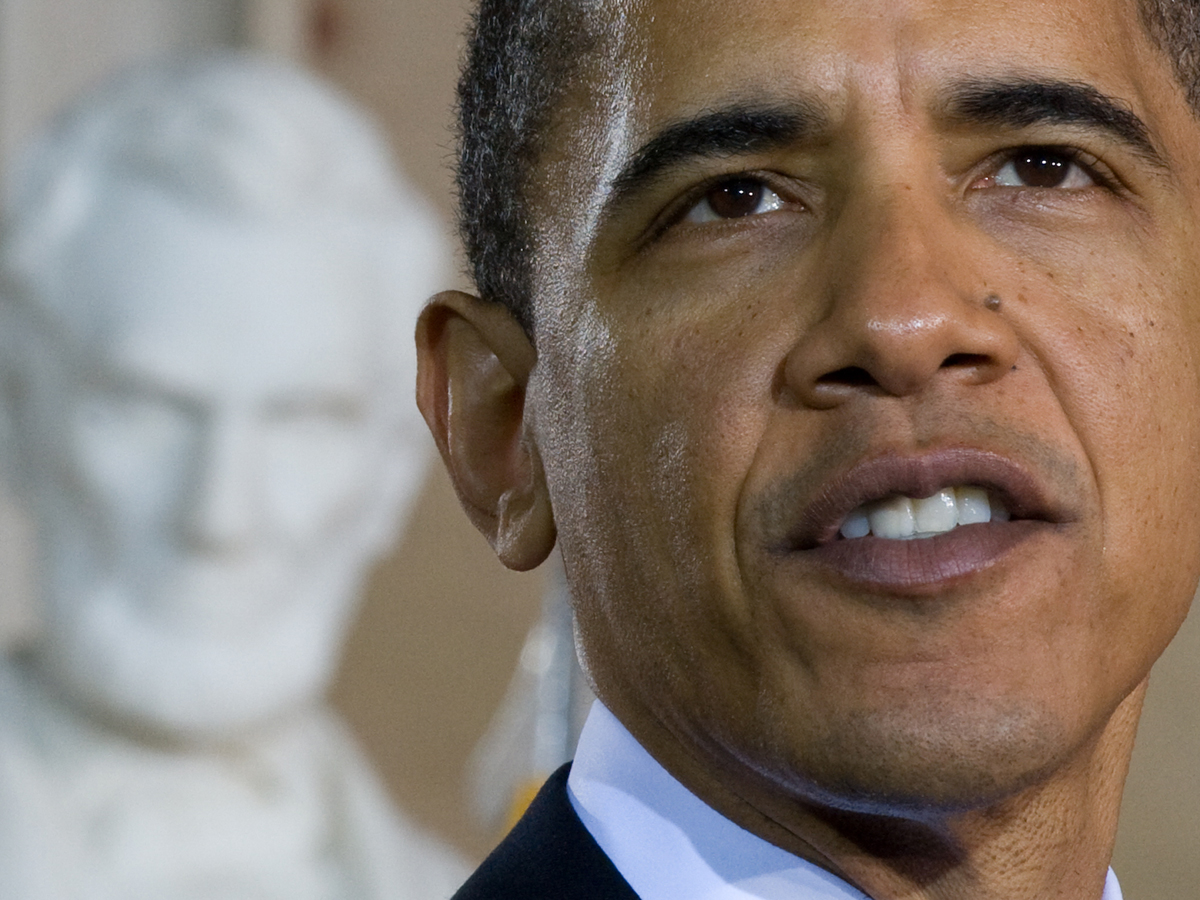
The first three months of Obama fell on the fierce financial crisis, forcing him to take decisive action. He organized an unprecedented state of the state into market processes, which, by the way, was supported only by the minimal majority of Americans. Nevertheless, the president remains extremely popular and this margin of safety, as the administration hopes, will allow him to begin several important reforms in the coming months.
Here's how the famous American political scientist, employee of the Cato Institute John Samples, explains the reasons for the popularity of the new president:
- The important achievement of the first stage of the presidency of Barack Obama is a mansion: he unexpectedly for many managed to achieve support in the preparation of the budget, which provides for significant state expenses that will not only help the Americans survive economically difficult times, but also provide the foundation for the reform of medical insurance and the introduction of energy -saving technologies. But this budget, in fact, is something like sweets. The question of what this budget will be financed, including who will become an object of tax increase, is left for the future. The real opinion in the country about the new administration largely depends on how it is resolved.
- And what are the real capabilities of the new president for large -scale reforms in the near future?
- Obama intends to make serious changes to the medical insurance system, for example, to introduce a system of fines for those industries that throw greenhouse gases into the atmosphere. He plans a noticeable increase in taxes to finance expenses. All these are priorities declared by the administration. But the president will probably have a difficult struggle in the Congress, since few people still realize how much it will cost both the fight against universal warming, and almost unlimited expenses on stimulating the economy. To convince the Americans of the need to increase taxes a politically incredibly difficult task.
On Tuesday, members of the House of Representatives took a gigantic step in the direction of reforms planned by the president. They prepared a preliminary budget version that can be approved on Wednesday. Legislators plan expenses unprecedented for the United States - 3.5 trillion dollars.
Many observers are surprised by the efficiency with which the supporters of Barack Obama, who make up the majority in both chambers of the Congress, have achieved the development of a compromise version of the federal budget. This option includes all the key priorities of the new administration for domestic expenses: reduction of external energy dependence, tax bones for the middle class, a sharp increase in the costs of education and reform of the healthcare system. A special procedure in agreement excludes obstruction by the republican minority when voting on expenses for the reform of the healthcare system in the fall of this year.
Why, contrary to the forecasts and experience of budget fights, the approval of the new giant state budget with a huge shortage, most likely, will be smooth? Here is the opinion of professor at the University of Michigan William Alena :
- Obama does not require the support of the Republicans. This budget is an individual creation of a democratic party, which has the vast majority in Congress. By the ease of passage, this budget is very reminiscent of the budget of Lyndon Johnson , on the basis of which social reforms of the 60s were carried out, called the "Great Society". But Obama's difficulties with the budget were that he was forced to abandon a number of expensive articles, opinions on which were divided even in his party. He is forced to postpone the issue of financing reforms in the energy sector and even in healthcare in favor of the inclusion of other articles. So his struggle is still ahead.
- Is it possible to compare the scale of the intentions of Barack Obama with the transformations that Franklin Roosevelt with his "new course" and Lindon Johnson with his "great society"?
- Apparently, the scope of transformations will be more modest than some observers and politicians suggest. Despite the fact that all the projects proposed by Obama are widely advertised, their details have yet to be found. This applies, for example, restrictions on industrial emissions using quotas or the idea of creating "green jobs". It can be assumed that Obama will surely strengthen his reputation by successfully drawing a budget through the Congress, but there will still be a fundamental question before him: is there a consensus in American society regarding the need for such radical changes? Without this, he cannot succeed.
The budget of Barack Obama also laid down a gradual reduction in the federal budget deficit - from 1 trillion $ 700 billion this year to $ 523 billion by 2014.