
Translated material
The minimum number of points for passing the exam in biology and computer science has been installed
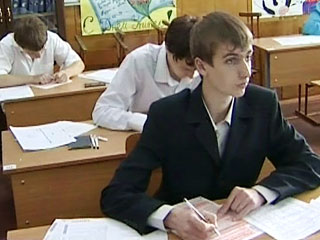
Rosobrnadzor set the minimum number of points for passing a single state exam in biology and computer science - 35 and 36 points, respectively, of 100 possible. The order published according to the results of the meeting of the scaling commission on Monday is posted on the website of the department.
The participants should be informed about the personal results of the exam within two days. If the announcement of the results is delayed, you need to contact the local regional education management body, the source reports.
If the participant in the exam has doubts about the results, then within two working days after receiving the result, you can appeal.
Testing on biology, as well as computer science and information and communication technologies (ICT), was carried out on May 26, the main wave of unified state examinations began with it.
The minimum number of points for each educational subject is set by the department, taking into account the requirements for the level of training of graduates of the secondary school, formulated in the educational standards of 2004; features of the organization of the educational process in this general education subject (the number of hours for its study for various examiner groups); expert assessments in subjects based on pedagogical measurements; statistical data based on the results of the exam this year in the country as a whole and in certain regions; last year results.
As for the examination of the exam in other subjects, as reported in Rosobrnadzor, the minimum number of points in the Russian language will be known no later than June 7, Interfax reports.
This year, Rosobrnadzor refused to publish the results of the exam on the Internet in order to protect the personal data of the participants.
At the same time, the regions are not prohibited from creating their own information Internet resources containing information about the results, however, as noted in Rosobrnadzor, "these resources should have official status and relevant powers from the education authority in this region."
All other sites that allegedly have examiners databases and offer access to them for money are fraudulent, and warned in the department.
Exams in schools will be passed before June 19. On June 1, children pass geography and literature, on June 4 they will be awaited by a second mandatory exam in mathematics, on June 8, knowledge of schoolchildren in foreign languages will be checked, on June 11, graduates pass social studies and chemistry, June 15 - physics and history.
Why the public is mostly unhappy of the exam
After entering the exam in society, disputes do not stop, is there any benefits from it for the Russian education system? The country was divided into two camps: some enthusiastically respond to the innovation, others believe that the exam cannot show the true knowledge of graduates. This topic was discussed the other day in the program "Dialog" on the regional television channel "Oren-TV" with the participation of a hereditary teacher, Honored Teacher of Russia Grigory Plotkin.
There are absolutely definite positive points in the exam, but the degree of public discontent remains high. The main reason, according to the participants in the program, is the practice of conducting an exam. Instructions and provisions on the surrender of the exam have changed on the go, literally in recent months. Control and measuring materials (KIMA) still contain many contradictions and errors. The educational standards are not clearly defined, and the requirements for the volume of knowledge of graduates are growing year from year, according to the website of the ATP .
Among other reasons for the folk "dislike" are the absence of standards when the materials of the Kims are sometimes completely not consistent with those textbooks and programs that are allowed to study at school, an occasion to expand the scale of corruption, the bias of knowledge assessment, the lack of a creative approach, as well as the possibility of strengthening social inequality.
Regarding the latter, the opinions are expressed that for “dragging” to the exam, schoolchildren are increasingly hired experienced tutors, and in large cities this is easier to do than in remote corners and small settlements.
As for corruption, despite the rainbow prospects drawn by the authorities, the people do not believe in a decrease in its level. On the contrary, many are convinced that corruption will simply switch to another level.
According to the poll, 25% of Russians believe that the number of bribes will only increase, 36% believes that it will remain the same, and only 17% believes that there will be less opportunities for abuse.
Also, 36% of Russians believe that the Unified State Examan is evaluating knowledge worse, 27% think that no better and no worse. Only 16% believe that the USE better reveals the real knowledge of students.