
Translated material
Berlin protection
Philosopher who justified freedom
Prophet in someone else's fatherland. On June 6, a hundred years of the birth of one of the largest thinkers of the 20th century Isaia Berlin - the theoretician of liberalism and the defender of freedom, which he was born in the country is born, marks 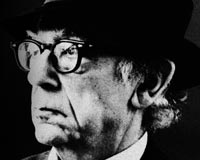
At one time, Berlin, who studied in Oxford, was thinking about the career of the philosopher in a broad sense, but these plans, apparently, laid an end to a meeting with Ludwig Wittgenstein, ¹ publicly reproaching the child prodigy. Q p. Berlin dedicated his life to philosophy in a narrow sense, where Vitgressionstin’s skepticism could not be: philosophy of culture. For all his fertility, he did not leave fundamental work, but individual articles became truly milestones in the analysis of the nature and capabilities of human freedom.
Two freedoms to the main contribution of Berlin to the theory of liberalism was the concept of two types of freedom, negative and positive, which can otherwise be characterized as “freedom from” and “freedom for”. These freedoms are not alternative, but complement each other. The first, the idea of which goes back to John Stewart MiL, is the maximum removal of external restrictions, possible in an ordered human society. The boundaries of this freedom are determined by the damage that one person can cause to another in the course of his activity. Within these limits, society does not have the right to prescribe and regulate human life, even in such extreme cases, when the actions of the subject threaten him with his own well -being, health and life - in particular, in the case of such “crimes without sacrifice” as drug addiction or prostitution. The field of jurisprudence and law enforcement, that is, the competence of the state, begins only behind the line of this private life.
Negative freedom does not imply any prescriptions from the outside and does not contain any internal structure. A person is free to act with her as he wants or not to do in any way. Another thing is a positive freedom, which makes up the natural continuation of the internal. Its preachers proceed from the thesis that freedom is given to a person for the purpose of implementing a certain individual plan or, as many insist, parts of a general social plan. An example of the theoretician of such freedom is Immanuel Kant, who believed that a person is driven by a certain internal moral legislation, a categorical imperative. Hegel went on, declaring freedom with a conscious necessity.
A person of negative freedom, Mill's man is virtually free from morality, unless he violates the laws, all his morality is external, he has the right to choose it or abandon it. A person has positive freedom, a man of Kant all morality - inside. However, at all times there were many who wanted to manage this morality - from religious positions or from state, to put external authority over the imperative.
The merit of Isaiah Berlin is that he convincingly showed how the concept of “freedom for” easily becomes an instrument in the hands of totalitarian regimes that arise precisely by socializing such freedom. Liberalism ends where they begin to explain to a person why and for what purpose he is free.
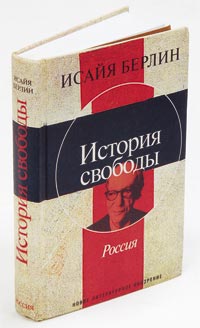
Totalite romanticism is another leading topic of Berlin's work, which he paid almost more attention than the problem of freedom, is the history of romanticism. But only at first glance it seems not too related to a set of issues of liberalism. Romanticism is sharply different from other trends in literature and art with its wholeness and duration: it arose at the sunset of the XVIII century as a reaction to the ideas of the Enlightenment, the brainchild of which was liberalism. Berlin traces how many ideas of romanticism formed the basis of later totalitarian ideologies. One of the undoubted adherents of romanticism was, of course, Adolf Hitler, a fan of Wagner, Strauss and, oddly enough, Malera, despite the Jewish origin of the last, but also the author of the numerous adventure novels of Karl May, a resident of the semi -basement of a romantic hive. In a sense, relativism of the postmodern period became the final chord of romanticism.
Neither Berlin nor liberalism returned to Russia from emigration. This, of course, is the figure of speech in regard to Berlin himself: after the war, he came to the USSR and met with Anna Akhmatova. This meeting, as Akhmatova said by the words of Christopher Marlowe, "lowered a thousand ships." (In the play “Faust” there is the phrase The Face that Launched a Thusand Ships, of course, Elena’s face is beautiful. Akhmatova believed that Stalin began a cold war of revenge on her, because Berlin himself fell in love with it. Berlin herself was out of this.) The light in Russia saw, but basically it was his works dedicated to Russian writers and thinkers and created a somewhat one -sided reputation in his historical homeland - rather a literary critic than a philosopher.
On the meaning of words, liberalism, of course, over the past decades managed to become a swearing word in Russia, but Isaiah of Berlin is not guilt in this. The term “liberalism” has many meanings, and they, in contrast to many fictitious meanings of the word “democracy”, are mostly meaningful, but denote different concepts. The one, which has acquired wide walking since the time of perestroika, is primarily referring to the teachings of the Austrian Economic School, whose ideas were popular among reformers. In addition, this can be attributed to the philosophy of “objectivism” by Ain Rand, 4 also reduces liberalism, including its ethics, mainly to the economy. It is interesting that Ain Rand, who was actually called Alisa Rosenbaum,, like Berlin, was an emigrant from Russia and is also connected with her by the fact that the roots of objectivism are traced in the theory of “rational egoism” of Pisarev and Chernyshevsky.
As a result, there was a situation in which exactly the meaning of the word, which in any dictionary stands first, rose at the end of the line in Russia. Isaiah Berlin, who was subsuriently, at least posthumously returning to his homeland with honors, is still stomping at customs, trying to explain to those who, without much understanding, are giving up in his baggage, that liberalism is the doctrine of human freedom, not capital.
1 Austro-English philosopher, founder of the school of analytical philosophy; His ideas about the nature and structure of the language, set forth in “philosophical research”, gave rise to British linguistic philosophy, or the philosophy of the everyday language.
The 2 -hour and a half polemic took place in Cambridge on June 12, 1940 after the report of Berlin, which was built on an analysis of the experience of his own toothache: his approach to the problem of reconstruction of consciousness sharply contradicted the then dominant in English philosophy with logical positivism.
3 English philosopher of the XIX century, author of the famous treatise "On Freedom" (1859).
4 American writer, playwright, philosopher. One of her most popular books “Atlant Broken shoulders” was published in 1957; In 2000, it was translated into Russian and the efforts of the economist Andrei Illarionov published in Russia.
Alexey Tsvetkov - poet, translator, prose writer. In the early 70s he was a member of the unofficial poetic group “Moscow Time”. In 1975 he was arrested and soon found himself in exile in the United States. He edited the Russian Life newspaper at San Francisco, studied at the University of Michigan, and taught Russian literature. He worked in Prague on Radio “Freedom” by the editor and host of the program “Seventh Continent” and “Atlantic Diary”. Lives in New York. Prize winner Andrei Bely (2007).