
Translated material
Alien among his own
Gordon Brown on the eve of the resignation
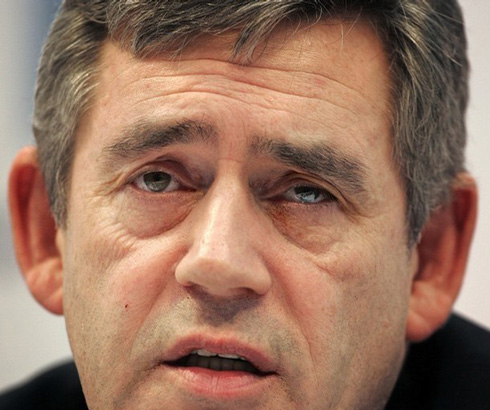
Gordon Brown: On the edge of the abyss. A few months ago, British Prime Minister Gordon Brown was called a man who will save the world financial system from the crisis. Two months ago, he reveled in success, chairing the “Big Twenty” summit in London. His Labor Party has most places in the UK parliament (350 out of 646). And the following universal elections were to be held only in May 2010. However, today, after two years of premiere, Brown is in the threat of early resignation. Moreover, he is forced to clean the office of his own single-partyists, as happened in due time and with Margaret Thatcher, whose party Tori also had the majority in parliament and who also forced to leave Dauning Street colleagues-conservatives.
Last Thursday, June 4, deputies from the Labor Party distributed an email with the following text: “Dear Gordon, you will better serve the interests of the Labor Party if you leave the post of party leader and prime minister.” And they started collecting signatures. If 70 members of the parliament sign this letter, then Brown will have to initiate the election of the party leader (but not universal elections). But even if 50 people sign, then in the party we will inevit the split. (At the time of signing the number, about 40 people signed the letter.)
Brown, of course, hopes to recoup by shuffling the government and appointing new ministers. But if the key ministers refuse to leave their posts or accept new appointments - but for now this happens exactly, then nothing will remain from the authority of Brown.
Very English story
It would seem: the German economy is now in decline, but the Chancellor Merkel is a favorite in the upcoming federal elections in 2010. The President of the Sarcosis is very unpopular in France, but it can be confidently confident that he will remain in the palace in the Champs Elysees until the end of his presidential term. The Prime Minister of Berlusconi was repeatedly accused of corruption, his wife accused him of spending too much time in the company of young and beautiful girls, but he was and remains the main figure on today's political scene of Italy.
Why is Brown not so lucky? Because it is a typical English story.
The immediate cause of the problems that suddenly fell on Brown seems quite trifling. The last two months, all the attention of the British establishment, parliament, press and electorate is not focused on the economic crisis - which would be quite natural, but on statements about compensation for expenses that members of the parliament submitted in full accordance with the law.
The case of £ 24 thousand
MP (Mambers of Parliament - members of the Parliament) of Great Britain receive a salary of £ 64 thousand per year. This is a very small salary for people who live in a very expensive London, especially when you consider that many parliamentarians are forced to support two houses: one in London, and the other in their constituency. A few years ago, a system of benefits was introduced for members of the parliament, according to which they can ask for compensation up to £ 24 thousand per year for the maintenance of the second house - provided that they will submit confirming documents, which is exactly as much and it was for them that they spent them.
One of the newspapers got a disc with a copy of all the checks presented by parliamentarians and several months, day after day, published them in its first stripes. It turned out that both ministers and other members of the parliament used their benefits in order to receive compensation for expenses that were hardly needed to send their professional duties: someone purchased a flat-screen TV in a London apartment, someone presented an estimate of the pool and garden work. In printouts, even a pink laptop and a bath for a bath for £ 0.88 appeared. With the exception of some cases, members of the parliament did not violate the requirements and laws. However, this information, issued in the headlines of newspapers, caused a tremendous negative reaction among taxpayers. Voters are furious. And it is clear why: a crisis, and their money is spent in such an inappropriate way.
Prime Minister's answer
Gordon Brown began to settle the situation and did it very awkwardly. Without consulting parliament, he announced his proposals to reform the MP benefits system through Internet broadcasting on YouTube. He looked stupid at the same time, which gave a reason to one of the ministers to publicly ridicule him. Members of the parliament were outraged that the party leader did not consult with them. Bottom line: Brown had to withdraw his proposals. The authority of the Prime Minister rolled down, the authorities began to flow from his hands. Over the past week alone, six members of the office and several ministers of the second row were resigned at once. And James Pernell - Minister for Labor and Pensions (he announced his resignation on the evening of June 4), openly called on Brown to leave: "Every day that you remain at the head of the party, makes the victory of the conservatives more and more likely."
However, there are more good reasons for the imminent resignation of Brown, namely: he lost the role of the prime minister.
Women against Brown
Being the Minister of Finance for 10 years, Brown, as he claimed, ensured an economic rise that he really was, and committed, as he said, with the cycles of “boom and downs”, which no one can do. Now, when this very decline happened, voters, and not without reason, blame Brown in it. Finally, voters simply do not like him. Many consider him a badly educated person, and besides with a heavy character. (Details about the personality of Gordon Brown, including his hard character, The New Times spoke in the essay of the rodric Line, who was published two weeks before Brown became the Prime Minister. The New Times No. 18 of June 11, 2007.) He does not have relations with women. Therefore, he prefers to surround himself with a narrow circle of favorites, among which exclusively men. It is not by chance that three of the six key ministers of his office, which resigned, are women. The Minister of Europe Caroline Flint, who announced on the evening of June 5, wrote in her letter Brown wrote: “You treated the women’s members exclusively as mannequins in the window of a women's store.”
Finally, under Brown, his Labor Party shows depressingly low results in the elections and is far behind and Tori, and even, as the last survey showed, liberal democrats - no one can recall this at all. On June 7, the results of the elections in the European Parliament will become known: it is expected that they will also be very deplorable for the Labor. Members of the parliament-Labor simply do not believe that their reputation among voters will become any better if Gordon Brown remains in power. Yes, they will most likely lose the following national elections with another leader, but still the loss will not be so deafening, they believe, and therefore, there will be more parliamentarians in the House of Commons.
What will happen next?
There are three probable scenarios of events.
The first: Gordon Brown will cope with problems that have fallen on him, try to change his office and retain his post (despite the serious damage to his personal authority) to the next elections that will be held in the spring of 2010, hoping that the economic situation will improve.
Second: Laborists will elect a new leader, who in July will become the Prime Minister. The most likely candidate is yesterday the Minister of Health, and from Friday June 5, is the new Minister of the Interior Alan Johnson, who is practically not known outside the UK. Other possible candidates are Foreign Minister Jack Strau and the current foreign minister David Milibend.
Third: national elections will be announced earlier than the stipulated deadline, regardless of whether Brown will remain the leader of the party or not. Obviously: the government has lost all confidence of voters. If they will demand changes with growing activity, and the Labor Party will remain split, then there will be no other way out, except to dissolve the parliament and go to the people, that is, to give voters to decide who should be in parliament and government.
Everything will be decided in the coming days: it will become clear whether Gordon Brown managed to preserve at least some “troops”-and then the decisive battle will be deposited for several months; Or he has nothing, there was no resources for political survival-and then he will have to leave Dauning Street. Here is such a democracy in the westminster. The question is, will it be able to ensure strong and effective management in which the country needs this way?
Translated from English Anna Makarova