
Translated material
Adopted children are increasingly not taking root in Russian families
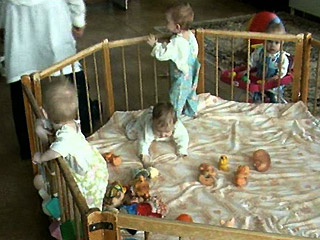
Every tenth adopted child has already returned back to the orphanage. Such data at the end of last week presented the Ministry of Education, write New Izvestia . Officials urge to return the patronage abolished in September last year. Psychologists say that many adoptive parents are simply not ready to educate adoptive children.
After the entry into force in September last year, the new law "On guardianship and trusteeship" Russians adopted 142 thousand children. Such data last week was presented by the Ministry of Education and Science. Another 42 thousand Russian children were adopted by foreigners. In total, 670.5 thousand children are left without parental care in our country. If some children are taken from orphanages to families, then others are returned back.
According to statistics, 10% of children do not take root in the foster family. According to experts, this is due to the fact that the child is selected only according to formal criteria - age, state of health, appearance. It is enough for adoptive parents to provide certificates of legal capacity and material well -being. After that, the child gets into the family.
“Often, foster parents teach children to overcome difficulties on their own. But many children cannot. And the child, in order to pay attention to him, does not begin to behave properly: he studies poorly at school, curses obscenities, smokes, drinks alcohol,” explains the psychologist Maria Kaplin. According to her, conflicts are most likely in those families where foster parents could not get attached to the child. For a child, a return to the orphanage is "another stress, since he loses his family for the second time."
The Ministry of Education believes that it is necessary to revive the patronage, which was abolished by the new law. During the patronage of the child, they placed in a family whose members were hired by an orphanage as patronage educators and received a salary. The agency prepares amendments to the law, and the patronage, meanwhile, is trying to revive some non -profit organizations. In St. Petersburg, for example, the Evey Child charitable organization distributed 40 disabled children between foster parents and provides them with financial assistance. “Most parents, due to material dysfunction, cannot raise such children themselves,” said the project manager Joanna Rogers.