
Translated material
Experts: Crisis can ruin the CIS
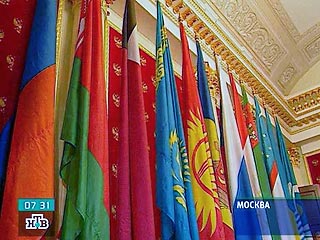
The current crisis will cause the strengthening of centrifugal tendencies among members of the Commonwealth of Independent States (CIS), since neither a single policy nor a plan of joint actions between them has so far been developed, while the number of interstate conflicts is growing, the Independent Newspaper writes with reference to the analytical study of the company of the CIS country and the global crisis: general problems and different approaches, ” published the day before.
Russia, being the center of the organization, objectively strengthens these negative trends, showing some of the worst socio-economic results following the results of January-April. According to the authors of the study, a weak center is a weak community, the fate of which seems clearly ambiguous.
Moreover - in recent years, the number of problems between countries entering the Commonwealth is increasing. Difficulties in the relations of Russia and Ukraine on the gas issue are well known. The accident in the gas transportation system caused the conflict of Russia with Turkmenia. Not everything is cloudless in relations with Azerbaijan. Finally, the recent "milk" conflict of Moscow with Minsk formed another crack in the CIS.
On the one hand, the CIS countries tried and try to combine efforts, and the tendency to adopt joint anti -crisis plans either on bilateral -based basis, as the leaders of Russia and Belarus stated this, or within the framework of other unions is clearly traced, the authors of the report noted. For example, in February it was decided to establish the anti-crisis fund of the countries of European-Asian economic cooperation (EURSECE) of $ 10 billion, 75% of which will be a Russian contribution. However, it is too early to talk about the unity of positions, given the polarity of the current socio-economic situation, which does not indicate that there is some kind of coordination between the CIS members today.
Commenting on the study, the director of the Institute of Economics of the Russian Academy of Sciences Ruslan Greenberg, in principle, agreed with a negative assessment, but recalled that during the crisis, almost all world leaders talk about finding joint ways to get out of it, but the case does not yet reach specific actions. “As a result, one rhetoric remains, and the CIS members are no exception,” the expert notes. “Meanwhile, the situation in Ukraine really causes anxiety - the total debt of Kyiv reaches $ 100 billion, and only this year, all previously taken loans need to pay about $ 30 billion, while he does not even have money - Europe nods at Russia, and that - at Europe.”
The best socio-economic indicators among the CIS countries according to the results of January-April have Uzbekistan and Azerbaijan, where GDP growth (according to the first quarter) amounted to 7.9% and 4.3%, respectively. At the same time, Tajikistan with a growth of 2.9% and Belarus - 1.2% were in the positive zone for GDP. The worst results, according to the FBK, are demonstrated by Ukraine and Moldova, where the decline in industrial production amounted to 31.9 and 25.7%, respectively. Moreover, Russia, which is and should be the center of the Union, turned out to be closer to outsiders, showing minus 14.9% in industry and minus 9.8% in GDP, NG notes.