
Translated material
Riot in the Bundestag
Khodorkovsky's case caused a conflict in the German parliament
German slap. The farce entitled “The second process over Khodorkovsky and Lebedev” overwhelmed the bowl of the patience of Europeans. 5 years ago, the German Chancellor Gerhard Schroeder allowed himself to call Vladimir Putin the “democrat of pure water”, and today the Bundestag accepts a tough resolution regarding the judicial system of the Russian Federation. This document was born in hot disputes, which was followed by The New Times 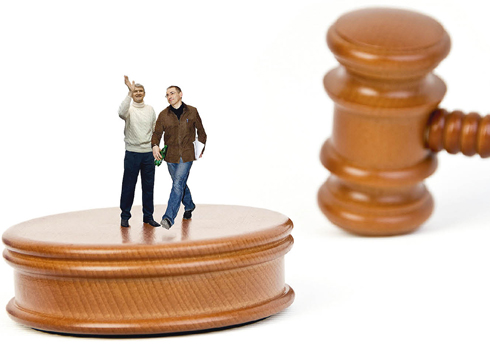
In early July, on the last working day before the summer holidays, the German Bundestag adopted a resolution called "Strengthening the legal system in Russia." A party of green, Christian democrats (HDS/CSS), free democrats (SVDP) and Social Democrats (SDPG) voted for it. Only one party - the left, the heiress of the Gader SPG, did not support the resolution. The document adopted almost unanimously, a few weeks before, almost split the ruling coalition of the social and Christian democrats.
It would be softer
They brewed green porridge. Mariluiza Bek, who was responsible in this party for politics against Russia, at the end of April visited Moscow to visit the second process of Mikhail Khodorkovsky and Plato Lebedev. The one saw in court convinced her that "and this criminal process is used for political purposes." Having returned, she sent a memorandum to the Bundestag, where, in particular, it is said: "The organizers of this event cause not only the reputation of Russia, its economy and relations with other countries, but - which is much more important - violate the principles of the legality and human rights that Russia at one time obligated to follow." The memorandum received the full support of the green fraction, a number of deputies from the ruling CDU/CSS, free democrats, located, like green, in the opposition. As for the Social Democrats, partners of the CDU/CSS on the government coalition, they considered the document too sharp. At the next party congress, Frank-Walter Steinmeier, the current foreign minister and the Chancellors candidate from this party, said that such a criticism is purely advertising and that in relations with Russia should be more friendly (moreover, as colleagues of the minister assure, he, communicating with officials of the Russian Federation, speaks out about Russian politics very critically).
CROs from the hut
In Germany, it is traditionally believed that observing coalition discipline is a good tone, that is, parties included in the ruling coalition do not vote against each other in parliament. When the disagreements in the coalition became, with the filing of the green, the press was known and the influential Zyudducca Zeitung and “Spiegel” wrote about this, the government parties were in a difficult situation. On the one hand, on the nose of the elections and putting the future competitor to the footboard would be very useful, on the other - the Germans (in this case, the considerable idea of them meets reality) do not really complain of those who violate the rules. Especially during the crisis, when the ruling parties should act as a united front. But the IS was already taken out of the hut, and the dispute, which should be the policy in relation to Russia and how to relate to the Khodorkovsky case, spilled into public space. In society, attempts by the Social Democrats to emasculate the resolution did not meet approval, and as a result, the adopted document retained the sharpness of the original option. True, the names of Khodorkovsky and Lebedev were removed from his title, and direct instructions from the text that the process over the owners of the Yukos is politically motivated. The document refers to the kind of Russian judicial system as a whole, but it preserved a direct requirement for the Government of the Federal Republic of Germany “to promote the implementation of the process against Khodorkovsky and Lebedev in every possible way, which will evaluate this process. Moreover, the results of monitoring should be regularly informed. ” In addition, the parliament called on the government to “indicate to Russia, referring, in particular, the process of Khodorkovsky and Lebedev, to violations in its proceedings and remind the Russian government of the obligations that membership in the Council of Europe and the OSCE imposes on it.”
New landscape
The scandal that preceded the adoption of the resolution would not be so interesting if he had not indicated a certain, albeit barely noticeable, fault in German politics, a fault, which, perhaps, will greatly change the political landscape of Germany. This collapse is not directly related to Russia, but in discussions about the attitude to the existing regime, the contours of new political unions are appearing, which until recently it was impossible to think. What is more important? Real policy or human rights? Momentary economic benefits or sustainable development? Transatlantic partnership with America or equidistance from the USA and Russia? The answers to these questions determine the new line of political demarcation. The former ideological guidelines are gradually receding to the background.
Social democrats, left, some of the green, liberal-economic wing of the CDS/CSS and free democrats gathered on one side of this line. The same group includes the communists of the old hardening and other left, which is explained by their latent anti -Americanism. This whole company advocates close cooperation with Russia and is ready to close his eyes to the problems with democracy, human rights and the rule of law in this country. For a sample, this group usually takes the so-called oriental policy developed by the Social Democrats developed back in the 70s. Then the bet was not made on a strict confrontation, but for changes (in Soviet society) through rapprochement. ” The already mentioned Steinmeyer two years ago made an attempt that did not meet approval in society, to revive the previous policy, putting forward a similar formula - “rapprochement through the weave”.
On the other side of the fault are the Green Party, at least most of it, free democrats, few Social Democrats, mainly former citizens of the GDR, and the conservative wing of Christian democrats. All of them, of course, are not against close cooperation with Russia (there are few of them in Germany in general), believing that it meets the interests of national security and economics. But at the same time, they insist that Russia should from time to time remind of the need to observe the principles of democracy and rights. They do not also deny the success of the “Changes through rapprochement” strategy, but they indicate that the West Support for dissidents in the Soviet Union and Eastern Europe in a short degree contributed to the collapse of the Soviet dictatorship than the “Eastern Politics”.
In the next elections to the Bundestag, which will take place in September, this only designated split will not manifest. But the scandal around the Bundestag resolution, which the government can easily ignore, seems to be a harbinger of great changes.
Photo on the main page from the site mallex.info
The collage used photos: Age/East News, RIA Novosti, ITAR-TASS