
Translated material
How will Belgrade look?
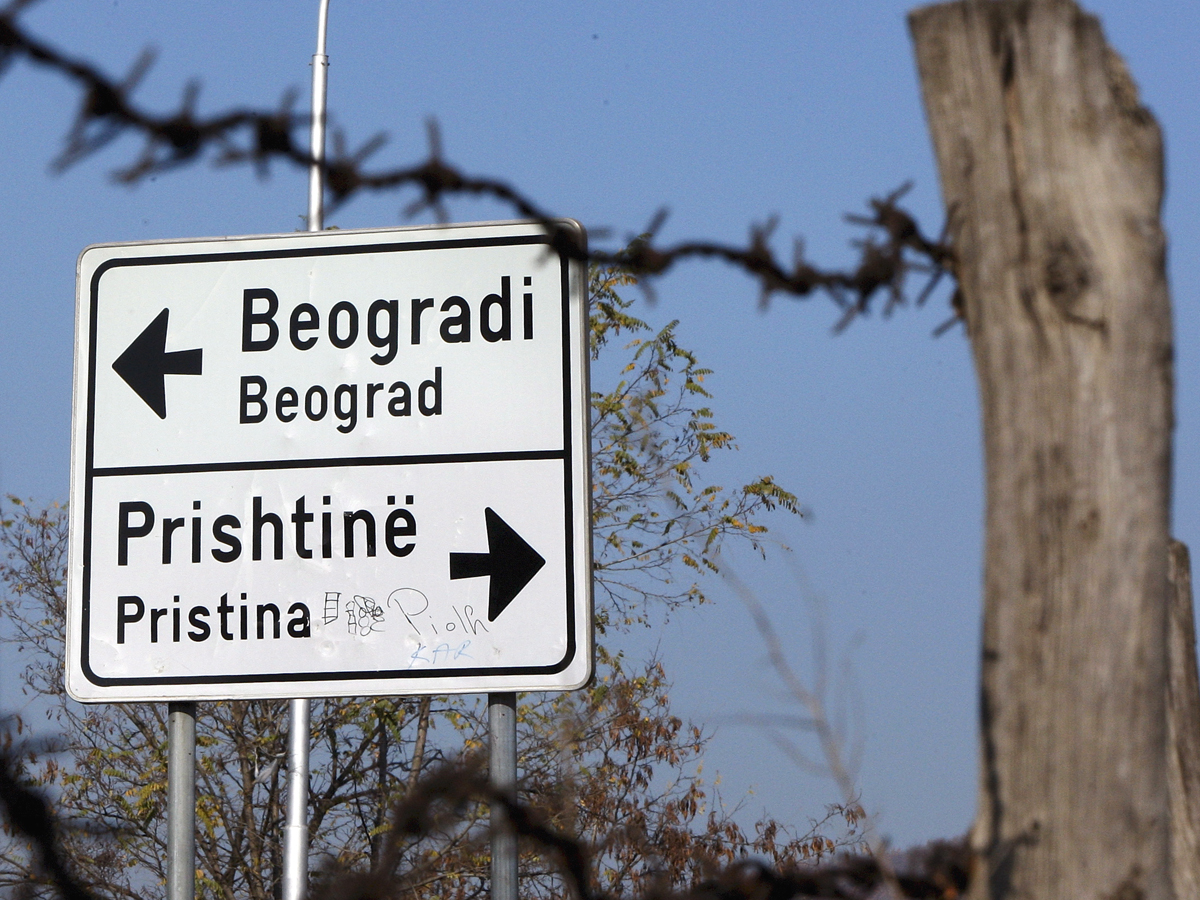
Yesterday, the Supreme Commissioner of the European Union on Foreign Policy Javier Solan visited Primetin. He stated that one of the main tasks of the new state should be the creation of a multi -ethnic society in Kosovo. And the Serbs he urged to take part in the upcoming elections to the local authorities in Kosovo in the fall in the fall, so that they themselves could influence the creation of the best living conditions for themselves. But how does Belgrade relate to these calls?
Almost a year and a half has passed since Kosovo proclaimed independence from Serbia, and the position of the Kosovo Serbs remains unclear. There are about 100 thousand in Kosovo. They look towards Belgrade, expecting instructions from the government of Serbia how to live on. However, recently it began to happen that the Serbs from Kosovo themselves are trying to decide their fate. So, on the last day of June, almost all Serbian police officers returned to the Kosovo police service. Immediately after the proclamation of independence, in February 2008, they, at the call of Belgrade, defiantly left their jobs, refusing to obey Protina. The Serbian authorities then promised to provide them with new jobs, and until then to issue salaries. But the Serbian policeman, despite the boycott of the service, which lasted more than a year, salaries came from Protina. And from June 30, they were in danger of losing jobs, and almost all of them returned to work. Official Belgrade unexpectedly supported this step.
How important is the Serbs from Kosovo have their fellow tribesmen in the police? Representative of the Ministry of Kosovo of the Government of Serbia Milita Mikhailovich answered this issue of Radio Liberty:
With confidence, we can say that the return of the Serbs to the Kosovo police service will be favored by security in Serbian municipalities

- This means a lot for the Serbian population in Kosovo and Metohiya. In this territory, where interethnic tension existed and exists, it is extremely important for the Serbs that the police contain Serbs. People trust them more, they can more affect safety. Their ethnicity significantly affects the support of the police by the local population. With confidence, we can say that the return of the Serbs to the Kosovo police service will be favored by security in Serbian municipalities.
- You said "in Serbian municipalities." However, the Serbia government urges Serbs not to take part in the upcoming local governments in Kosovo. How then will Serbs be able to defend their rights at the local level, solve their practical problems with Profina?
- Local self -government was elected in the Serbian elections and it works in all municipalities of Kosovo and Metochia, where our elections were held last year. At the moment, there are no conditions for Belgrade to call on the Serbs to take part in the Albanian elections - primarily because the local elections in Kosovo were announced by temporary Kosovo authorities, and this does not correspond to the resolution of 1244 Security Councils of the UN. This is the assessment of the Government of Serbia.
- However, there are Serbs in Kosovo - however, belonging to radical nationalist circles - who refuse to listen to Belgrade. They arrange road blockade in the north of Kosovo, protesting against the establishment of customs control on the border with Serbia, despite the fact that Belgrade reached an agreement with the international community that Kosovo is a separate and unified customs area. Recently, a group of Serbs in Kosovo threw stones at a column of vehicles, in which there were three ministers of the government of Serbia, including the Minister of Kosovo.
- This situation is provoked by some opposition political parties. It seems to me unnatural that the Serbs in the north of Kosovo are protesting against customs, because the customs has not yet been established. There are many unclear in these protests. In my opinion, we are all interested in making control on the border with Kosovo - against smuggling and other crime. If Serbia is involved in this process along with the UN, there should be no problems with the local population. This is in their interests so that criminal acts are not committed there. I believe that after ten years of lawlessness in Kosovo and Metochia it was time to restore order.
Miliy Mikhailovich expressed the official position of the Government of Serbia. But many people have a contradictory policy in Kosovo. On the one hand, Belgrade agrees with the return of the Serbian police to the Kosovo police service, as well as with the establishment of customs on the borders with Kosovo. On the other hand, Serbia strictly opposes the participation of the Serbs in the elections of local authorities - under the pretext that this, they say, means recognition of the independence of Kosovo. Here is what the director of the Belgrade non -governmental organization "Forum on Ethnic Relations", specialist in Kosovo Dushan Yanich : the director of the Belgrade non -governmental organization says.
- Official Belgrade agreed with the decision of the Serbs to return to the Kosovo police service, however, without participating in the preparation of this decision. Serbia left this to be decided by the police himself. We can say that Belgrade was informed of their desire, but I am not sure that the consent with such a decision was complete. As for the elections, it is strange that the government of Serbia so hastily called on the Serbs not to participate in them. It was expected that first negotiations would be held, after which a clear call - neither to the boycott, nor to participate in the elections - would not be followed. But now we can only conclude - the Government of Serbia does not have a clear policy regarding domestic events in Kosovo, and therefore, he does not have a clear policy on the question of what to do with the Serbs who remained in Kosovo.
“But the Serbs in Kosovo have their leaders.” What policy do they support?
- As for people called the leaders of the Kosovo Serbs, this is a really strange mixture - none of them are elected in normal, honest, democratic elections. For example, leaders from the Serbian National Council - at first it was an informal organization of Kosovo Serbs, and then most of its members entered the party, primarily in a radical party, or joined the nationalists of Voislav Koshtunitsa. Another group of the so -called leadership of Kosovo Serbs are different chairmen of the Serbian municipalities parallel to Albanian in Kosovo. They are appointed and contained by Belgrade, local residents often do not even know them by person, although these people, in fact, are the most influential. There is also a third group of leaders who take part in the elections of the authorities in Kosovo, collaborate with Primya. Most often, they simply settled down to financially improve their living conditions - they have no political idea. From all this, we can conclude that the Kosovo Serbs do not have a political elite formed according to the democratic rules - and it is not for the reason that Belgrade does not allow this.
- The dissatisfaction of the Kosovo Serbs is huge and continues to grow - in their life, nothing decides for the better.
- If you talk with ordinary people, it is clear that they are very unhappy, first of all, their leaders. However, in Kosovo there are no mechanisms with which most Serbs could express their will. This is one of the reasons for their dissatisfaction with Belgrade. The other - no matter how much Serbia helps Kosovo Serbs, they feel that this is not enough, it is extremely difficult for them. But, despite the fact that the Serbs are dissatisfied with Belgrade, they still rely on Belgrade - for the simple reason that their discontent with the international community and Prostina is even more. After all, the international community and the Albanian leadership allowed the Serbs to live locked up, in enclaves, like Belgrade's subjects. And Belgrade is far away. In addition, there is still no clarity strategy of Protina and the international community, how to integrate Serbs into a Kosovo society. The problem of integration is posed only as a matter of participation in the elections.
- The leadership of Serbia has been constantly repeating for a year and a half: "We will never recognize the independence of Kosovo. Kosovo was and remains part of Serbia." But, despite this slogan, do you understand how Belgrade plans to solve the real problems of the Serbs in Kosovo?
- In fact, the current approach of the Serbia authorities to Kosovo does not differ from the early period of the power of Slobodan Milosevich, when he abused Kosovo for the purpose of national mobilization. In those days, Milosevich promised Serbs control over the Albanians, and then spoke about the division of the territory. I personally do not see a single new idea today. Unfortunately, those who are in power in Belgrade have absolutely no plan, and they are increasingly losing interest in Kosovo. And such an attitude of Belgrade spurred a neglect of local Serbs from international representatives in Kosovo and Kosovo Albanians. I am afraid that Kosovo Serbs over the next five to six years will be generally left to the mercy of fate. That is, one part of them will move to Serbia, someone will agree to live according to the Albanian rules, and others will passively live on the limit of opportunities and dream of moving into some third country on one day.
The text is prepared based on the materials of the program "Time and the Peace" .
-

Irina Lagunina
Head of Special Projects of Russian Service Radio Liberty
Laguninai@rferl.org