
Translated material
There are no old aircraft
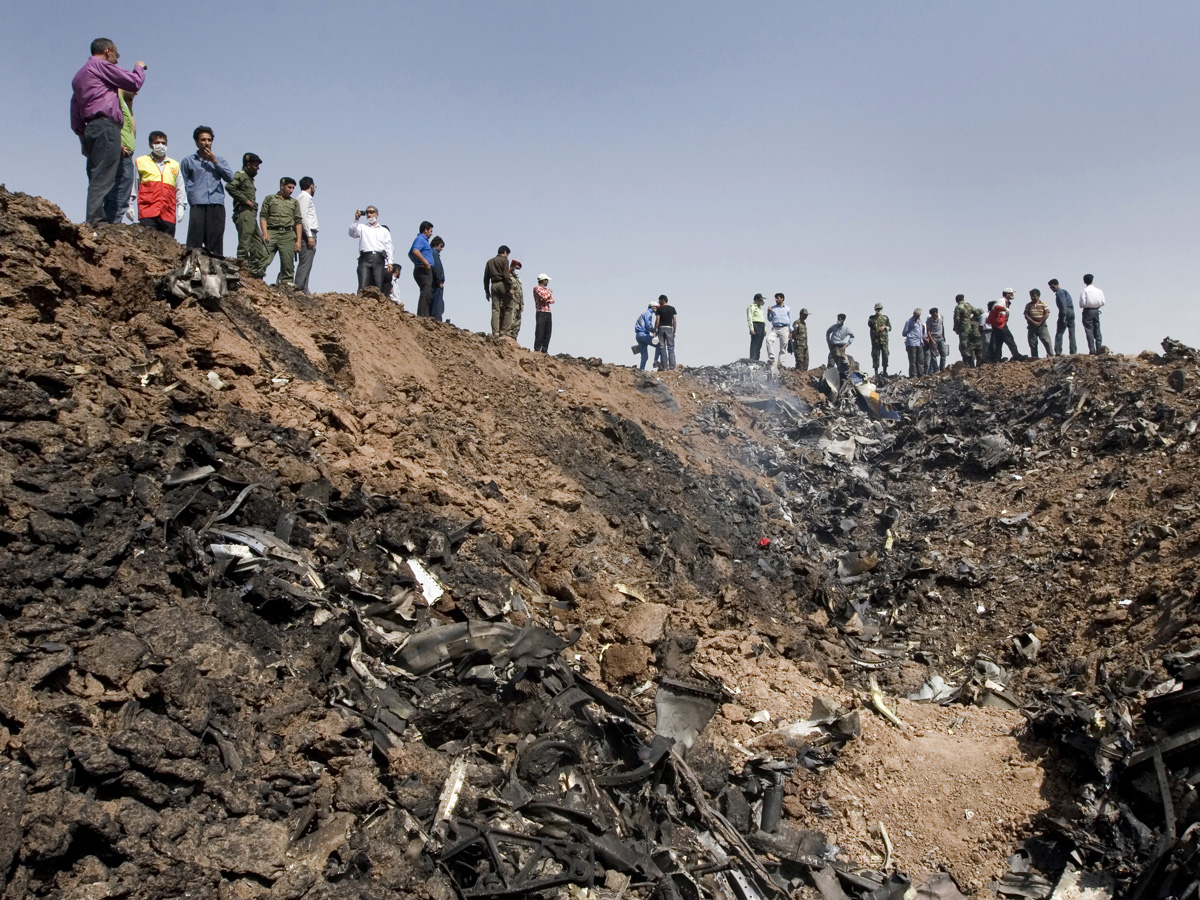
Alexei Komarov , editor -in -chief of the journal "Air Transport", in an interview with Radio Liberty said that the possible cause of the plane crash is improper maintenance of the aircraft:
- The whole mass of flight accidents that occur with aviation equipment is conditionally divided into two components. The first is the one where the cause of the incident was some kind of troubles associated with the technique, that is, with the plane itself. The second is the one that is associated with the erroneous actions of people. Moreover, this refers not only to people who are sitting at the helm and in the cabin of the aircraft, but also those who prepared this aircraft for flight, who repaired it and who controlled the movement in the air.
According to statistics, it turns out that more than 70 percent of all aviation accidents is associated precisely with the shortcomings in the activities of people who provide air transportation

According to statistics, it turns out that more than 70 percent of all aviation accidents is associated precisely with the shortcomings in the activities of people who provide air transportation. Therefore, to say that the Tu-154 aircraft is reliable or unreliable, rather groundlessly. Tu -154 has been produced a lot, it was and remains - at least, so far - the main workhorse in Russia. It is also operated in some foreign countries, however, everything is smaller and smaller.
A very important question is when we are talking about the reliability of technology - how this technique is maintained in a state of flightness, who repairs it and how to repair, who exploits it, who monitors the state in which it is located. This question is poorly connected with the equipment as such, and more with airlines that provide all operational activities with repair enterprises and, oddly enough, even with the authorities of the countries where these machines are operated. After all, the authorities should observe the correctness of all the requirements that are set out in the basic documents to ensure flight safety.
There is no concept of "old aircraft" in aviation. "Old car" - there is, and "old aircraft" - unfortunately or fortunately, there is no such thing. Designers set up well -defined limits of life for each aircraft, for each aircraft engine. In operation, two actions are carried out to achieve this line: either the plane is thoroughly repaired and restored to a state where it can continue to fly, or write it off. If the plane is carefully repaired or restored, then within the prescribed resource it will continue to fly, it will be operated without problems.
But there is a second half of the issue, associated not with the technical, but with the moral aging of technology. Each new generation of aircraft is becoming more and more smart, more and more robotic, simplifies the work of the pilot. This increases the reliability of operation. The technique reduces the risk of the human factor, tries to reduce it. From this point of view, of course, it is desirable to replace the aircraft of previous generations with more modern ones. But the economy is already playing a role here, and in the case of Iran, politics plays a role, because Iran cannot buy aircraft of either American or European production.