
Translated material
Moscow authorities refused the theater in the Hermitage Garden in the status of an object of cultivation
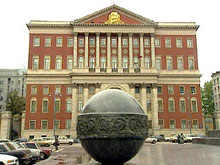
The Moscow government approved a list of cultural heritage objects that are taken under state protection as monuments of the history and culture of the peoples of the Russian Federation of regional significance.
"In total, there are 75 objects in the list of 75 objects, including the children's shelter of the Elizabethan Charity Society of 1892 of the construction in Arkhangelsk Lane, the building 17, building 1, the city estate of Novikova on Bakhrushin Street, the Civil Council of the XVII century in the Vetoshny Lane, a number of profitable houses and manor buildings on Volkhonka and other The streets of the city center, ” Interfax reports with reference to the city administration.
It was noted there that the building of the Electric Demeter and the Exhibition Hall was also taken under state protection, in which since 1924 there is a Moscow Art Theater School in Kamerhergersky Lane, House 3a. This building of 1915 was designed by architect Fedor Shekhtel.
Also, the objects of the cultural and historical heritage include the building of the Tretyakov trading house on the Kuznetsk bridge, house 13/9, the Restaurant "Hermitage" on Neglinnaya Street, house 29.
In addition, a list of buildings was approved in respect of which a decision was made to refuse to adopt them for state protection as objects of cultural heritage.
In particular, in this list were the temple of St. Nicholas Miroliki in Bulatnikovsky, house 8, the 19th century profitable household in Middle Kislovsky Lane, house 3, as well as the Ermitage Sleeping Theater on the Barrow row, in which Fedor Chaliapin, Anna Pavlova and Leonid Utesov spoke in different mountains. The Tatar mosque in the emergency lane does not fall under the state protection, the house 7. Note that the New Opera Theater was opened in the reconstructed building of the Mirror Theater.
“The list of buildings that are refused to take under state protection are mainly residential buildings of the old buildings located in the center of the capital,” the agency’s interlocutor said.
He added that all these buildings are attributed to the objects of the historical and urban planning environment.