
Translated material
Experts against separate training of boys and girls. It inhibits the development of schoolchildren
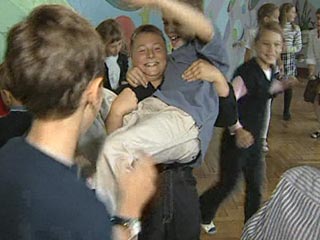
Separate training of boys and girls in the schools of modern Russia, which the USSR refused 55 years ago, would significantly brake the development of schoolchildren and would reduce their performance, experts interviewed by RIA Novosti .
Separate learning practice existed in schools in pre -revolutionary Russia. However, after the October Revolution, significant changes occurred in public education. Class-source educational institutions were liquidated: cadet corps, lyceums, spiritual schools and seminaries, women's diocesan schools. The school separated from the church. They began to teach boys and girls together.
In CCCR, separate training was again introduced in war in 1943. It was conducted in seven-year schools, secondary schools of capital of the Union republics, regional and regional cities, large industrial centers. Given the wishes of parents, teachers and the public, on July 18, 1954, a special resolution of the Council of Ministers of the USSR was restored in all schools.
“There is no and cannot be a great pedagogical effect from separate learning. Because over the past few decades, the school has ceased to literally be a place of study. The school is necessary for growing up, initiation, and when the sexes are separated,” said the director of the Moscow Education Center No. 548, Efim Rachevsky.
According to him, at present, Moscow and Siberia have schools where boys and girls are taught separately, but these are only isolated cases that are incomparable with generally accepted practice.
Separate training also exists in religious schools of a number of regions where Islam is common. In cadet corps and Suvorov schools only boys teach. However, this year for the first time, some Suvorov schools will begin to recruit girls. The Ministry of Defense of the Russian Federation in September last year opened a boarding house in Moscow, where about 180 pupils studying. It is planned that such educational institutions for the daughters of military personnel will appear in every military district.
"They say that the traditional school is a school of England, where girls study separately, and boys separately. But in England this tradition is gradually starting to break. It is more likely a tribute to the centuries -old tradition, nothing more than," Rachevsky believes.
In turn, Alexander Adamsky, the rector of the Institute of Educational Policy of Eureka, under whose leadership a new standard for elementary school was developed, said that he was categorically against the idea of returning separate training.
"Such ideas arise from time to time, they are built on the argument that girls and boys have a different perception. This is the idea of radical socialists. From the fact that boys and girls perceive the world differently does not mean that they need to be divided in training. On the contrary, it is important that they adopt the features of perception from each other, because it is obvious that the more diverse the environment in the classroom, the higher the learning result", the higher the learning result. " He.
Adam sees a positive effect in the fact that girls grow up before boys. "It is useful for boys to be in the environment where girls grow up before. When people grow up in a same -sex environment, they do not have experience in communication and relationships, and then this leads to poor results," he said.
The expert recalled that today in many schools there is a practice of inclusive education, when children with developmental problems study with ordinary children and this often leads to better development of not only children with disabilities, but also ordinary children.
“The society has been going on to joint training for so long, and if you return to this archaic principle, it will be a step back. Although external, momentary results can be higher, but in the future it will give a bad result,” Adam said.
“I believe that in pedagogy it is necessary to accept such an axiom that any segregation (separation) is unacceptable, it does not matter what basis - sexual or ethnic,” he summed up.