
Translated material
American in Siberia
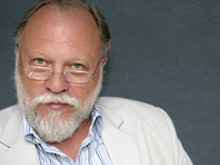
The New Yorker made a generous gesture: in two summer rooms, he literally published dozens of pages of the regular author of Ian Freizer, telling about a trip to Siberia . For Americans, Siberia is exciting exotic. The Russian reader of the Siberian "miracles" described by the American saw with his own eyes, took place at school, looked at the cinema, read about them in notes from a dead house and in the "Gulag Archipelago". But still, the essays of the American are curious: they say something about American psychology and optics. Ian Fraser, for example, is shocked to the depths of the soul and body with Siberian mosquitoes. He classifies them with the meticulousness of the entomologist. “The mosquito there,” he writes, “specialize in different organs and members: some prefer eyes, others - ears, others - nasopharynx, and eye mosquitoes usually aim directly into the eyeball.” The American concludes: "The tactics of these creatures remains a mystery." On the road, Ian Fraser is accompanied by two Russian friends. When the American is offered a tempting acquaintance with the nuclear, "Rubensov" (as he expresses) Siberian, he nervously refuses: "I'm married." He is also discouraged by the proposal to drink an instrumental, accompanied by an eloquent gesture: a booming click of the index finger along the throat. There are political comments in these travel notes: Fraiser recalls that Lenin prophesied the Barabinsky steppe "Great Future", but, as the American writes, "what appeared before my eyes, more like an emptiness of eternity." In the exiled Decembrist, Sergei Trubetsk, the American worries the similarity of the Russian prince with George Washington. In Birobidzhan, in his opinion, Soviet Jews rode enthusiasm. In fact, this enthusiasm was enough only for a month or two, and not all Jews of the USSR strove for the Far East: the dream of many was a different east-near.
The American traveler also draws attention to the mountains, whole mountain layers of garbage along the tracts. “Most of the Russian garbage,” he writes, “make up empty plastic bottles and glasses made of them.” In America, it turns out, roadside garbage is paper disposable plates and glasses. Here is what good advice the author gives to American readers: "Under no circumstances, do not visit Achinsk. The cement dust of this city is still a bit." The Russian dictionary of Ian Fraser is curious. In his notes there is a dozen Russian words that he does not risk translating into English: “master”, “pies”, “cottage cheese with sour cream”, “catch up and distillation America”, berry of “Kostyanik”.
And no cranberries.