
Translated material
Libya does not intend to pay compensation to the families of victims of terrorist attacks arranged by the Irish Republican Army
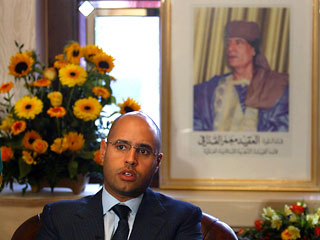
Libya intends to resist the requirements to pay compensation to relatives of victims of terrorist attacks arranged by the Irish Republican Army (Ira). This was announced on Monday by the son of the country's president Saif al-Islam Gaddafi, reports Breitbart.com with reference to Ar.
Relatives of more than 100 victims of Ira insist on compensation, since Libya once supplied explosives to the detachments of the North Irish terrorists. Moreover, things in their claims were instituted not only in the UK, but also in the USA.
Saif al-Islam Gaddafi said that relatives of the victims of terrorist attacks have the right to defend their requirements while Tripoli has the right to defend their position. “They have their own lawyers. We have our lawyers,” Gaddafi added.
Earlier, British Prime Minister Gordon Brown rejected the demand for relatives of the victims of terrorist attacks on the provision of pressure on Libya in order to receive compensation for the dead British from it. The head of the government stated in a letter to lawyer Jason McKuu, representing the interests of the IRA victims that the official London "does not consider it suitable to enter into bilateral discussions with Libya in this case" and that Tripoli "harshly opposes the resumption of the discussion of this problem." Brown’s letter was dated last of October last year, but the prime minister made his text only on September 6, 2009.
In an earlier letter addressed to the same McCu, Brown said that Libya is an important partner of Great Britain in the fight against terrorism and that the continuation of cooperation from Tripoli in this direction is in the immediate interests of London.
The negative reaction from the relatives of the victims of terrorist attacks to the maintenance of Brown’s released letter did not force a long time to wait. They demand to explain why the British prime minister did not show such perseverance in this matter as ex-president of USA George Bush, who, in their opinion, actively defended the interests of families of American citizens who died at the hands of IRA. And according to Colin Parry, the father of one of the dead British, Brown’s position creates a situation in which the UK "looks very, very faint and insignificant" power.
The conflict around Gordon Brown’s reluctance to meet the relatives of the victims Ira exacerbates tension in British political circles caused by the nature of the relationship between London and Tripoli in the light of liberation from the Scottish prison and deportation of the former Libyan special services of Abdel Basit Ali Al-Migrahi, sentenced to life imprisonment Aviatheraract over the 1988 Lokerbi.
It is obvious that a considerable part of British society considers Libya as a state that at one time was an accomplice of international terrorism, and therefore should still bear full responsibility for this, especially since the previous persons remained in power in Jamahiria. However, the Labor Government, and not only now under Brown, but also with his predecessor Tony Blaire, began to adhere to the vector to build constructive business relations from Tripoli. The inconsistency of these two positions causes sharp contradictions in British society.