Translated material
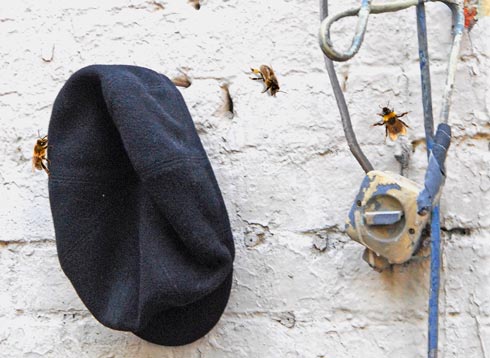
Dali on the cap
Putin took Moscow without a single shot
The end of the era. The October elections in the Moscow City Duma will draw a line under the nearly 20-year-old enchanting reign, which turned a small territory inside the Moscow Ring Road into a great business, where the main money of a gigantic country rotates, into an electoral stronghold, which over and over again, “pulled” the federal elections to the Kremlin’s benefit, about which even $ 1 is not presented to the depth of $ 1 TRLN of budget funds mastered by the capital during the Putin eight -year -old. The mayor Luzhkov failed to transfer his huge kingdom to the reliable heir. Autumn of the Moscow mayor studied The New Times
The control levers of the 15 millionth metropolis slip from the weakening hands of Yuri Luzhkov. The tired mayor goes to the election of the metropolitan parliament at the head of the United Russia list, depicting a campaign. This is the little that he can do for the pleasure of the Kremlin and the White House.
The mirage of the power of the Duumvira, for their part, has long been no longer aimed to change Yuri Mikhailovich to their creature. Although back in 2007, the Moscow government was drawn to the Constitutional Court with the Ministry of Finance, proving that the Federal Treasury has no right to carry out cash services for the execution of regional budgets. Although on November 18 last year, President Dmitry Medvedev publicly pulled Luzhkov, who spoke about the return of the election of heads of regions. No, even for this they do not hold evil for the mayor. Firstly, how to be offended by an eccentric who suggests in winter to disperse clouds over Moscow in order to save on snow cleaning, and hang balloons over summer reservoirs to save the drowning people? Secondly (and this is the main thing), Luzhkov for about a year and a half, although it has reigns in Moscow, does not rules.
The road to sunset
Since 2004, in a gigantic cap, which once tightly covered the whole capital along with the Moscow Ring Road, numerous holes are being tumbled, where federal players immediately rushed. It was an objective process launched by the mayor himself and his immediate environment. The construction complex of the capital is the most absurd speculative investment machine, which the latest history knows. In the country of sagging wires, erased to the land of roads exploding hydroelectric power plants and burned to the ground, leading companies (including state) began to be invested in rapidly expensive sacred concrete boxes. Luzhkov, in fact, built an alternative to the rickets of the stock market-a single hypermonopolized construction, investment and trading platform with a simple line of derivatives and even simpler regulation. He himself became a guarantor, the main conductor and at the same time the main beneficiary of the progressive increase in real estate prices. Mobilized for this all the administrative resource available to him. And in the end, he turned out to be the main political victim of the business scheme he designed, the concrete fragments of which flattened his reputation, power and influence.
The decay of the team
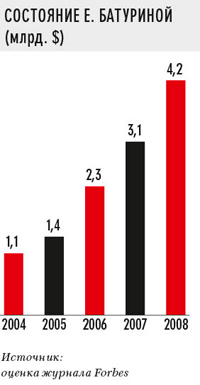
A year ago, under the storm strokes of the crisis, a huge core investment bubble burst. However, five years earlier, the expansion of developers, guarded by the Moscow government, rested on strict political and electrical restrictions. According to the developers familiar with the situation, generated by Luzhkov and his wife, the owner of the Inteko group of companies Elena Baturina, a mass demolition plan in the center of the capital of Stalin's houses with wooden ceilings, the Kremlin did not like the Kremlin. Behind the wall, it was reasonably calculated that political destabilization in Moscow would cost more than any money. And they forced the enthusiast and his tireless girlfriend to hold the bulldozers.
Then the prefect of Cao Gennady Degtev went to the “Exchange”, to which the odious plan, which had flowed in the media, was written off. Degtev’s resignation of Tverskaya old -timers, 13 is still considered the greatest mistake of Luzhkov: this predetermined the collapse of his once rather monolithic team. In December 2003, Sergey Baidakov, the first prefecture of the Central District, was the first person grown by personally Luzhkov. But a year later, business publications began to associate a new prefect with the FSO director Evgeny Murov and his diverse business interests. And the fact that the central district sailed from the mayor’s hands, it became clear when, in October last year, Baidakova was replaced by a direct protege of one of the “St. Petersburg” power clans - Alexei Alexandrov. The Degtev Kazus gave an impulse to gradual taming and reconstruction of the capital's leadership. The once omnipotent owner of urban lands and property Oleg Tolkachev became a senator. Vice-mayor Valery Shantsev went to the Governor to the Nizhny Novgorod region, two other close associates of the mayor-George Boos and Mikhail Men-respectively in the Kaliningrad and Ivanovo regions. In October 2006, the so-called Mosinvest Control (now just Moskontrol) was created in the structure of the Moscow government-a powerful department, without the consent of which neither the main builder is the first deputy prime minister Vladimir Resin and the system-forming companies controlled by him, nor the largest private developers like “Intec”, the Su-155, peak-holding, etc. did not have the right to build anything. The chairman of the Mosinvest Control Alexander Ryabinin (the top official who arose in the corridors of the capital’s power literally out of nowhere) and the chairman of the Moscow Cultural Heritage Committee Valery Shevchuk quickly pushed the “old team” from the talked processes of the reconstruction of the Moscow Center. In parallel, since the beginning of 2006, the “federal” oligarchs-Oleg Deripaska, Mikhail Friedman, Suleiman Kerimov-and the State Bank took leading positions in the capital's development sector, retail and service sector. New people even penetrated the holy of holies - metropolitan road construction.
The price of an error
Meanwhile, due to the failure of the “Baturina Plan”, the metropolitan authorities had difficulties with the fulfillment of confidential obligations to leading oil and gas companies to form new investment sites. In 2004, the main players of panel housing construction were forced to move to the Moscow Region. However, the much more severe consequences for the family business entailed the Kremlin’s refusal in the fall of 2007 to support another reformal project of Luzhkov - the elimination of small -optical and small -strip street formats. The fact is that the massive construction of countless shopping and entertainment complexes, malls and business centers was carried out at the expense of external investors and under the personal guarantees of Luzhkov, who promised to fill new sites with tenants and customers. Not only the free money of raw materials companies, but also borrowed funds were invested in the capital's commercial real estate. However, the small business, as expected, did not accept inhumanly high rental rates. Projects could “fight back” only if the Moscow authorities managed to eliminate “wholesale” and “Azerbaijani stalls” with one blow, where poor people are traditionally cooked. But Putin found that this plan was no better than the plan of the expulsion of Muscovites from the center of the capital. The taste of South Butov history was too bitter. All this also expectedly accelerated the erosion of Luzhkov’s business corruption. By the beginning of the crisis of 2009, the Tverskaya, 13 was one on one with investors who froze gigantic money frozen in construction and development, and began to rapidly lose their support among the elite.
Forced loneliness
Therefore, knowledgeable people were not surprised when this year Luzhkov was forced to “surrender” his closest business partners - the owner of Cherkizon, Telman Ismailov and Shalva Chigirinsky, to which the Russian Ministry of Internal Affairs has an equally extensive list of claims. The latter, as you know, hastily left the country and shed light on the nature of the relationship between the capital's leadership with a large business. On July 20, 2009, speaking in the high court of London, Chigirinsky said that he agreed to transfer to the President of Inteko Elena Baturina half of the assets of Sibir Energy in exchange for “overcoming bureaucratic difficulties”. The mayor's wife denied the accusation rather sluggishly. Finally, in July -August, the Federal State Registration, Cadastre and Cartography Service torpedoed the city of investment contracts for the construction of about 5 million square meters. m of housing, refusing to arrange the rights to the rights to plots. The public reaction of the Moscow Government was not at all followed at all.
It seems that a person who at one time has almost deprived Yeltsin Porphyry is not terrible to anyone else. Putin and his entourage took the rebellious Moscow with a quiet sapa, without a single shot. The “old man Baturin”, as the mayor of politicized bloggers, could not save the capital for Madame Luzhkova.