
Translated material
"Opel" did not reach
Why General Motors denied Russia
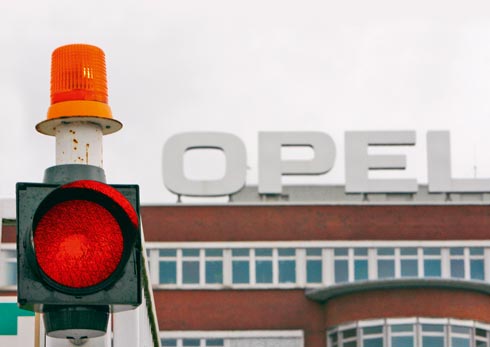
"Opel" drove away. The American Automobile Concert General Motors changed his mind to sell Opel to the Russian-Canadian consortium Magna-Sberbank. And this despite the fact that the heads of government of Russia and Germany took an active part in the lobbying of the transaction. What is behind the cancellation of the agreements - the Russian side found out the New Times, the Russian side could not hide the irritation of the breakdown of the transaction: “This is a lesson,” said Prime Minister Vladimir Putin, “we will have to take into account this style of relations with partners in the future.” The German side is also unhappy: the Minister of Economics of Germany Rainer Brusterle called the GM decision unacceptable both in relation to Germany and in relation to Opel factories. The employees themselves went to the strike the next day against the "new" old owner. They fear that to optimize costs, the American owner will reduce a significant part of the German workers.
Recall: on June 1, GM, 77 years old, former the world leader in the production of cars, filed a bankruptcy statement. The Opel brand, which the concern has owned since 1929, was subject to sale. However, just four months after the approval of the transaction between GM and the Magna -Sberbank consortium
* * The cost of the transaction is € 500 million, as a result, Magna was supposed to receive 20%of the shares of the German company, Sberbank and General Motors - 35%each, OPEL employees - 10%. GM Executive Director Fritz Henderson unexpectedly stated: the economic situation in Europe has improved, and Opel plays an important role in the General Motors global strategy.
A changeable asset , however, many experts tend to explain the demarche of the American side by no means economic reasons. Since the announcement of the transaction, the highest ranks of the United States, including President Obama and Secretary of State Clinton, have repeatedly visited Russia and could well come to the conclusion that at this stage it was not worth it to have affairs. “In the West, they know what Russian bureaucracy and justice are, and this categorically does not suit them from the point of view of doing business,” he says
Badri Gobry, chief editor of the K2knews news agency . “It can be assumed that the members of the Board of Directors of GM, having thought well, decided that Russian officials were quite capable of“ drowning ”such a company as Opel, and refused to deal with us.” Hoberty admits that the GM decision could also affect the latest events in the Russian automobile industry - and above all, the AvtoVAZ, which led to serious stress in relations with a potential strategic investor - the French company Renault.
The sudden retreat of GM can have another reason - unwillingness to share with Russia its technologies. “Russia hoped to get Opel technological developments to project them on our market,” he says
Sergey Tselikov, Director of the Avtostat analytical agency . “However, foreign partners from the very beginning did not burn with the desire to share these innovations.” I agree with this point of view and
Kirill Rogov, researcher at the Institute of Economics of the Transition period : “No one wants to give technology to anyone. Only from despair can large concerns can go for it. Apparently, the despair of GM has passed by the beginning of November. ”
Finally, the political terms of the transaction could also change, which, according to some experts believe, existed initially. “Angel Merkel has not just lobbying the interests of Russia,” I am sure
Nikita Krichevsky, Scientific Director of the Institute of National Strategy . “In exchange, Germany could well obtain the most favorable regime for the same Volkswagen plant in Kaluga or preferential conditions for the supply of Russian raw materials.” I agree with this and
Nikita Maslennikov, adviser to the Institute of Modern Development . According to him, the German side at the height of the crisis could offer Russia assistance with Opel, and in exchange, for example, promised the lobbying of Russian interests related to the Northern Stream gas pipeline. It is possible, Maslennikov believes that by November these political considerations have exhausted themselves.
A number of experts believe that the decisive factor in the cancellation of the transaction was the mismatch of the economic interests of its participants. “The decision to keep Opel is quite logical,” confirms
Alexander Pikulenko, automobile observer of the Echo of Moscow radio station . - Last week, GM publicly stated that for the first time in 21 months, Opel sales in the United States have grown. The market has recovered, the growth of sales in Germany is very good, the Opel model range is also. And the most important thing: if the GM now sold Opel, he would have lost that niche of the market in which he himself was never strong - mass small cars. ”
“Opel has recently demonstrated fantastic indicators to update the model range - it has turned into a worthy competitor of leading European brands,” confirms
Oleg Datskiv, general director of Auto-dealer.ru . “Therefore, of all the current GM assets, Opel is the only one that he should fight for and where to invest money.” According to the expert, “GM initially did not want to sell Opel: it is important to have significant brands not only in the North American market, but also on the world.” Datskiv recalls: after the conclusion of a preliminary agreement with the Russian-Canadian Alliance, GM constantly tried to insert sticks into the wheels of an already launched transaction. One of the last “inventions” of GM is the requirement to initiate the procedure of antitrust proceedings in order to convict Germany authorities in lobbying a contract with Magna and Sberbank.
Loss of a face , but is Russia's interests so much? Oleg Datskiv believes that Russia still lost from the breakdown of the transaction - in the possibility of “rebuild” the domestic auto industry. “It was important that a concern came to the country that really knows how to produce competitive market cars and organize production for this.” Alexander Pikulenko believes differently: “For Russia, the deal did not give anything real in terms of obtaining technologies, since our production base does not allow them to be used.”
Alexey Navalny, a member of the Council for Interaction with the Ministry of Defense of Sberbank , also believes that Russia is not losing absolutely nothing from the breakdown of the transaction. “From the very beginning, the motives of this deal were incomprehensible for the Russian side,” Navalny wonders. - The explanation of Sberbank was strange: they say, he concludes it in order to transfer successful technologies to Russian car factories. But what technologies, how and under what guarantees were completely incomprehensible. ” If so, then the main disadvantages of Russia are associated with the “loss of face” by the heads of the government who made this contract. Do not get used to it.
What do they say in Germany
Magna Vice President Siegfried Wolf: “I am surprised and disappointed. We had a wonderful plan that could work not only in Europe. Thanks to this plan, we would save all the jobs. ”
General Director Opel Hans Demant: “This is an unexpected decision, and we must consider it. However, I, as an insider, can say that it can be effective. I am sure that GM weighed all the pros and cons.
Chairman of the Supervisory Board of Porsche Wolfgang Porsche: “Poor Opel! Politicians should be ashamed. Employees have been in limbo for six months now. Such a solution is just meanness. ”
Daimler president Daimler Diter Cetshe: “I never understood why GM at all to sell an Opel. Having got rid of him, he would leave in Europe something like a giant wasteland. "Chairman of the Board of Directors of Volkswagen Martin Wintercorn:
“GM decided to do what we usually do with our subsidiaries. When one of them is in a difficult situation, it is not rushed to sell immediately. In the end, the concern’s task is to make a subsidiary recovered. ”